If you follow my blog you will have seen a couple of photos of the pampered pooches of our family. Our dogs live in our house, sleep on our bed and are well fed. This includes a selection of treats. We will drive to the beach at low tide just so our dogs can have a run and a paddle. Much to his disgust, our little white fluffy dog has a regular grooming appointment to have his hair clipped.
Dogs in my family have not always been so pampered or privileged. Growing up on a farm and in a family of six, we did not have the means or the habit to pamper our pets; even though we loved them. Visiting a Vet was not our usual practice. This meant that our dogs and cats were not vaccinated or desexed. Dog food came in the shape of a ‘roo leg, which was roughly carved off a kangaroo carcass after a shooting trip; and thrown in the yard. It was not until we moved into a less rural area that dog food came in a can.
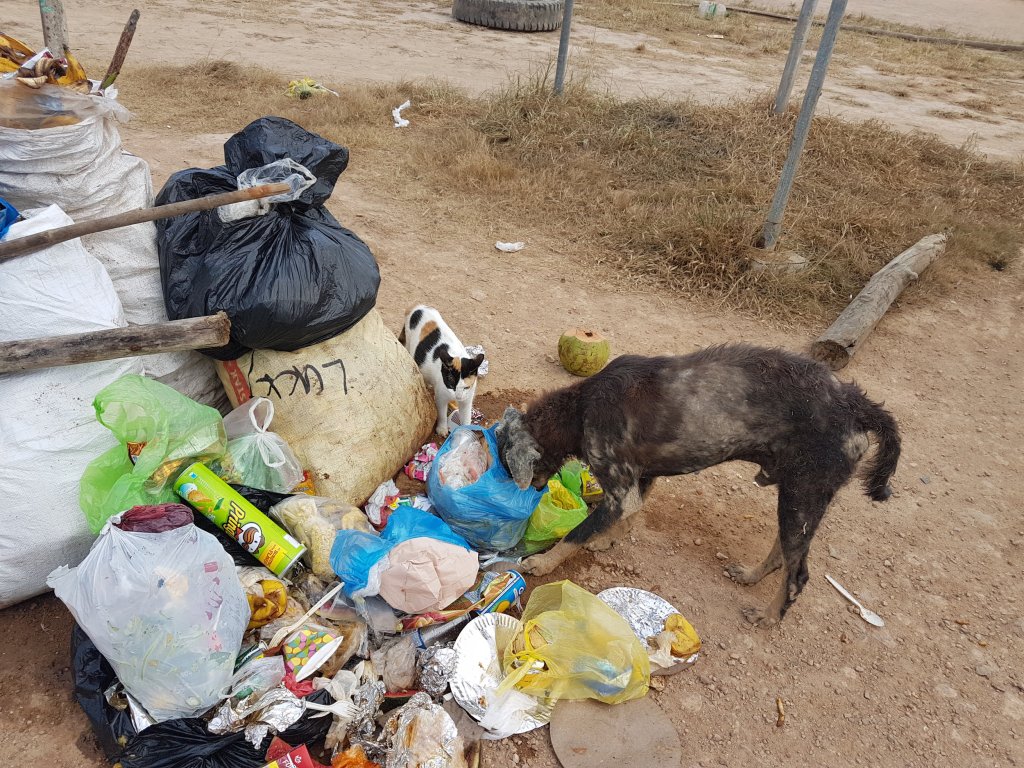
How far removed is the life of a dog in our household to this dog? This photo was taken in the Philippines last month. This dog is one of many streets dogs in the nation. It is thought that the Philippines have more street dogs than any other South East Asian or African country. Some days our minivan would toot and dodge dogs that looked even worse than this. Someone suggested it would be kinder to hit that dog than let it live. We did not of course. Other days, we would feed our scraps to some of the street dogs that hung around the site of the clinic. That was a little tricky at times, as we sought to avoid a dog fight and a possible dog bite. I have not had my rabies vaccinations, so there is no way I want to be bitten by a dog.
The plight of the street dog in the Philippines-and the world has been noticed. Instead of catching and culling these dogs, they have more humane programs to vaccinate and desex to control disease and the population. Perhaps this programme has yet to reach the places we visited and hence so many dogs (and cats) live on the street without owners.
This is not the first time I have been confronted by the life of a dog that is less privileged than ours. In some places I have visited, the dog is below a pig and a chicken when it comes to getting fed. He was not bred to be eaten as the pig and chicken were. This is why they have to scavenge amongst the rubbish.
Feeding your scraps to a dog is not always the wisest either. Years ago, while staying in a village in Vanuatu, one of our children took to feeding a particularly friendly and affectionate dog. The dog it turned out was well cared for by one of the pet lovers in the village. When the owner found out, he explained why we should not feed his dog. As he said, not everyone else in the village was as fond of dogs as he and we were. If it entered someone else’s hut looking for food, it may well get hit with a machete in response. We did not want that to happen either.
It is hard to know what to do when confronted by street dogs and dogs less privileged than our own. The fact is though that many people in some of these countries are not as well fed and medically cared for as our own pets in our home country. It is a dilemma that is not easy to reconcile or to deal with. For the moment I will look with compassion on the street dogs I pass and hope that the few dogs we fed our scraps to are better off for that feed and not worse. The plight of the street dog is something to ponder a little more.
 On the Blog!
Leave a comment