Christmas Eve has arrived. And after a frantic end to the year, I love the way the pace finally slows. There is food being prepared, conversations wandering, and the simple delight of family sharing space.
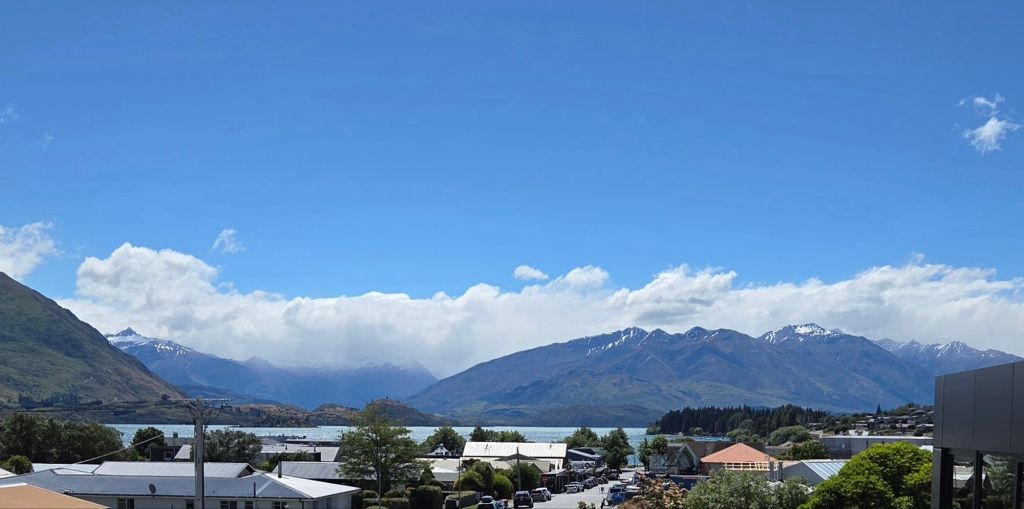
This year, Christmas Eve finds us in a borrowed home overlooking Lake Wānaka in New Zealand. It includes a table large enough for our son and his wife, a joyful grandson, a daughter who has travelled a long way from London to be here, and extended family arriving and settling in nearby. The windows of our house hold the lake and the sky. The house, and my heart, feel full in the best way.
Christians speak of this night as the coming of Emmanuel; God with us. Not a distant or abstract deity, but One present in the middle of ordinary life. This is what with us looks like this year: a shared table, food offered with a little less fuss, small gifts tucked into Christmas stockings, and weather ten degrees cooler than home back in Queensland.
In a world that often insists Christmas is about striving and more stuff, I am grateful for the quieter invitation; to notice where God has already drawn near. In the people we love, the place we have been given, the moment we are living. Tonight, this is enough for me.
Wishing you a gentle and blessed Christmas, wherever you find yourself this evening. And, may you know something of God with you.
— A gentle reflection for a hurried world, on Christmas Eve.
For most of my life, I prayed for strength; now I find myself praying for gentleness. I used to believe that if I just tried harder, life would finally work — and maybe I’d finally be thinner. But sooner or later, effort becomes its own kind of exhaustion.
I have come to learn that our bodies are designed to help us survive challenge, not to live in constant pursuit of it. When we push hard for long periods, our stress hormone cortisol stays elevated. At first it fuels motivation and alertness, but over time it begins to work against us. High cortisol can disrupt other hormones such as insulin, thyroid, and estrogen. It tells the body to store fat and hold on to energy “just in case.”
For those of us living with autoimmune conditions, this constant stress signal can confuse the immune system, intensifying inflammation and fatigue. I have come to see that this is not just theory. It is the very pattern I find myself caught in, and it only adds to the stress I am trying to escape.
What begins as determination can quietly become depletion. The harder we try to control, the more our bodies interpret life as unsafe. Muscles tighten. Sleep fragments. Digestion slows. The healing systems start to switch off. It helps to remember that this is not a moral failure; it is simply biology asking for safety.
When we begin to interrupt that loop by resting, breathing, and nourishing ourselves kindly, something sacred happens. Cortisol steadies. Hormones rebalance. The immune system begins to trust again. Compassion becomes chemistry. Gentleness becomes medicine.
I am learning that growth doesn’t always come from pushing harder. It’s not easy, especially when you’ve spent a lifetime equating effort with worth. Yet the work now is asking me to be quieter; to listen more deeply to the wisdom of the body, the whispers of the Spirit, and the longing for peace and a non-hustling life.
I have often called out to God when I am at the end of my rope. Lately I am discovering that He meets me within these limits, not just at the end of them. He is not the One who demands more, but the One who abides when we can’t do more.
So the next time we catch ourselves looping, planning, pushing, or punishing ourselves for not changing fast enough, let’s pause instead. Take a breath. Ask softly, “What might kindness look like here?”
What if the truest transformation doesn’t happen through force but through gentleness? And the work is the steady turning from self-criticism to self-companionship; from striving to trust.
If we traded willpower for wonder, what might we change?
When did I become old? And, who says I must retire, just because I turn 60 next year? I do not dispute the tally of birthdays, the development of wrinkles and grey hairs, but I do take exception to being pensioned off like an old nag turned out into her forever paddock.
Like most deeper issues in my life, they rattle around the fringes of my subconscious, stealing joy and undermining my momentum, until I can finally name what has been bothering me for some time. This last month, I finally realised that I was giving up on much of life itself, because I believed that my age dictates, I do that. Feeling like time is running out, and I am no longer valued I started to believe that that forever paddock was all I had to look forward to.
It all started five years ago, when I resigned from my then job, citing I would like to spend a bit more time with my new grandson. Immediately, people spoke of me as retiring. I never once said the word. And if you saw my superfund balance, you would know that was not an option at aged 55. I took on another role after that, initially valued because of my seniority. When I noticed that my junior colleague was afforded opportunities I was not, my query was dismissed with a conciliatory comment. When I resigned from that position several years later, rumours circulated that I had retired once again. Not so! That superfund has still not miraculously ballooned, I have another decade before I am even eligible for the senior’s pension, and once again who says because I am a certain age I must retire from meaningful work?
Of course, others have officially retired at this age. Some of my friends are in that category and are traveling Australia with the quintessential four-wheel drive and caravan. Good for them. But what has impacted me the most is the assumption that I am close to expiring. I feel that this tag attached itself to me like one of those pesky, bush flies, as I slipped into the last third of my life.
Let me start with exercise classes. Who decided to base exercise around an age rather than ability? It seems the fitness industry training organisations do. I have witnessed several instructors, studying their fitness certificate, recording sessions with simplistic training protocols specifically for the over 50s. And yet, I go to a gym where most days I work out with other women represented by every decade up to their 70s; lifting the same weights, if not more, and generally keeping the same pace. One of the fittest, strongest, and leanest women in the gym is over 60! I love the fact that my gym’s trainers do not look at age as a barrier. Whist I appreciate the consideration to limitations that might come with age, lumping all people into the over 50s feels a lot like simplistic stereotyping.
This is not new to the workplace of course. A 2021 Australian Human Rights Commission report found that around 30% of Australians aged 50+ had experienced age discrimination in the workplace. This ranges from assumptions around ability because of age, promotions going to younger workers, and includes stereotype comments, exclusion from workplace culture because of age, and even benefits being denied under the assumption they are “winding down” in their careers. Yep, I can vouch for that. And then there is the matter of simply being overlooked because one is too old.
The media often reinforces ageist stereotypes, portraying older people as frail, forgetful, or burdensome rather than active contributors to society. In contrast, youth is often celebrated, creating a culture that undervalues aging. We see this with the way older characters are portrayed in the movies: unrealistic beauty standards, negative phrases used in the news, a lack of diverse, realistic, and empowering representations of aging.
Am I alone in this? I think not. I have heard it said that other women around my age, who have spent the best part of the past two to three decades caring for others, are only just getting their second wind. I am constantly encouraged by women who the world says are ‘old,’ publishing another book, running their own business, and clearly living purposefully.
As a Christian, I do not believe that God attaches a use by date to our gifts and talents. Nor, do I believe that we are designed to quit all work at a certain age and focus on our comfort and enjoyment. The idea of retiring into a life of ease with a nice superannuation nest egg, is a modern concept and even then, is not everyone’s reality. There are many of us, especially women, that must stay in the workforce just to live, and certainly do not need the barrier and bias of ageism.
So, no—I am not expired. I am vintage. Still complex, still evolving, and yes, still useful. I may be entering what some call the “third act,” but I plan to rewrite the script. Age has given me experience, resilience, and a sharper sense of who I am and what I bring to the table. What I am leaving behind is the tired narrative that aging equals decline. I am not ready for the forever paddock—not when there is still so much to contribute, create, and challenge. If society cannot quite see it yet, that is fine. I will just keep lifting heavy, speaking up, and living proof that purpose does not come with an expiry date.
Have you ever been in at a time and space in your life, where the past season ended but what comes next is far from clear? Five months ago, I finished up my part time job and left a faith community I belonged to for over twenty years. I had a sense that I was heading into a new season, albeit unknown, but I figured that the waiting in between would be over as soon as I caught my breath and had a rest. It has not happened quite as I expected.
Even though I chose this step, not everyone who finds themselves in this space does. Sometimes it is an unexpected job loss, or a chronic illness that interrupts life, or a divorce that looms through no choice of your own. It might be a stage of life or a stage of faith. This closed door can bring us into a new space of bewilderment and profound unknowing.[i] Often impatient for the new, and desiring to just move one, this season in between feels like we are stuck, and we are desperate to move on to the new. Some may numb out, choosing sugar, alcohol, or drugs. But what if this transition space has a purpose all its own?
The ancient Celtic monks call these in between times liminal spaces or thresholds. This transitional space is often the result of leaving behind something that feels comfortable and safe. It can also provide space for God’s spirit to do a deeper work within us. Christine Valters Painter in ‘The Souls Slow Ripening’, says that in the monastic tradition they have a custom called statio, which‘is a holy pause full of possibility’ and involves the practice of stopping one thing before beginning another. It is also the practice of pausing prayerfully. This practice invites us to let go of what was behind us, so we can fully step into what comes next.[ii] In a material sense, it is like arriving at the threshold of a doorway, to pause and reorient one self, before moving through.
What then if this pause is longer than we thought and instead of being wasted time, is a gift instead? Mandy Bayton suggests that some of the gifts can be found in this space, where we ask questions and wrestle with answers, where we might re-examine faith, or grapple with doubts, or confront fears, and where we get to explore hopes and reimagine dreams.[iii] While we are not to stay in this space, it promises to be transformative space that encourages us with the possibility of the newness to come.
I’m not done in this space, so I cannot name the gifts I have found – yet. I have been journeying with others who are guiding me in this space. What I do know is I would be negligent to ignore its grace and value. I pray that you too will meet Jesus in your liminal spaces, and you too are transformed and encouraged by the gift of grace found here.
I avoided funerals as a young person, for no other reason than a sense of inadequacy around communicating sympathy. I would like to think that I have grown up a little bit, even if I still struggle to adequately express myself to those closest to the deceased. Not one to excel at small talk, I would rather serve the tea and coffee, or deliver the eulogy. Again, I like to think I have matured some, and overcome my own discomfort for the sake of others. I have also come to appreciate the importance of ritual and traditions, and saying final goodbyes.
I have sat through some long funeral services, and one less than half an hour. I missed others during Covid lockdowns, but was able to watch online. In the last three months, I have attended three funerals in person, and am thankful that I was able to be a part of the rituals and traditions that acknowledged the life – and the death, of someone I knew and loved.
Except for Covid limitations, I have never been denied attendance at a funeral. Have you? As I have discovered, not everyone has a funeral service, and some are ‘family only’. How would you feel if you never got to say goodbye to someone before they died, and then was denied access to their funeral? What if there was no funeral at all? No graveside to visit nor plaque on a wall. Nothing at all, to mark the life and the death of the person gone. How then do people grieve or remember, if there is no event or place for final goodbyes?
Studying pastoral care at Bible College, I had the privilege of a closeup look at a crematorium, a funeral home, and a mortuary. One thing that stood out to me from each of these locations, was the intentional cues and rituals designed to facilitate grief and closure. For example, at the crematorium there was a little button on the podium, that could be pressed at a significant moment in the service, thus closing a curtain behind the coffin as it disappears for cremation. It was explained to us that this was just one of several cues or rituals that helped people move along the grief process, as they say a final goodbye to a loved one.
I understand that we live in a culture that often shuns religious ceremonies and traditions, including funerals held in a church. Instead I have seen celebrants officiate and services held in a chapel, often adjacent to a crematorium or a funeral home. I have seen fewer people buried in graveyards and less ashes placed under a plaque; and instead, are scattered at some later date, in a place special to the deceased, and their loved ones.
It is written in some places that surely the funeral, or the lack of, is the right of the deceased and their close relatives. After all, a funeral can cost quite a bit of money and the deceased might have requested no fuss. Why not skip the gathering and avoid difficult conversations altogether, and exclude people who haven’t been around the deceased in decades? But, what about those who don’t get to say their final goodbyes and struggle to relinquish their grief, all because of this lack of tradition? Why must they find ways to grieve alone, when for centuries our community’s cultural rituals, in funerals, were presumed and known?
Each funeral I attended recently was as different as the deceased person themselves. Two funeral services were held in a church and the other in the chapel beside the crematorium. One was followed by a large wake, another by a potluck lunch, and the other with refreshments over a cuppa. Each service acknowledged the person’s life and legacy. Guests came from far and wide to support the family, pay their respects and to mourn the loss of the dead. In each case, I appreciated personally as well as for others, that this communal gathering provided various intentional rituals, that offered closure and the opportunity to grieve. I also found that by reconnecting with some people we had not seen in decades, we were incredibly comforted, as well as nostalgic, and has resulted in reignited old friendships.
My friend who couldn’t understand her exclusion from a private funeral, will have to find her own way to bring closure and acquit her grief. If this trend continues, we too might have to find ways in the future to process our grief and loss in private or independent ways, without the communal rites and traditions we take for granted. Writing a letter, planting a tree, or holding a private memorial are all excellent ways to process grief; but they remain individual. They also miss out on so much more; more that a good old-fashioned funeral provides.
What you think? Just how important are communal rituals and traditions for saying final goodbyes?
“Grief is the price we pay for love” – Colin Murray Parkes
I have been absent for quite a while. Last time I poked my head up, I was bragging about playing. Where has that person gone? I suspect the thieves who came are named responsibility and duty. They shout at me most days, and shoo me into a little patch in the corner of my life’s garden where they insist, ‘keep tending that, and don’t venture beyond!’ That little patch in the corner is perfectly managed in rows. A single weed would not dare grow.
I have been here before. I have looked out over my inner world’s garden. It’s much bigger than that plot in the corner, and it is more like the wilds. Somewhere in there is whimsy, play, creativity, and beauty, overgrown with weeds, and curiosity is hiding. Responsibility and duty insist I stay in the corner, believing this is the only bit of garden that I have been given, and that is all I am to know.
Sometimes, like today, I dare to rest on a pile in another corner of my garden. I notice this is where many of my dreams were planted- some prematurely so that they never bloomed. I spy creativity, poking its head out; and I notice it still has beauty and potential. There’s a piece in the middle, recently tended too. It wasn’t so long ago that it was watered, and I see a few rows have sprouted and scrambled.
I see play and laughter are there, but they are dormant and marred. I remember now. Anxiety snuck into my garden and covered them up. But there are still signs of life – a glimmer. The sun has still to set. I just cannot expect them to erupt with vigor, without some tenderness on the side.
I lost my ability to feel joy in this constant state of drivenness and obsessively managed rows. I also lost my ability to experience blessings when they arose.
Today, I am more determined than ever to place a chair in the middle and look for glimmers. Maybe I will watch the flowers leaning towards the sun. Perhaps, I will lean into puppy kisses and cuddles from little ones I love. All the while, I feel I am digging a little deeper into the loam of God’s goodness and love.
And tomorrow. I will remember to venture again beyond that little corner, and start searching for lost treasures in the secret places of my inner garden. I want to catch a few more glimmers in the wild.
Imagine being gifted boxes and boxes of firecrackers, and told you are free to light them to explode. This was my story, along with a few others, just a little while ago. The first cracker was little, and held hesitantly. The impact a fizzle; and, at best a pop. The next one was bigger, and more brazen, with a flash and a bang, to finish off. Before long, we were like little children; placing, lighting and fleeing before they exploded behind. Standing back, we marveled at the light show, and the halo of colors ascending into the sky. I still can not decide if I had more fun lighting them, or standing back and watching them rise. Was I remembering my childhood, or was this adult playing, the first time in a long while?
The adult in me cringed at the sheer scale of frivolity, but the kid in me couldn’t care less. The adult was nervous of damage, the kid didn’t care if there was a mess. This grown up wouldn’t have spent the money, but this kid was glad for the gift.
To be honest, this was the first time I have ever lit up a firecracker. Made possible by an invitation, to a once-a-year event. Thankyou to my family, and Darwin, for celebrating this event. Territory Day, I thank you, it was a time well spent.
…and a deeper lesson about play. When did I lose my way?
Brene Brown – I love her, says wholehearted people – she means adults, know how to play. It’s okay to spend time on things that seem frivolous, because at the end the day, play is at the core of creativity and innovation. She says, “Play—doing things just because they’re fun and not because they’ll help achieve a goal—is vital to human development.”
In part, I lost my way a long time ago, when I prematurely became an adult. This is compounded by a belief that everything I do needs a result. Heck, I grappled with this just today, when someone asked me, what goals have I achieved thus far, this year. There are some things that are just brilliant for the soul, but are difficult to measure. Play is one of those things for those of us who take adulting too serious, that often feels like a waste of time. Kristen Wong encourages, “Play offers a reprieve from the chaos, and it challenges us to connect with a key part of ourselves that gets lost in the responsibilities of adulthood, especially during a crisis.”
When was the last time you played? What indeed would you consider play? I remember as a child, play was riding my bike, swimming for hours, and every now and then, lying on my back in the grass watching the clouds. Sometimes it involved mud, other times flour, and never did it involve counting the hours. If you are like me, you need to revisit play, and add some fun to your stuffy and boring ways. And don’t add this to your list of things to be done. Just do something for fun!
To my friends, and family who have not forgotten how to play, I thank you for your patience and invitation to participate in this way. As Ralph Waldo Emerson says, “It is a happy talent to know how to play.”
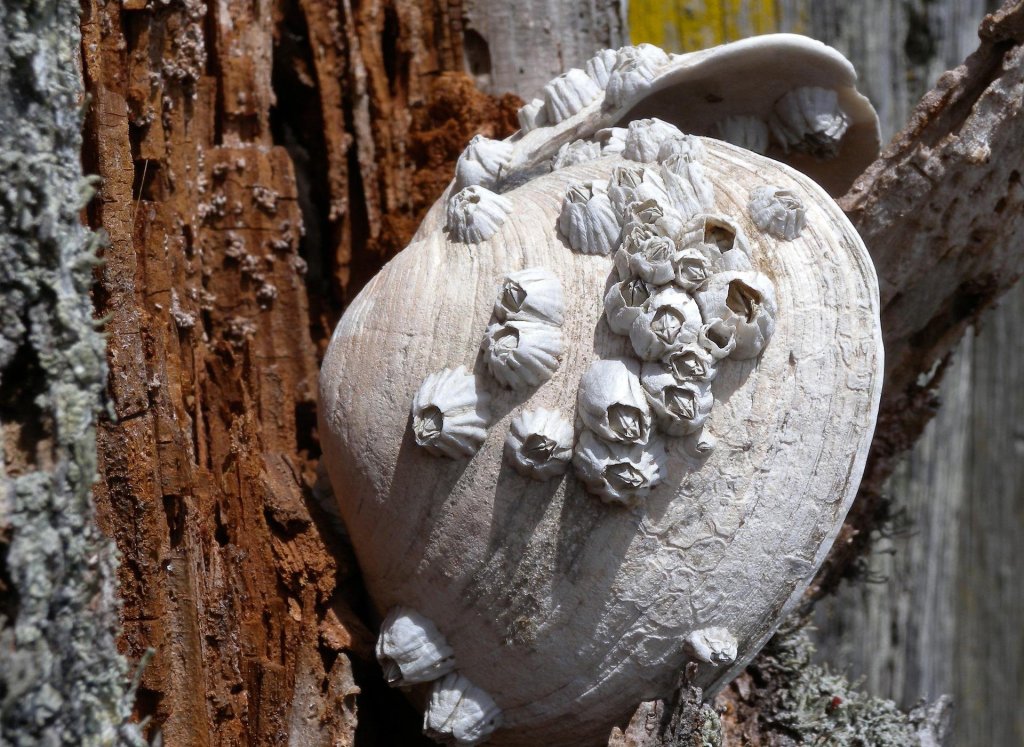
I resonate with Donald. S. Whitney, “The older you get, the more you tend to accumulate responsibilities like barnacles.”
Just when I think I am moving through the waters of 2022 smoothly, one morning I wake up and it starts to feel like hard work. Hauling myself out of the metaphorical water, I realise that a collection of small and large responsibilities is contributing to this drag. How did I collect so many, I wonder? How did I take on so many responsibilities? And why me?
I’m told, that all boats that are moored in the water need to come out from time to time to have the barnacles scraped off. Barnacles happen. These sticky little crustaceans love boats because they are so solid and strong, with surfaces easy to stick to. And the ocean is full of barnacles looking for a host to cling to. To save the boat’s paint job, the best way to remove barnacles is one by one with a putty knife.
And so, like barnacles, additional responsibilities seem to have attached themselves to me, increasing the drag and my inefficiency. I don’t want to cover myself in antifoul, so nothing at all becomes my responsibility. But I do need to be mindful of removing any unnecessary responsibilities when they are small, and not-so-stubborn to pry free. Much easier to remove a lone barnacle than a whole colony.
I acknowledge that over responsibility is an issue of mine. Being dependable and solid is a good thing. But it is possible to go too far. Before long I become overwhelmed with obligations and lose my ability to do anything well at all. Perhaps, I will never stop the accumulation of responsibilities, but the lesson here, is to be diligent in removing unnecessary duties when they are small.
This is my mood, as the middle of the year looms. When will I learn I am human, and there are limits to what I can achieve anymore? Taking stock of what’s mine and what belongs to another, is a start. Experts say for those of us that are over responsible, it’s time to do something just for fun, and ignore the to-do list for a moment more.
But, how can I do that, when I hear of war, and rumor of war on distant shores? It is hard not to be alarmed or feel some responsibility at all. My neighbor is suffering, there are people going hungry, and families without a home. How is any of this not mine to be responsible for?
Well, some of it is; but, not all! I am reminded once again that I am but one human, and not the saviour of it all. There is another, called Jesus, who is the Saviour of this world. My responsibility is to listen to His voice, to be sure what is mine to be responsible for, what belongs to others, and that which I can leave with Him. Perhaps, I can also ask for help to remove some of those barnacles I have collected on the way.
‘The tide that carries us farther and farther away from our beginning in times is also the tide that turns and carries us back again” – Buechner.
Be warned, I was told. There may be too many skeletons in that family’s closet. Stories of womanizing and molestation have been whispered for years. Lots of shame and pain in this dusty old cupboard. And it all started with one man, my great grandfather, who left foreign lands, to come to Australia. His migration is not so ancient at all, but a mystery. And, I want to know from where and why, did he come?
Last month, I opened the well aired cupboards of my father’s ancestors. I can trace back his forefathers, to their Australian arrival in the 1800s. This much was easy. Someone else has brought theirs stories to light. Their families came from a village in Prussia, now located within the borders of modern-day Poland. They were among a wave of migrants to sail to South Australia in the mid-1800s. They were German, but not actually from Germany. Their steadfast faith in God, and their determination for religious freedom, meant whole families sold up, to flee both Prussia and persecution. Migration allowed these Old Lutherans to worship freely on the foreign soil of Australia.
But I am more than my father’s daughter. I am also my mother’s. And it is in one of my mother’s family closet that dwells a few dusty, old skeletons. She had started to look but did not finish the work. She died a premature death. One, I attribute to the trauma of unhealed sins hidden in one of those closets. I found photos, and some photocopied notes. And remembered stories about different times. Stories about relatives I never met. Some of them not very nice at all.
In a bid to fill in the gaps, I signed up for one particular, online ancestry database. I am among ninety-eight million people in the world, who have done the same. Why, all of a sudden, am I so curious about my family tree? Is it because I am closer to my death date, than my birth. Perhaps it is as Frederick Buechner says, the older we grow, the more we find ourselves returning to the days when we were young. And for me, it is returning to those stories I heard around cups of tea, at my grandfather’s knee.
It turns out this skeleton is also German. But, may be not as noble as the others. Many questions remain unanswered. And, I am more curious than ever. I am full of questions about the shadows and bones in this particular closet. Questions like, why did my great grandfather migrate to Australia? Was it to avoid military service in his motherland of Germany? Like so many of the young men of his time, was he too at odds with the increasing militarization of their country. Or was it opportunity, and a free passage paid by the government of Queensland? Did he leave behind parents and siblings too? What did they think about him leaving them? Great Granddaddy, how did you handle being vilified by your neighbours, only a decade later, when the Germans became Australia’s enemy? If the dates are true, then you also carried the shame of fathering your first child before you said your marriage vows to Great Grandma. Did you love her? And why, oh why, did some of your sons turn out that way?
My pop was born into this family. I don’t remember him being anything like his brothers were purported to be. Perhaps he did have a little charming rogue in him, as they most certainly did. But then his world was turned upside down by the disease of Diabetes type one, diagnosed in his twenties. He would have been a child of a German, during World War One. And a husband and father with a German name during World War Two. He faced the prejudice of both ethnicity and disability, as well as the challenges of the Great Depression. Work for Pop I heard, was hard to find, and even harder to hold down; especially when a diabetic coma threatened regularly. He found work in pineapple farms and cutting timber; none of which where permanent careers. He and my Nan relied on the generosity of family, and often sought accommodation on family land.
I only knew my pop, as a tottering elder living with our family. In some places his teeth were jagged; in others none. He sipped tea with me, and preferred his biscuits, first dunked, and mushy done. I remember him with flyway white hair, and falling pants hitched up with a piece of bailing twine. He often had a twinkle in his eye, and up for a yarn. Charming is how I remember him. But truly, only eyes for his Rita, my Nan…and me too, when I came for tea.
He didn’t talk all that much about the other brothers. They made my Nan uncomfortable, and one brought shame and suffering to my mother. Do I really want to go there, and dig up their stories? When, other closets are swept clean, with fewer skeletons.
What good does it do, to go rummaging through the past, and search dark places for the broken pieces and secrets. Will it help bringing them into the light? Will it help telling their stories? Tread carefully, I hear. For now, I shed tears vicariously, for lost hopes and lost lives, all due to the complex migration history of one man, who’s DNA I carry. What do I do with this tide that has carried me to distant stories, and skeletons long buried? Does anyone want to hear these? Or do I leave them to float away again, to the distant shores they came from?
How do you celebrate birthdays? What’s more important, the present, the cake, the meal, or who is there to share it with you? What do you expect from yourself and others, every year you have a birthday?
As a child, birthdays for me were simple. Family finances were stretched, so the present was not grand. The best part for me, was the home-made cake – usually chocolate, shared with my fam. Nan and Pop were there too. Soft drink was a luxury, so a couple of bottles of pop on the table was special.
When my children were little, I did the same. Occasionally, I would throw a special party. Mostly, it was a home-made cake shared with grandparents, cousins and aunties. As young adults, I determined that their milestones would not pass without some fanfare. My baby turns thirty this year, and she will be celebrated with a Tuscany themed lunch, on the lawn.
February is my birthday month. As a child, I shared the month with my sister and mum. And yes, we had cake for every one! This year, I shared not just my month, but the actual day with my grandson. And thanks to his mum, we had cake times two. He may not remember his first birthday, but photos will remind him who he shared this day with. In attendance were his parents, his Pa and grandmothers, times two. We call ourselves Oma and Amma. He will too, one day soon.
I am pretty sure Harper had no clue that his birthday was an event. Perhaps he wondered who those old ladies were; grabbing him and cooing, so he would smile for the camera. My hope is that he will know just how loved he is and that he matters to many. And that appreciation for butter icing, was first introduced with birthday cake.
Having lived over five decades around the sun, many birthdays have come and gone for me. For some inexplicable reason or reasons, many of my milestone ones have been tinged with sadness. Mum was in ICU, while I celebrated my sweet 16th. I lived on the west coast of Australia, and my family and friends were on the East coast, for my 21st. By the time I was 30, I was a mother of two young children, so this birthday slipped past with a dinner at the local pub. I planned a party for my 40th, but for a number of reasons, it did not go according to my plan. My 50th was mostly spent in the air. Sitting beside a stranger, between Brisbane and Manilla – somewhere. There was cake. But that was the day after.
Did you know that birthday blues are a thing? According to Vanessa Van Edwards in “Birthday Depression: Why Birthdays are so Hard”, there are a number of reasons people find birthdays simply depressing. Birthdays remind us that we are getting older. And what we had hoped to accomplish since the last birthday or milestone, may not have transpired. The celebration itself usually has expectations surrounding it; whether one’s own or others. We are easily disappointed when the celebration falls short. Sometimes, it is discovering the love and excitement of childhood, is simply not there anymore.
Van Edwards suggests we reflect on our answers to these four questions. What was the best thing that happened last year? What did I learn last year? What do I hope will happen this year? And, what do I want to learn this year?
My takeaway, is that others struggle with birthdays too. Did I say that? That is true! And, by remembering someone else’s birthday, and showing love and appreciation on their day; I might just make the difference between a day that’s blue, and their best birthday ever! So, thank you to my friends and family, who remembered my birthday. For all those reasons, and maybe more that I don’t know, you make the difference between a day that is often blue, and the best birthday ever!
Although, can I say, that having a grandson born on my birthday was the best thing that happened to me last year. And this year. And maybe forever. And then there’s always cake!




 On the Blog!