Christmas Eve has arrived. And after a frantic end to the year, I love the way the pace finally slows. There is food being prepared, conversations wandering, and the simple delight of family sharing space.
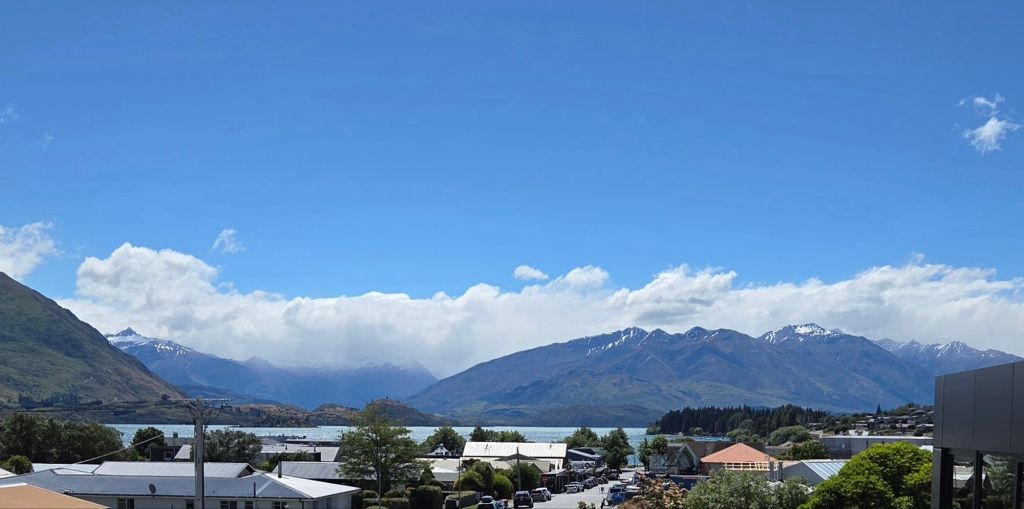
This year, Christmas Eve finds us in a borrowed home overlooking Lake Wānaka in New Zealand. It includes a table large enough for our son and his wife, a joyful grandson, a daughter who has travelled a long way from London to be here, and extended family arriving and settling in nearby. The windows of our house hold the lake and the sky. The house, and my heart, feel full in the best way.
Christians speak of this night as the coming of Emmanuel; God with us. Not a distant or abstract deity, but One present in the middle of ordinary life. This is what with us looks like this year: a shared table, food offered with a little less fuss, small gifts tucked into Christmas stockings, and weather ten degrees cooler than home back in Queensland.
In a world that often insists Christmas is about striving and more stuff, I am grateful for the quieter invitation; to notice where God has already drawn near. In the people we love, the place we have been given, the moment we are living. Tonight, this is enough for me.
Wishing you a gentle and blessed Christmas, wherever you find yourself this evening. And, may you know something of God with you.
— A gentle reflection for a hurried world, on Christmas Eve.
For most of my life, I prayed for strength; now I find myself praying for gentleness. I used to believe that if I just tried harder, life would finally work — and maybe I’d finally be thinner. But sooner or later, effort becomes its own kind of exhaustion.
I have come to learn that our bodies are designed to help us survive challenge, not to live in constant pursuit of it. When we push hard for long periods, our stress hormone cortisol stays elevated. At first it fuels motivation and alertness, but over time it begins to work against us. High cortisol can disrupt other hormones such as insulin, thyroid, and estrogen. It tells the body to store fat and hold on to energy “just in case.”
For those of us living with autoimmune conditions, this constant stress signal can confuse the immune system, intensifying inflammation and fatigue. I have come to see that this is not just theory. It is the very pattern I find myself caught in, and it only adds to the stress I am trying to escape.
What begins as determination can quietly become depletion. The harder we try to control, the more our bodies interpret life as unsafe. Muscles tighten. Sleep fragments. Digestion slows. The healing systems start to switch off. It helps to remember that this is not a moral failure; it is simply biology asking for safety.
When we begin to interrupt that loop by resting, breathing, and nourishing ourselves kindly, something sacred happens. Cortisol steadies. Hormones rebalance. The immune system begins to trust again. Compassion becomes chemistry. Gentleness becomes medicine.
I am learning that growth doesn’t always come from pushing harder. It’s not easy, especially when you’ve spent a lifetime equating effort with worth. Yet the work now is asking me to be quieter; to listen more deeply to the wisdom of the body, the whispers of the Spirit, and the longing for peace and a non-hustling life.
I have often called out to God when I am at the end of my rope. Lately I am discovering that He meets me within these limits, not just at the end of them. He is not the One who demands more, but the One who abides when we can’t do more.
So the next time we catch ourselves looping, planning, pushing, or punishing ourselves for not changing fast enough, let’s pause instead. Take a breath. Ask softly, “What might kindness look like here?”
What if the truest transformation doesn’t happen through force but through gentleness? And the work is the steady turning from self-criticism to self-companionship; from striving to trust.
If we traded willpower for wonder, what might we change?
When did I become old? And, who says I must retire, just because I turn 60 next year? I do not dispute the tally of birthdays, the development of wrinkles and grey hairs, but I do take exception to being pensioned off like an old nag turned out into her forever paddock.
Like most deeper issues in my life, they rattle around the fringes of my subconscious, stealing joy and undermining my momentum, until I can finally name what has been bothering me for some time. This last month, I finally realised that I was giving up on much of life itself, because I believed that my age dictates, I do that. Feeling like time is running out, and I am no longer valued I started to believe that that forever paddock was all I had to look forward to.
It all started five years ago, when I resigned from my then job, citing I would like to spend a bit more time with my new grandson. Immediately, people spoke of me as retiring. I never once said the word. And if you saw my superfund balance, you would know that was not an option at aged 55. I took on another role after that, initially valued because of my seniority. When I noticed that my junior colleague was afforded opportunities I was not, my query was dismissed with a conciliatory comment. When I resigned from that position several years later, rumours circulated that I had retired once again. Not so! That superfund has still not miraculously ballooned, I have another decade before I am even eligible for the senior’s pension, and once again who says because I am a certain age I must retire from meaningful work?
Of course, others have officially retired at this age. Some of my friends are in that category and are traveling Australia with the quintessential four-wheel drive and caravan. Good for them. But what has impacted me the most is the assumption that I am close to expiring. I feel that this tag attached itself to me like one of those pesky, bush flies, as I slipped into the last third of my life.
Let me start with exercise classes. Who decided to base exercise around an age rather than ability? It seems the fitness industry training organisations do. I have witnessed several instructors, studying their fitness certificate, recording sessions with simplistic training protocols specifically for the over 50s. And yet, I go to a gym where most days I work out with other women represented by every decade up to their 70s; lifting the same weights, if not more, and generally keeping the same pace. One of the fittest, strongest, and leanest women in the gym is over 60! I love the fact that my gym’s trainers do not look at age as a barrier. Whist I appreciate the consideration to limitations that might come with age, lumping all people into the over 50s feels a lot like simplistic stereotyping.
This is not new to the workplace of course. A 2021 Australian Human Rights Commission report found that around 30% of Australians aged 50+ had experienced age discrimination in the workplace. This ranges from assumptions around ability because of age, promotions going to younger workers, and includes stereotype comments, exclusion from workplace culture because of age, and even benefits being denied under the assumption they are “winding down” in their careers. Yep, I can vouch for that. And then there is the matter of simply being overlooked because one is too old.
The media often reinforces ageist stereotypes, portraying older people as frail, forgetful, or burdensome rather than active contributors to society. In contrast, youth is often celebrated, creating a culture that undervalues aging. We see this with the way older characters are portrayed in the movies: unrealistic beauty standards, negative phrases used in the news, a lack of diverse, realistic, and empowering representations of aging.
Am I alone in this? I think not. I have heard it said that other women around my age, who have spent the best part of the past two to three decades caring for others, are only just getting their second wind. I am constantly encouraged by women who the world says are ‘old,’ publishing another book, running their own business, and clearly living purposefully.
As a Christian, I do not believe that God attaches a use by date to our gifts and talents. Nor, do I believe that we are designed to quit all work at a certain age and focus on our comfort and enjoyment. The idea of retiring into a life of ease with a nice superannuation nest egg, is a modern concept and even then, is not everyone’s reality. There are many of us, especially women, that must stay in the workforce just to live, and certainly do not need the barrier and bias of ageism.
So, no—I am not expired. I am vintage. Still complex, still evolving, and yes, still useful. I may be entering what some call the “third act,” but I plan to rewrite the script. Age has given me experience, resilience, and a sharper sense of who I am and what I bring to the table. What I am leaving behind is the tired narrative that aging equals decline. I am not ready for the forever paddock—not when there is still so much to contribute, create, and challenge. If society cannot quite see it yet, that is fine. I will just keep lifting heavy, speaking up, and living proof that purpose does not come with an expiry date.
Have you ever been in at a time and space in your life, where the past season ended but what comes next is far from clear? Five months ago, I finished up my part time job and left a faith community I belonged to for over twenty years. I had a sense that I was heading into a new season, albeit unknown, but I figured that the waiting in between would be over as soon as I caught my breath and had a rest. It has not happened quite as I expected.
Even though I chose this step, not everyone who finds themselves in this space does. Sometimes it is an unexpected job loss, or a chronic illness that interrupts life, or a divorce that looms through no choice of your own. It might be a stage of life or a stage of faith. This closed door can bring us into a new space of bewilderment and profound unknowing.[i] Often impatient for the new, and desiring to just move one, this season in between feels like we are stuck, and we are desperate to move on to the new. Some may numb out, choosing sugar, alcohol, or drugs. But what if this transition space has a purpose all its own?
The ancient Celtic monks call these in between times liminal spaces or thresholds. This transitional space is often the result of leaving behind something that feels comfortable and safe. It can also provide space for God’s spirit to do a deeper work within us. Christine Valters Painter in ‘The Souls Slow Ripening’, says that in the monastic tradition they have a custom called statio, which‘is a holy pause full of possibility’ and involves the practice of stopping one thing before beginning another. It is also the practice of pausing prayerfully. This practice invites us to let go of what was behind us, so we can fully step into what comes next.[ii] In a material sense, it is like arriving at the threshold of a doorway, to pause and reorient one self, before moving through.
What then if this pause is longer than we thought and instead of being wasted time, is a gift instead? Mandy Bayton suggests that some of the gifts can be found in this space, where we ask questions and wrestle with answers, where we might re-examine faith, or grapple with doubts, or confront fears, and where we get to explore hopes and reimagine dreams.[iii] While we are not to stay in this space, it promises to be transformative space that encourages us with the possibility of the newness to come.
I’m not done in this space, so I cannot name the gifts I have found – yet. I have been journeying with others who are guiding me in this space. What I do know is I would be negligent to ignore its grace and value. I pray that you too will meet Jesus in your liminal spaces, and you too are transformed and encouraged by the gift of grace found here.
How do you celebrate birthdays? What’s more important, the present, the cake, the meal, or who is there to share it with you? What do you expect from yourself and others, every year you have a birthday?
As a child, birthdays for me were simple. Family finances were stretched, so the present was not grand. The best part for me, was the home-made cake – usually chocolate, shared with my fam. Nan and Pop were there too. Soft drink was a luxury, so a couple of bottles of pop on the table was special.
When my children were little, I did the same. Occasionally, I would throw a special party. Mostly, it was a home-made cake shared with grandparents, cousins and aunties. As young adults, I determined that their milestones would not pass without some fanfare. My baby turns thirty this year, and she will be celebrated with a Tuscany themed lunch, on the lawn.
February is my birthday month. As a child, I shared the month with my sister and mum. And yes, we had cake for every one! This year, I shared not just my month, but the actual day with my grandson. And thanks to his mum, we had cake times two. He may not remember his first birthday, but photos will remind him who he shared this day with. In attendance were his parents, his Pa and grandmothers, times two. We call ourselves Oma and Amma. He will too, one day soon.
I am pretty sure Harper had no clue that his birthday was an event. Perhaps he wondered who those old ladies were; grabbing him and cooing, so he would smile for the camera. My hope is that he will know just how loved he is and that he matters to many. And that appreciation for butter icing, was first introduced with birthday cake.
Having lived over five decades around the sun, many birthdays have come and gone for me. For some inexplicable reason or reasons, many of my milestone ones have been tinged with sadness. Mum was in ICU, while I celebrated my sweet 16th. I lived on the west coast of Australia, and my family and friends were on the East coast, for my 21st. By the time I was 30, I was a mother of two young children, so this birthday slipped past with a dinner at the local pub. I planned a party for my 40th, but for a number of reasons, it did not go according to my plan. My 50th was mostly spent in the air. Sitting beside a stranger, between Brisbane and Manilla – somewhere. There was cake. But that was the day after.
Did you know that birthday blues are a thing? According to Vanessa Van Edwards in “Birthday Depression: Why Birthdays are so Hard”, there are a number of reasons people find birthdays simply depressing. Birthdays remind us that we are getting older. And what we had hoped to accomplish since the last birthday or milestone, may not have transpired. The celebration itself usually has expectations surrounding it; whether one’s own or others. We are easily disappointed when the celebration falls short. Sometimes, it is discovering the love and excitement of childhood, is simply not there anymore.
Van Edwards suggests we reflect on our answers to these four questions. What was the best thing that happened last year? What did I learn last year? What do I hope will happen this year? And, what do I want to learn this year?
My takeaway, is that others struggle with birthdays too. Did I say that? That is true! And, by remembering someone else’s birthday, and showing love and appreciation on their day; I might just make the difference between a day that’s blue, and their best birthday ever! So, thank you to my friends and family, who remembered my birthday. For all those reasons, and maybe more that I don’t know, you make the difference between a day that is often blue, and the best birthday ever!
Although, can I say, that having a grandson born on my birthday was the best thing that happened to me last year. And this year. And maybe forever. And then there’s always cake!
I feel a strange resistance this year; a resistance to the pursuit of acquisitions and adventures. Instead, I feel the need to explore the motto ‘think less and feel more.’ My first quest is beauty.
I want to behold things of beauty, and send the ugly to the shadows. Instead of picking scabs and running my finger along the scars, I want to focus on all that is beautiful in between.
Beauty by definition is the very quality that brings delight and pleasure to the senses. Beauty is more than what we see, it is also in what we hear, we taste, we touch and we smell. It is not always that our senses are not operating. It is that we are not conscious of what they absorb. It may not be that I need to feel more, but slow down enough to allow my senses to explore.
I take in a deep breath, and I smell summer. Freshly mown grass. The air heavy with pollen. A tickling breeze that carries the smell of barbequed onions.
I listen, and I hear noises. Murmuring voices and a saw-mill whirring. And then silence. But the world is not really silent. Is that cicadas I hear? The song of the butcherbird?
The spices of my chai tea and the sweetness of honey lingers. I reach for the cut watermelon in the fridge. The bright red flesh is beautiful, just as its sweetness, that does not disappoint.
The day is heating up and the humidity is rising. The tickling breeze that flutters over my bare limbs is welcomed. It’s beautiful.
I choose to ignore the weeds in my garden, and the grass that needs mowing again. I spot the butterfly flitting from leaf to leaf, adding a splash of yellow to the green. How beautiful are the red chilies; glossy and heavy on the plant. The lime tree is laden with fruit; as always. I marvel at how one cluster of citrus flowers, sets into a cluster of perfect fruit, growing daily until ready to eat. Or drop into a cool, refreshing drink.
What is beauty to you? Is it smooth or rough? Is it cool or warm? Is it light or dark, or coloured? Is it loud, is it soft? Or a range of sounds, making music?
Is it a matter of perspective? Is it subjective? I will stop there, because that is too much thinking.
The Bible talks about beauty from ashes. (Isaiah 61). How does beauty rise out of grief and loss? It’s a promise that the God of the Bible has the capacity to take something so ugly and turn it into something beautiful. I can seek beauty but I am not the creator of it. Co-creator maybe. Let’s not overthink that either.
I cannot replicate the pink and blue hues of a sunset, reflected in the silver trunks of the sentinel gum trees. If I was an artist, I might paint that, capturing the beauty of the sunset. If I was a photographer, I might snap that too. If I was a musician, I might record the song of a bird, or the ripple of a breeze. No essence replaces the flavour of a ripe watermelon; but a chef can present it to eat. In a world that is presented too often as two dimensional; how do we capture the texture and its depth? 3D does little to replace the experience of being present in the world, with all our senses.
Will you join me in finding and restoring a sense of beautiful, implanted in our soul by the Lord.
“A man should hear a little music, read a little poetry, and see a fine picture every day of his life, in order that worldly cares may not obliterate the sense of the beautiful which God has implanted in the human soul.” ― Johann Wolfgang von Goethe
‘Do you want to visit your old family home?’ my husband asked, as we drove past the turnoff, on the remote, dusty road.
‘No, I said. ‘I’ve done that before. What good would it do, to revisit the decay? Leave it to my memory.’
Twenty years earlier, an old neighbour had taken me that way.
‘Be warned’ he said. The last owner stored grain inside, and the cattle have tramped through it.’
Cow pats lay drying on the aged, grey hardwood of the wrap around verandah. The homestead was already old before I was born. The rust on the corrugated roof, and the powdering pastel, green paint was just a bit more. The holes, though, were much bigger. The rain would now fall through and dripping would replace any thrumming.
It was the size that got me. I had remembered the verandahs as wide; wide enough for two cars to pass each other. At three, I had a red metal wagon, and my sister, a replica bug of bright red. We pedaled hard on those wooden boards, keeping back from the outer track and the dangers of the edge with no handrail. The French doors rocking on their hinges were smaller than I remembered. Dad and I used to stand together under their frame on a dry summer’s night, watching the storms roll across the paddock and the lightning fill up the sky.
The tank stand that sheltered our children’s afternoon play, now leaned eastward. I wondered how the tank on the top ever kept enough water to provide for our family. Any rainfall today would pour through the crumbling sieve that remained sprawled on short, tired stumps below. Back then, our only water was from this tank or a nearby bore. Very little was spared for the garden, so the yard did not offer lawn for us children to play on at all. Instead, there was plenty of dirt to dig holes in, and the clay underneath the tank stand formed the best mud pies. I recalled making bricks for a grandiose cubby house I planned at five.
I dared not go inside for fear of falling through a rotten board or encountering one of those snakes my mum would chase with her rifle. I would rather remember our family home filled with people, rather than mouse droppings, cow dung, and the webbing of now dead spiders. By staying outside, I could smell mum’s baking, hear my brother’s laughter, and pretend I was waiting for my dad to come in from harvesting. And that old rope spinning in the rafters that would unravel with the tiniest of tugs? Well, I pretended that it was still attached to the wooden swing, that was the joy in my sibling’s laughter.
The yard looked much the same as I remembered. More dirt than green, and more prickles than grass. The wisteria was still there, draped over the sagging, training wire on the verandah; a touch of lilac on a sepia backdrop. Every now and then, a breeze picked up a bundle of chaff that would tumble over the yard, like the ghosts of my childhood memories.
The drum halves, used to pot Mum’s red and orange geraniums, were twisted like the front stairs they accompanied. These rusting relics were from a time before recycling became trendy. No one else came after us to fill them with flowers, and this old Queensland lady was too far gone now to ever belong to another family.
I could not bring myself to walk out back. I suspected the cast-iron, clawfoot bathtub had long been prised out of the lean-to. With the water dried up and the taps rusted shut, I daresay the green frogs who shared this wet room, had long hopped away. I did not need to see the old thunderbox to know that families of red back spiders had taken up residence.
Instead, I remembered our Teddy, the black and white Collie dog snoozing in the sun. I saw cats and kittens, guinea pigs and chickens. Kangaroos and emus. And wheat in the paddock beyond. I heard harvesters and diesel generators. I smelled kerosene, the wood fire burning and the lingering scent of first rains on the dust of the freshly plowed paddocks.
‘Let’s go’, I said, coming back to the present.
I left as I came, down a graded track, winding over the creek and through a gate. As I said to my husband, I would rather remember this old lady as a home, than a derelict house and a hump of corrugated iron and timber. I agree, that a house is only a home, when it is filled with people.
To paraphrase a proverb: timber and iron makes a house, but the laughter of children makes a home.
If you were asked to describe an experience that brought you great joy, what would it be?
In a small group discussion, I was asked a similar question. “Describe an experience in which God did something for you that gave you great joy?” I have to be honest, this question really stumped me. If you asked me about my struggles, disappointments, my hurts or my regrets I could list them straight away. Why then, did such a simple question bewilder me? Especially, since experiencing joy was at the top of my 2019 list.
So, I did what I often do these days, I googled it. I found an excellent little YouTube clip of Brene Brown with Oprah Winfrey on her “Super Soul Sunday”. She said joy is an emotion many seek, but it’s by far the most terrifying feeling that we face. “We are afraid joy will be taken away, so we beat it to the punch.” “We are trying to dress rehearse tragedy to beat vulnerability.”
How many of us have had our joy taken away, maybe even stolen by hurts, regrets or disappointment? Perhaps we have become worn down by life’s challenges and when we get a glimpse of joy, we push it aside fearing that something bad is going to happen instead. We are waiting ‘for the other shoe to drop’, as if we deserve suffering. In doing so, we lose our joy.
What if suffering and joy can co-exist? And, what if joy is something we must choose? It is an act of the will to pursue joy…and if suffering does follow, as in this life it surely will, we deal with that when it happens. (I would say ‘and with God’s grace’.) We must hold precious moments as sacred and push aside our fears and anxieties about what might ruin this moment.
Richard Foster says “Celebration brings joy into life”. That’s why I did not hesitate to commit to driving ten hours to attend a family wedding in a few weeks’ time. I am prepared to drop everything to attend a funeral, so why not grab hold of the invitations we are given to rejoice. What could give more joy than to celebrate the marriage of two beautiful young people in love.
Of course, not every day involves a wedding invitation, but there is plenty that we are invited to celebrate and give thanks for. Whatever happened to the family meal where people paused long enough to give thanks for their day and shared that together? Should thanksgiving be only a once a year event? What about the sheer joy of being alive and watching a sunrise or a sunset? What about the joy of being “rooted and grounded in God?” (Richard Foster, Celebration of Discipline p 252)
So, this week, I have made it my commitment to celebrate the good things in my life. I must start with being thankful. Brene says “cultivation of gratitude is the way home.” Scripture says “give thanks in all circumstances…” (1 Thessalonians 5:18) This week, I choose joy. Will you choose joy too?
“What if it’s not the circumstances that creates joy? It’s you!” (author unknown)
Today, Sunday, is the first day of Advent 2018. Maybe you recognise the word ‘advent’ from those calendars , of which you pop one square open every day until Christmas Day. Some calendars have a chocolate for everyday. I saw one today on a box of beer. It had a craft beer for everyday- and two for Christmas!
What does ‘advent’ actually mean? Apparently, it is a version of a latin word which means ‘coming’. Yes, it is the coming of Christmas, but more importantly it is the coming of Christ; both his birth and anticipated return.
I grew up in a traditional church where candles placed in a wreath were lit each Sunday until Christmas. These candles symbolise Jesus Christ being the light of the world. And each of the four Sundays of Advent and the corresponding candles symbolise something more of our anticipation of the coming of Christ.
My memory of tradition is a little rusty. Research reminds me that the first candle represents hope. It is also called the ‘prophecy’ candle. Hundreds of years before his birth, the prophets foretold of the humble birth of Jesus.
“Therefore the Lord himself will give you a sign: The virgin will conceive and give birth to a son, and will call him Immanuel. “(Isaiah 7:14, NIV)
I love that word ‘ Immanuel’. It is the Hebrew word which means ‘God with us’. Imagine the presence of God living with his people?
One of my favourite Christmas carols is ‘O come, O come Immanuel’; written in the 12th century and based on the prophets words found in the Bible. It reminds us of God’s promise of a Saviour.
Does our world need saving? Can we save this world by ourselves, or in spite of ourselves?
Sometimes the brokenness of this world and the brokenness of people’s lives around me can be hard to bear. I know some even say “where is God?”
But what if He is here-in our midst, weeping too for the brokenness and hopelessness of so many people.
I believe, that He alone has the power to save and turn around even the most hopeless and broken of lives.
What are you anticipating with the coming of Christmas? Where does your hope come from? Will you light a candle today and consider the Christ in Christmas? #writer#speaker #speaker
Do you hold on with light or tight hands? Sometimes I think I hold on too tightly to my opinions, my plans, my relationships, my possessions and even life itself. Sometimes I do not hold on at all. What if we are meant to hold on with light hands?
We have two puppies at my workplace that are always being picked up and cuddled, whether they like it or not. Some people hold on with very tight hands and the puppies can barely wriggle. Others hold on with light hands. The puppies never seem to complain but they do hide. I have noticed that they are more likely to respond to and even come out of hiding for those with the light hands.
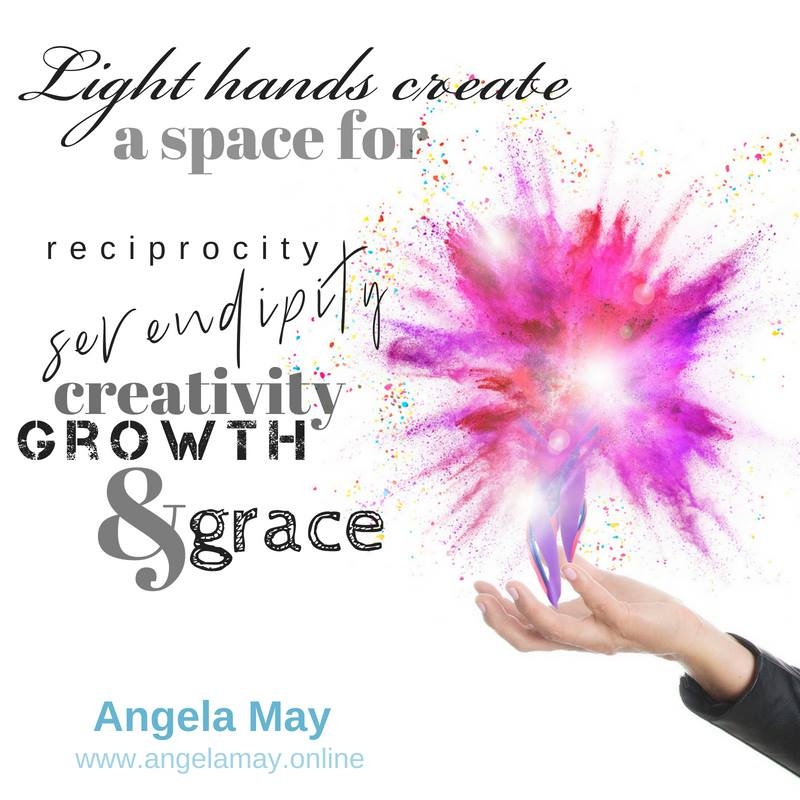
When we use light hands, we allow space for reciprocity, serendipity, creativity, growth and for grace. Tight hands are confining and closed and rarely allow any space for movement. We miss out when we hold on with tight hands.
I am a planner and an organiser. I have noticed over time that when I plan and organise with lighter hands the more room there is for something far greater to develop than I could have ever imagined or designed. At times it feels and even looks a little chaotic and messy, but it also has the potential for something beautiful to grow. When I plan with tight hands I squeeze out the opportunity for others to bloom and for the Divine to work in this space.
I feel the pressure in work and in life to plan with measurable, quantitative outcomes and as a result feel compelled to work with tight hands to execute these plans. Tight hands are limiting hands and belong to a world of ‘cannots’. I would need to let go of being right, of getting it right, expecting others to get it right and of making it ‘stack up’. What if instead, I was to work with light hands to provide a space for others to grow and God’s grace to manifest. I could focus on possibilities and relationships, foster collaboration and imagination and be delightfully surprised with the result-or not. Light hands are hands of possibilities and a world of ‘cans’. As Martin and Golsby-Smith said in their article “Management is much more than science”, “In the can world, the relevant data doesn’t exist because the future hasn’t happened yet.”
This week, will you be brave enough to hold life and your plans with light hands and see what develops?



 On the Blog!