Category: mentor

  • Finding true north in our work and life

    Finding true north in our work and life

    We were experiencing a crisis in parenting goals and conflict in our marriage as we co-fostered a teenager.  Our support worker sat us down one afternoon and helped us to understand what was going on.  It had to do with our values, he said and how we prioritised and projected ours in raising someone else’s child.  This crisis seemed to centre around whether this young person we were co-parenting, chose to adopt or dismiss our values.  This teenager had to weigh up not only our values, but also the values of his parents and his peers and decide what he would dismiss or adopt.  Tough gig, I reckon!

    How many of us ever really sit down and define what our core values are and whether we need to reconsider which one’s we prioritise-let alone project?  Life Coaching experts Patrick Williams and Diane S. Menendez promise that the meaning we seek and satisfaction we long for, is found when we align our work and life with our core values.  In order to thrive and experience full satisfaction we must be aligned.   This starts with identifying one’s core values. 

    I had a spiritual conversion in my mid-thirties.  My values were overhauled and realigned as I sought to live my life by the values of my family of faith.  I had been raised in a family whose values were aligned with a traditional religious community, so my realignment often involved rediscovering my roots.  The biggest overhaul of values involved throwing out values I had absorbed and prioritised unconsciously from the media and culture I was raised in.   

    Some of the refining that has occurred in recent years has been identifying which of my core values are driven by fear and which by purpose and meaning?  Which have been driven by the need to please others and which by the need to please a Holy audience of one?   The biggest joy has been ‘discovering’ or ‘rediscovering’ the me I was born to be before I tried to be someone else.

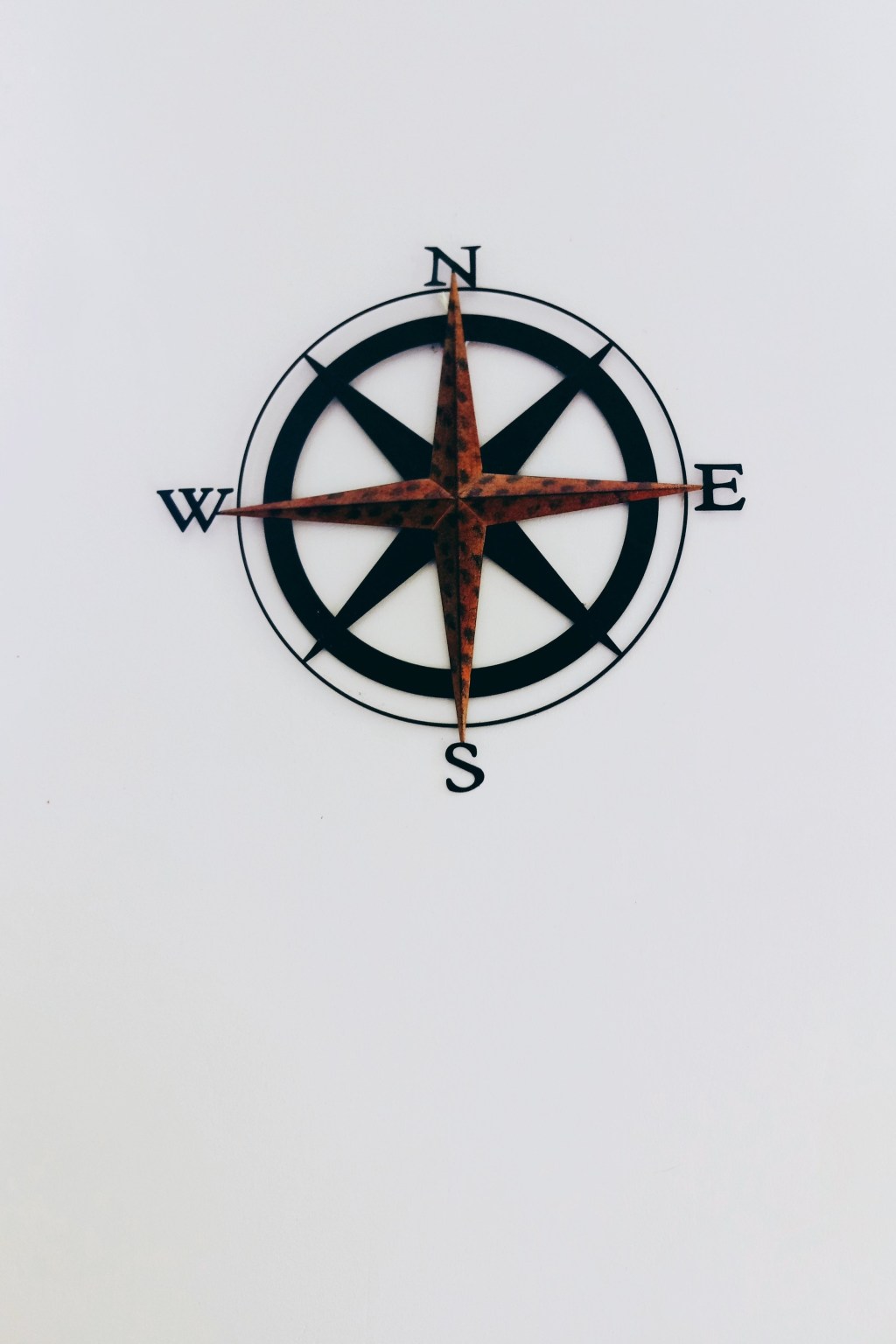
    Identifying and choosing our core values are like finding the true North on a compass. Redefining them feels like getting rid of negative magnetic interference and recalibrating this true north.  Finding this will help to find direction for our life and choices. 

    I will be the first to admit, surfacing and naming my core values has not been all that simple.  Most times I am not even aware how they direct my life; but they do direct my life in both habit and action.  It’s times of crisis, like our fostering co-parenting one, that I realise the importance of examining them and considering realignment and recalibrating them.  It is also in times of disquiet that I pause and consider what habits I need to change if I want to align my life and work to my core values. 

    Whose values guide your life?  When was the last time you identified the core values that direct yours?  Maybe the disquiet you feel or the crisis of belief is in invitation to realign or recalibrate and discover your true North. 

    As Jennifer Cummings says “Knowing my true north gives me the courage to focus my energy where I believe it should be, not according to what is popular or pleasing to others.” 

    Photo by Honey Yanibel Minaya Cruz on Unsplash.com

  • The benefits of being inefficient

    The benefits of being inefficient

    A little while ago I started wearing a fitness tracker. To my dismay I discovered I hardly moved all day. No surprises really, as most of my work is done at the desk and on a computer.   I set myself up so well that I had everything within my seated reach.  I am the sort of person that would feel guilty walking from my desk to the kitchen to fill up my water bottle without also taking out the rubbish and collecting up any dishes on the way.  I had also begun to purchase my groceries online so I could achieve more at my desk. Someone else ran the aisles for my groceries, packed them in their truck and delivered them to my front door.  I had efficiently and effectively made myself sedentary.

    There has been lots of chatter recently about sitting being the new smoking.  Under advice, I purchased my first standing desk so I can now alternate between standing and sitting. (I could not afford the treadmill desk.)  While this has health benefits it did not really address my inactive lifestyle. If I was going to add more steps to my days routine, I realised I had to give myself permission to become inefficient.

    Along the way I have discovered the surprising benefits of becoming inefficient.  Previously the visitor at my door was an interruption to my workflow. Gulping coffee and snacking at my desk was preferred to taking a break. Now I delight in chance meetings. My digestion is better for eating slowly. My new attitude to life has opened the door to new adventures.   Hyper-efficiency I discovered is the antithesis to spontaneity and serendipity.  It is also bad for my health.

    I am also enjoying kicking the addiction of multi-tasking. Just because I can does not mean I have to.  This type of juggling is not much fun and is stressful.  If this is inefficiency then it has provided a surprising tradeoff. Instead of being breathlessly busy and constantly planning I am enjoying the new singular focus and rediscovered what it means to be present in the moment. 

    I do not think I will ever become totally inefficient and nor am I advocating laziness and disorganisation.  However, in a world that prides itself in fitting more into the day’s schedule I say “At what cost?”  There are benefits to inefficiency.  It took my fitness tracker to remind me of that.   

  • Big thoughts and small talk

    Big thoughts and small talk

    I like to write and am very happy speaking from the front, but take me to a party and I’m rubbish at small talk.  I am comfortable with asking people deep and meaningful questions but out of my depth with light and entertaining conversation.  Sit me next to a stranger on a plane and I will bury my head in a book and put earplugs in to avoid having to make conversation.

    For an introvert-as I am, this is quite normal; though not always helpful. Hiding is not always an option.  Nor is it particularly good mannered.  Evidence points to the fact that not everyone welcomes deep conversations. So small talk is necessary I am lead to believe. 

    Weather gets a bit ho-hum.  Surely there are other people like me that have zero interest in sports.  There is only so much we can tell people about others or our family without breaching their privacy or being a gossip. Too many holiday dialogues sound like a bragging festival or a travel documentary. Does that only leave cute kitten and puppy stories?

    Good small talk does not have to be shallow. Our social media habits have done little to enhance good conversation with their practice of superficial and brief messages.   Perhaps it is time to rediscover the old art of a good conversation. 

    One aspect of making good small talk is preparing and telling a short personal story.  Much the same as preparing and practicing one’s elevator pitch.   Where an elevator pitch might be 30 seconds long, a small talk story can be a minute long.

    Small talk, I have deduced is harder than my big thoughts.  If I opened my mouth and let my thoughts tumble out I reckon I have zero chance of engaging someone in conversation or of being considered interesting. The quality of a good story is as much dependent on the words left in as the words left out. 

    Telling a good story and engaging another person in a light and entertaining conversation is an art.   It takes skill and it takes practice.  How many people do you know that do this well? Possibly very few if you count them when sober. Perhaps that’s why so many people hunch over their phones to tweet or post selfies whilst at a party.

    No matter how ordinary or routine our lives are, no one else has the same story or stories to tell.  Ordinary stories can be interesting if told well.  It is time to harness those big thoughts and create an interesting short story for making superb small talk.  Join me at the next party and let us practice the art of a good conversation together.

  • Kind words are like honey

    Kind words are like honey

    In our land down under where sarcasm is de rigueur I am often left wondering if kind words are considered to be only for the soft and the foolish.   

    The Bible says kind words bring sweetness to the soul and health to the body. (Proverbs 16:24) They sure do to me. Some days I reckon all I hear is criticism, sarcasm or silence.  It feels as if a little more of me shrivels as a result. It is as if my soul and body ache with the pain. 

    I recall some ten years ago after a close relative completed suicide that many people were especially kind to the spouse when they heard. They were generous in business dealings where they had previously been indifferent and hard nosed. They said kind words and were understanding when previously they had been otherwise.  At the time I struggled to understand why they could not do that all the time.  Is tragedy, I thought, the only invitation they have to speak words of kindness?

    I long to hear kind words.  I want to speak kind words to others.  Sometimes I have to tell my inner critic to shut up so I can speak kind words to myself.   

    If the Bible says kind words bring sweetness to the soul then perhaps it is possible we can entice a bitter soul to become less so.  If kind words bring health to the body, why not speak kind words then to others and to our self to bring health and vitality?

    What does it cost us to say kind words?  Is it our cynicism and defensiveness the reason we withhold kindness and opt for sarcasm or silence?  Perhaps we are reluctant to be kind in case the other person is not kind in return.  Instead of practicing our wit and our banter why not practice kind phrases.  Instead of recognizing faults why not look for beauty and good things in a person. Instead of being silent why not be vulnerable and commend another; maybe speak kind words to a stranger.

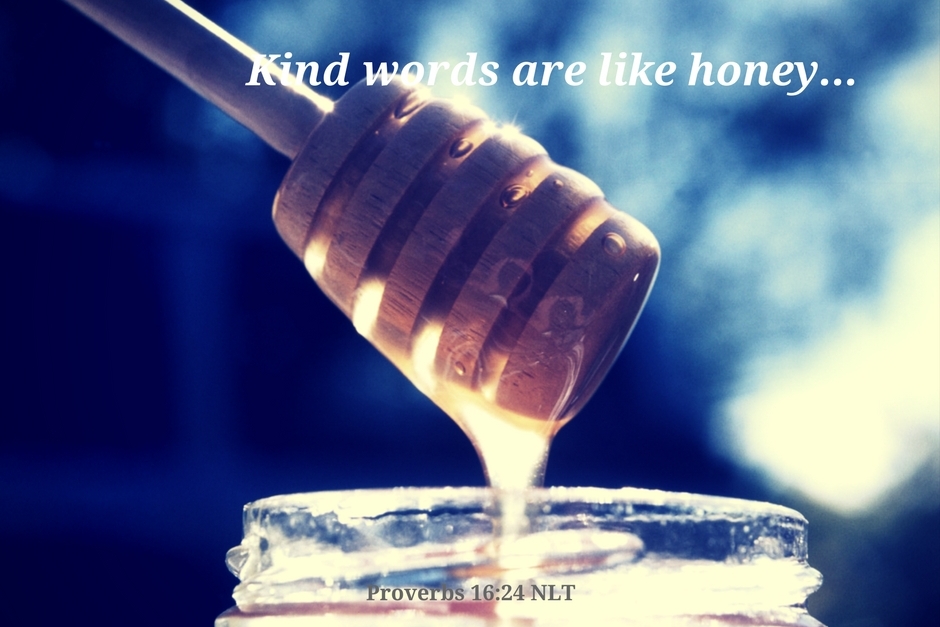
    Let us be honest, kind words do not cost us money.  Kind words are like honey. Why not spread a little sweetness and good health to another and make kind words de rigueur tomorrow.    

  • An Extraordinary Life…

    An Extraordinary Life…

    Is your life ordinary or extraordinary? I suspect that most of us would say our life is rather ordinary. Given the choice I reckon most of us would rather an extraordinary life.

    What if it is possible for all of us to have an extraordinary life? What if it is not out there as a vague dream of riches and fame, but rather right here; in the midst of the ordinary life? After all, the word extraordinary is made of two words: EXTRA and ORDINARY.

    Perhaps the extra is there for us every day; we just have to look for it, listen for it or accept it! And perhaps we can make it for someone else; by creating it, speaking it or giving it! The it being the EXTRA in an otherwise ordinary life!

    One of the pitfalls of an agenda filled busy schedule is that we do not always provide the space or create the opportunity for the EXTRA to be noticed. The extraordinary is there every day!  Perhaps we overlook it as we go about the ordinary!

    Take my roses. I am always amazed that something so beautiful would bud on such a lanky, thorny and ordinary bush. (Well mine are!) Roses are my favourite flowers and it always brings me great joy to pick a new bloom and place it in a vase inside.

    This concept of extra in the ordinary challenges me often. Many years ago, our little family of four used to walk and rollerblade around the bitumen walking track of a nearby public park. I asked my neighbour one day to join me on my regular walk. She declined because she said it was “ordinary”. That irritated me. She had dismissed the park and its walk before even giving it a go. When I set off on my next walk, I looked a bit harder at the park and started to feel that she was right and it was rather ordinary; ordinary people, ordinary dogs, ordinary grass, ordinary trees, ordinary sky, ordinary playground. It was an ordinary park. As I walked past the ordinary pond, with its ordinary ducks I noticed for the first time a rather ordinary nest of twigs and branches floating on the ponds edge. The water was an ordinary brown as were the twigs and the reeds around the pond.  As I paused a little longer, I spotted something contrastingly red and black. A waterfowl with its glistening black plumage and a bright scarlet beak was busy around the ordinary nest of twigs. I watched in fascination as three or four little heads bobbed out of this nest. “Extraordinary!” I thought. I had just witnessed the first of spring’s hatch in this otherwise ordinary park. For several weeks after that ordinary day, I especially looked forward to my ordinary walk in the park, because when I spotted those little chicks, my life became extraordinarily richer.

    Have you paused recently, long enough to listen to a bird’s call, a tune playing, and a child’s laughter?

    Have you paused to take in a sunrise or sunset, the cloud pattern in the sky, a flower as it blooms, the antics of a puppy or kitten?

    Have you paused to accept the smile of a stranger or the genuine compliment of a friend or colleague, the cuddle from a child or a lick from a puppy, the generosity on the road from a fellow driver or thanked a cheery and helpful shop assistant for a job well done?

    Have you offered a kind word today or filled the air with beautiful music?

    Have put flowers on your desk at work or gone the extra mile with whatever you do at work to make it look good ‘just because’?

    Have you ever surprised a stranger or a grumpy shop attendant with a cheery “Good morning!” or stopped to compliment someone with something positive you have thought, but never been game to say?

    Have you stopped at all today to look, to listen and accept the extraordinary in the life you live?

    When I next see you and ask “How’s your life?” Will you be able to say “I have an extraordinary life!”

  • When I die, will my inbox be empty?

    When I die, will my inbox be empty?

    We have a family motto “you can go play when the work is done”. The problem for me is that the work to be done keeps growing. The older I grow, the more practiced and efficient I seem to become at making lists and finding things needing to be done; and that is without others adding to the pile. I have multiple email inboxes, an in-basket, a clipboard, many ‘to do’ lists and calendars.  

    It occurred to me one day that I will go to my deathbed and still have not emptied my inbox or finished everything on my lists. Does that mean I never get to play?

    Jesus reminds us that the Sabbath was created for man and not man for the Sabbath. (Mark 2:27) God knew what he was doing when He rested from His work on the seventh day. The Sabbath day is gift and not a duty. It is a blessing for us to rest from our work for one full day, once a week. And that rest surely includes a rest from the oppressiveness of the lists, the various inboxes and in-trays.

    Experience has shown me that when I take a Sabbath to reflect on my Creator and gain an eternal perspective, my focus for the next week becomes clearer.  I am less likely to become obsessed with the irrelevant and overwhelmed by the ‘to dos’. Sabbath’s help me to clarify my priorities and dot point items on the lists lose their urgency and tyranny. Thank God for weekends!

    Sadly I am a slow learner. I confess that it is very tempting to use my weekend to push through and clear the pile or cross off a few more items off the list. And sometimes I do just that. The bit I forget is that before long I lose the perspective I so clearly need. I have also discovered an irony:  as quickly as I efficiently action items, my inbox seems to grow exponentially. If I am going to live and enjoy the days my Creator ordained, I need not wait until my work is done before I play.  It is okay to ignore the inbox for just one day!

    Am I the only one that needs to be reminded of this?