Category: speaker

  • Cooking is good for your soul

    Cooking is good for your soul

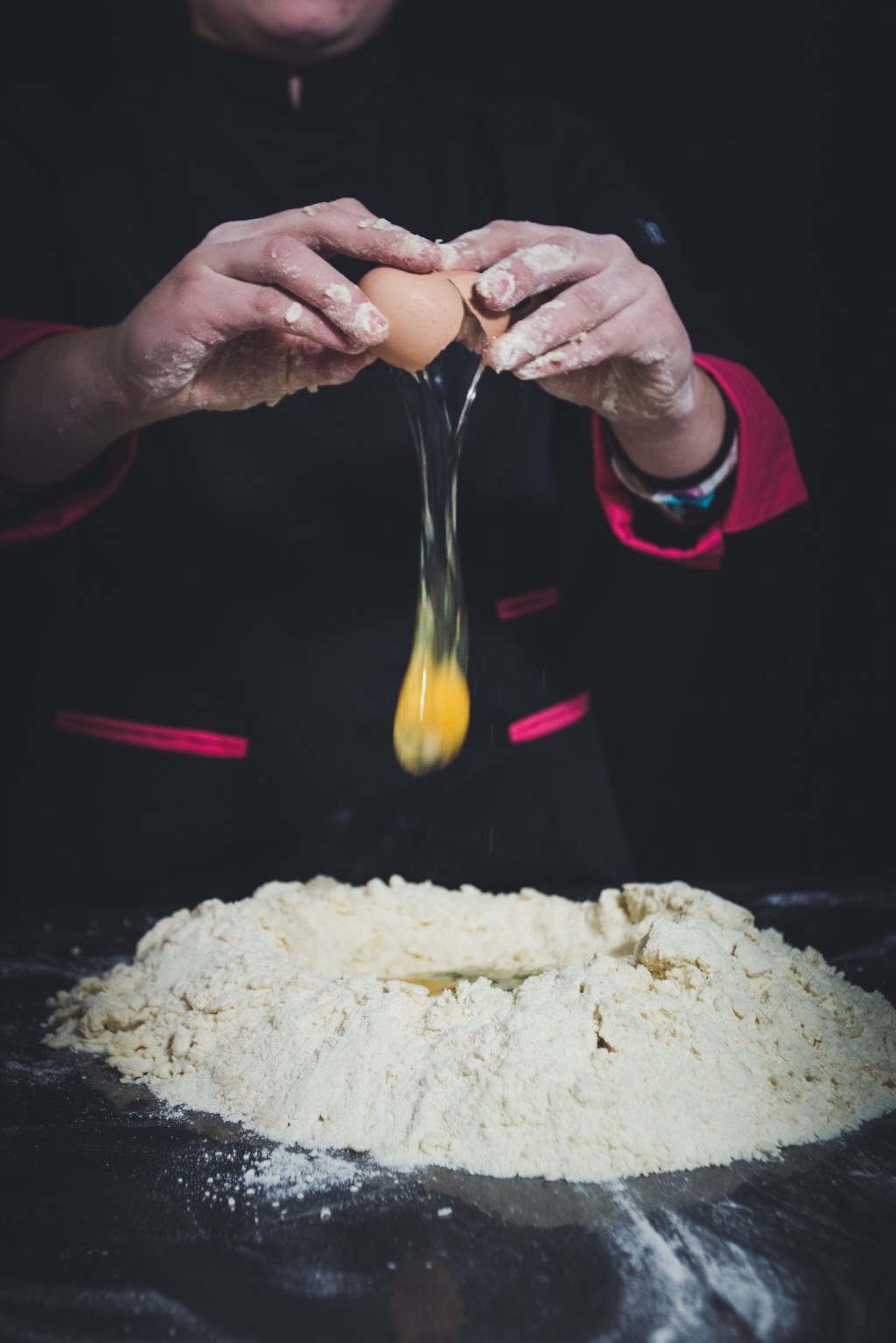
    I have been teaching cooking to high school students on and off for the past 12 years.  Intuitively, I have understood that these lessons involved more than the students learning a few new practical life skills. This week, I discovered a body of research and discussion around cooking as therapy.  More specifically, Julie Ohana’s research and work in ‘Culinary Art Therapy’.    

    Did you know that cooking is a form of mindfulness; it provides stress relief, improves social skills, sensory awareness and can build self-esteem as well? It is also a form of nurturing, a means to create bonds of belonging, builds community and is a form of altruism.  These benefits are more than incidental to the practice of creating something to eat; they in fact are the ingredients for something therapeutic.  Can you believe that? 

    Each week, I can confirm that I have students that benefit from simply cooking.  Because cooking requires full attention and involves all five senses, it is a great activity for students with ADHD and anxiety. It is a form of mindfulness. 

    The very fact that there is something to show at the end is not to be underestimated. For some, it may be the only class that delivers tangible evidence of success and a sense of accomplishment.  Even if it is imperfect, there is always someone willing to eat what is baked. As Linda Wasmer Andrews says “Cooking is a meditation with the promise of a good meal afterwards.” 

    Better still is when it is made with love to be given away to someone they care about; often family or friends.  Sharing food with others is known to have both physical and emotional significance-and not just for the person receiving the food! 

    Cooking is also a form of nurturing and a means to create bonds of belonging and community.  In turn these are linked to increased happiness, decreased depression and greater wellbeing. Whether it is a group of students rolling sushi or pleating Chinese dumplings around a workbench or sitting down afterwards to taste each other’s cooking, there is something special about the community that develops during this process. 

    Because all our senses are involved, cooking and food is also associated with memories which can link us to people in our pasts too.  It transcends even the present for making connections.  I have had a number of conversations with students, who like me, associate baking with positive memories of absent loved ones.  For some of us, it is almost a form of grief therapy.  “Cooking can help someone process those memories in a positive way and be able to allow the ability to cope with the loss, process it and move forward in a positive way.” 

    I do not usually need an excuse to cook; or more specifically to bake.  After reading up on “Culinary Art Therapy” I am even more convinced it is good for me…and others. 

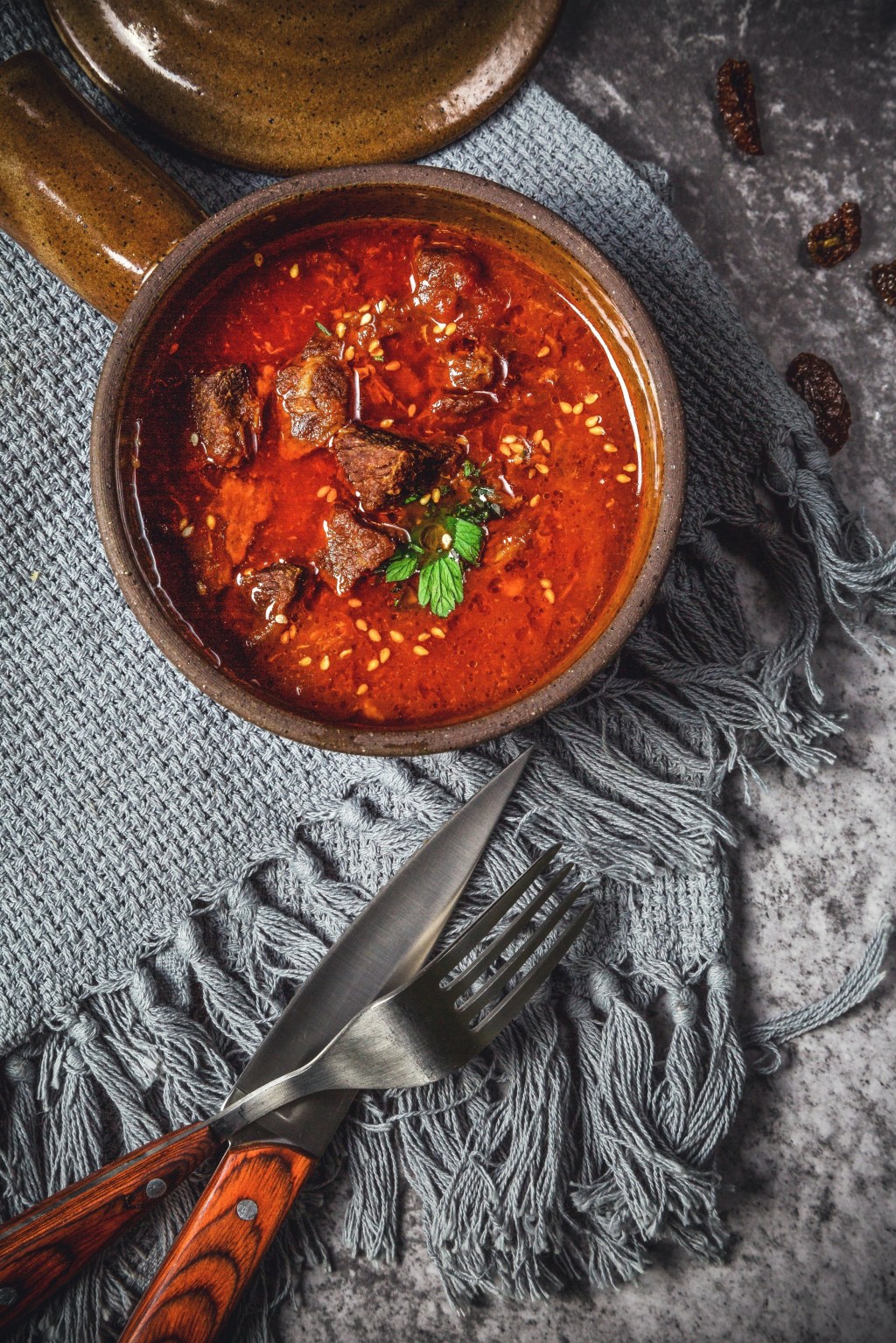
    photo by Jordane Mathieu on Unsplash.com

    Culinary Art Therapy

    Why Cooking Is Therapeutic & Makes You Feel Like Everything’s OK, According To Science

    Kitchen Therapy: Cooking Up Mental Well-Being

    How Something Called ‘Culinary Arts Therapy’ Can Change Your Life

    Psychologists Explain The Benefits Of Baking For Other People

    How Cooking Can Benefit Your Mental Health

    Healing That Uses Therapeutic Culinary Arts

  • Kicking the Busyness Addiction

    Kicking the Busyness Addiction

    This past week I have been on holidays.  Actually, for the first part of it, I wondered if I hadn’t just swapped addresses only.  Instead of being at work, I was at home; but still operating with a ‘to do’ list and a rigorous pace.  It was as if I could not stop being busy.  I began questioning myself “Am I addicted to busy”? 

    I admit I find it rewarding to have ticked things off of my ‘to do list’.  If my brain rewards me with dopamine when I complete a task, then I can think of worse things to do for this good feeling hormone!  Perhaps I should worry though when I cannot stop. 

    U.K Psychologist Jaimie Bloch, says a sure way to know if you’re addicted to busyness includes packing your schedule to the brim, panic at the thought of an activity free day, you can’t stop checking your emails and phone when you’re out and you feel the need to constantly be productive.  She says that busyness is often our way of avoiding our emotions and thoughts and busyness is often seen as a status symbol. 

    We even ‘humblebrag’ about it, Michael McKeown says.  Busyness is code for us being successful and important.   In his article “Why we humblebrag about being busy”, McKeown says we are in a cultural bubble which is caused by an unholy alliance between three powerful trends: smart phones, social media and extreme consumerism. He said the antidote to it is the pursuit of less. If we don’t then, one day, we will wake up to the fact that our overstuffed lives are as empty as the real estate bubbles’ waste of foreclosed homes!

    How do we pursue less then in our overstuffed and busy lives? We have to be still long enough to allow those thoughts and emotions we are escaping to catch up with us and deal with them.  During this process of being still some of us may just remember to breathe deeply again.  And while we do that we may also consider exactly what our priorities are and what we must now say no to.  Afterall, who wants to get to their deathbed and think ‘what a bunch of useless and insignificant things I filled my life with.’  We may also have to talk ourselves through those feelings of being unproductive, of missing out, boredom and whatever else we are trying to outrun.  For some of us, this is going to feel like a detox. 

    How do you slay busyness in your life?  In spite of my busy start to the holidays I think I have improved over the years.  I have stopped believing multi-tasking is good for me or even good at all.  I much prefer doing one thing at a time and enjoying it.  I still have ‘to do’ lists, though not as long nor so urgent.  I refuse to operate as a machine and prefer to do meaningful work; work that I have identified as important and important for this season of my life.   And I schedule time off.  There is nothing more therapeutic than hanging out in nature; going for a walk, a swim or just sitting and watching the world go by, taking in the smells, the sounds and the sights.   

    And that is how I finished my holidays; a weekend by pool and overlooking the beach-kicking my addiction. 

  • If your heart was a food, what would it be?

    If your heart was a food, what would it be?

    If my heart was a food it would be a chocolate cake covered in a thick chocolate cream. It would be rich, sweet and a little warm just like the memories I have tucked away there. 

    My first memory of chocolate cake involves my grandmother in our old farmhouse’s kitchen. I would have been no more than seven. It was a one bowl recipe where everything was added into the bowl and mixed up with my mother’s Sunbeam mix master.  We baked it in the wood-fired slow combustion stove in the alcove and ate it together at the kitchen table in the centre of the chequered linoleum floor.

    I would have to agree with psychologist Susan Whitbourne who says,  “Food memories feel so nostalgic because there’s all this context of when you were preparing or eating this food, so the food becomes almost symbolic of other meaning.”

    Food memories are also powerful and more sensory than other memories. Psychologists say this is because they are shaped by all of our senses.  They are also shaped by the company, the situation and the emotions involved.

    Food memories work both ways. I still struggle to eat corn relish as I associate this food with the stomach flu that coincided with eating a belly full of it.  I can still remember where I tasted it first and also remember the room where I threw it up!

    Decades have passed since I made my first chocolate cake.  My passion for baking has not waned. In fact, the more stressful I find life, the more you will find me in the kitchen baking.  I have moved on from a one bowl recipe (although I still have that one) to my favourite chocolate cake which is now a flourless one, which requires all sorts of complex processes and finished with a rich chocolate ganache.  One of my biggest joys is working alongside a young person and teaching them how to bake too; just like my grandmother did all those years ago. 

    Food means so much more than what we cook and what we eat. What memories does food evoke for you?  What memories are you creating?  If your heart was a food, what would it be? 

    Photo by Jasmine Waheed on Unsplash

  • Slow food, fast food

    Slow food, fast food

    One of life’s ironies is traditional slow food cooked fast. Did you know you can cook lamb shanks in a pressure cooker in thirty minutes today? Prior to pressure cookers and even slow cookers, a lamb shank was cooked slowly in a pot of stew or a very slow oven for at least three hours.  Full of flavour, and enriched with vegetables and herbs, a lamb shank’s meat is not only delicious but will fall off the bone when it is cooked long and slow.

    The lamb shank is traditionally a humble, cheap cut of meat.  There are four shanks on your average spring lamb and they are one of the toughest cuts of meat.    All that lamb leaping about requires muscle!  The shank, being the part below the lamb’s knee has to be cooked a long time in order to break down the sinewy tissue.  (Or not! If you have a pressure cooker.) 

    While not a member of the Slow Food Movement, I am a fan of local foods and traditional cooking methods.   For this reason, I resist cooking recipes under pressure when they were meant to be cooked slow.  I am also a fan of cooking from scratch rather than from a packet or a bottle. 

    I might be one of an increasingly rare group of people though; people who actually cook. According to research in the United States,  grocery shopping and cooking are in a long-term decline. Cooking has shifted to a ‘niche activity that a few people do only some of the time.’  In spite of all the cooking shows on TV, we apparently want to eat more (and watch more food TV), but not necessarily cook our food.

    When I did a search for lamb shanks on one of the major grocer’s websites, I found one entry for the raw meat, two for sachets of herbs to add to your slow cooker and three ‘slow cooked’ lamb shank meals.  That has left me shaking my head and thinking there is an even bigger irony; fast food cooked slow!  

    Photo by Ting Tian on Unsplash

  • The importance of the pause

    The importance of the pause

    I have been silent for the last couple of weeks.  I have struggled to find the mental capacity for creative thoughts. Some days after work I do not feel like speaking. When I start writing I struggle to string together a coherent sentence let alone a creative one.  For those close to me, it is hard to believe that I have run out of words.  Perhaps the words are there but I have needed to pause for a moment. Self-care has become a priority.  

    When I stop thinking and planning long enough, I begin to feel. And when I allow myself to feel, that feels like grief. I have been sad for all the fractured lives I encounter during my working week.  Sad for the fact I cannot possibly do enough to help everyone I meet. I am sad too, because my own life as a teen parallels some of the lives of the teens I hang out with.  Memories I have chosen to ignore or were locked away have come trickling back, mixed with delayed grief and sobering realisations.  I cry for another time and I cry for now.  I cry for others and I cry for me. 

    Some days I just want to hide away and live a quiet life. I have even thought about quitting being a grown up and go back to being a kid. Then I read quotes like this one; “Do not be daunted by the enormity of the world’s grief. Do justly, now.  Love mercy, now. You are not obligated to complete the work, but neither are you free to abandon it. “(attributed to the Talmud)

    And so, I work out, I run, I rest, I read, I take care of myself, I pray and draw strength from the God I follow.  There is so much work to do, that there is not enough of me or the week to finish it all.  Rather than abandon it all together, I do what I can, and ask the Lord to multiply all that I can humanly offer.  If he could multiply loaves and fishes to feed the hungry, why can’t he multiply the little I offer to help others? 

    Self-care often feels selfish.  But as Eleanor Brown says “Self-care is not selfish. You cannot serve from an empty vessel.”  If I am going to keep running the race set before me, I need to ensure I have something to give at the beginning of each working week. It is important to pause.

    Photo by Jess Watters on Unsplash

  • What happens when we use light hands?

    What happens when we use light hands?

    Do you hold on with light or tight hands?  Sometimes I think I hold on too tightly to my opinions, my plans, my relationships, my possessions and even life itself.  Sometimes I do not hold on at all. What if we are meant to hold on with light hands? 

    We have two puppies at my workplace that are always being picked up and cuddled, whether they like it or not.  Some people hold on with very tight hands and the puppies can barely wriggle.  Others hold on with light hands.  The puppies never seem to complain but they do hide.  I have noticed that they are more likely to respond to and even come out of hiding for those with the light hands. 

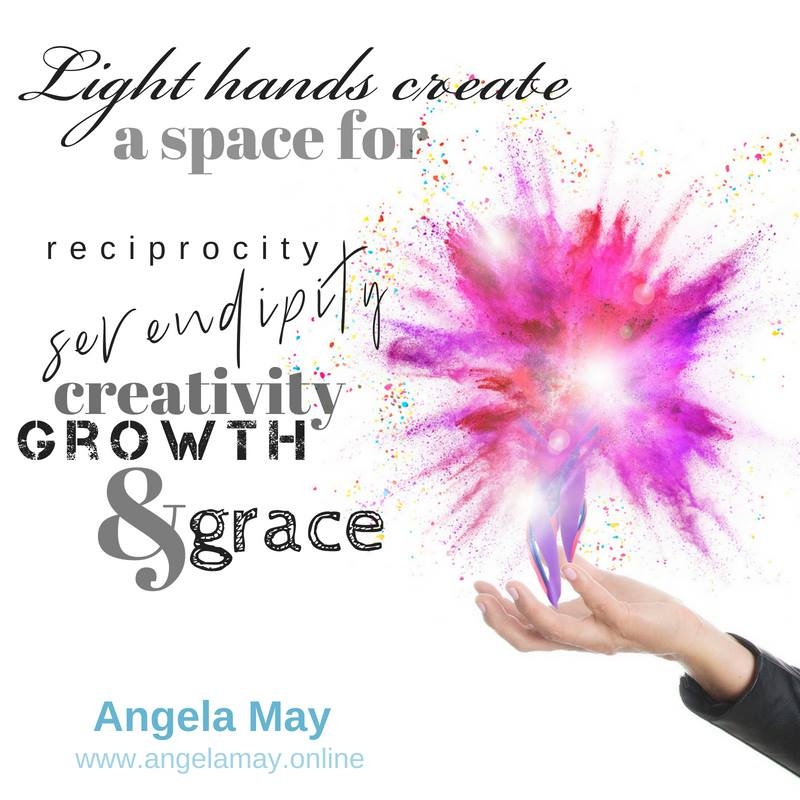
    When we use light hands, we allow space for reciprocity, serendipity, creativity, growth and for grace.  Tight hands are confining and closed and rarely allow any space for movement.  We miss out when we hold on with tight hands. 

    I am a planner and an organiser.  I have noticed over time that when I plan and organise with lighter hands the more room there is for something far greater to develop than I could have ever imagined or designed.  At times it feels and even looks a little chaotic and messy, but it also has the potential for something beautiful to grow.  When I plan with tight hands I squeeze out the opportunity for others to bloom and for the Divine to work in this space. 

    I feel the pressure in work and in life to plan with measurable, quantitative outcomes and as a result feel compelled to work with tight hands to execute these plans. Tight hands are limiting hands and belong to a world of ‘cannots’.  I would need to let go of being right, of getting it right, expecting others to get it right and of making it ‘stack up’.  What if instead, I was to work with light hands to provide a space for others to grow and God’s grace to manifest.  I could focus on possibilities and relationships, foster collaboration and imagination and be delightfully surprised with the result-or not.  Light hands are hands of possibilities and a world of ‘cans’.  As Martin and Golsby-Smith said in their article “Management is much more than science”,  “In the can world, the relevant data doesn’t exist because the future hasn’t happened yet.”

    This week, will you be brave enough to hold life and your plans with light hands and see what develops? 

  • Perfectly Imperfect

    Perfectly Imperfect

    Have you ever met a human that is perfect?  No, me neither.  Why then do we insist on pursuing such an unobtainable goal.  After all, as humans we are multidimensional-physical, spiritual, cognitive and emotional beings.  And then there is the subjective definition of perfection which is mostly a social and cultural construct.  And we know it!  Who has not critiqued social media and media for the unattainable perfection that is presented there? Would you agree with me that the pursuit of perfection is irrational?

    This week, I witnessed adolescents being mean to others about their imperfections when they themselves were glaringly flawed.  One young man, was making fun of the disabilities of others in special education when he himself required assistance.  Looking on I could not help be dismayed about their responses when I knew they themselves sought and hungered for acceptance. 

    In an article on disability and the acceptance of imperfection, Erin Martz says “the anger, avoidance, blame, and stigma that is often heaped upon individuals with disabilities could be explained as a projection of an individual’s own insecurity and non-acceptance of the fact that he or she is also imperfect.”

    Should we be focusing on our imperfections instead?  I do not know about you but that has led me to shame, blame and self-dislike in general, not to mention anxious vulnerability about my inadequacies.  I have noticed that some people start to wear their imperfections with pride. That does not sit well with me either. It’s like saying, I cannot help being a bitch and I am not even going to try to be kind.

    I have been reading about the importance of self-compassion and the link this has to our wellbeing.  According to research, self-compassion deactivates the threat system and activates the self-soothing system.  Instead of being in a heightened state of being; ready to attack or to flee because of threat to our perfectionist self-worth we could instead love others because, just like us they are also imperfect. We are all imperfect with varying degrees of abilities and disabilities across our multidimensional self.    With this approach, there is no need to puff ourselves up nor do we need to put others down.  Perhaps instead we can say, “there but for the grace of God go I.” 

    We are all perfectly imperfect and mostly beautifully broken.  I have a feeling that it takes far more courage to accept this in ourselves than we realise. I would suggest that with God’s help, it is the beginning of being able to truly love ourselves and others.  This week, let us start by accepting and loving our flaws; and in turn loving people better. Who’s with me?

    Photo by Umanoide on Unsplash

  • The importance of old friends

    The importance of old friends

    Twenty-four hours was all we had for four ‘old’ girls to get together.  We four girls started-and finished university together, over 30 years ago.  For nearly four years we hung out together; studied together; some of us lived together; others of us partied together; sometimes we visited each other’s families and we all graduated together in 1987. 

    For twenty of the past years we did not see much of each other.  We moved away from campus, we got married, some of us had children, all of us worked and some of us moved overseas.  Over 10 years ago, we discovered we lived within the same corner of our state and decided to get together for lunch.  After quite a few phone calls and deciding where to go and who would travel the furthest, we managed it and of course enjoyed it. 

    Over the past ten years we have tried numerous times to get together again and occasionally made it happen.  Once we even met up in Sydney, as that was where one of the group lived.  This time, one of our group who lives on the other side of the country was visiting.  With a lot of to-ing and fro-ing with emails we managed to create a 24-hour window for us to meet and stay overnight together.  I would drive over 600 kilometres to meet up with these gorgeous ‘old’ friends.

    During our get together, we laughed, we talked, we ate, we talked some more. There was a little bit of shopping and we did manage even to sleep.  No great expectations. No great plans. Just a time to reconnect and perhaps even to reflect.  As one friend said “it was better than a year of counselling”! 

    Some of our most powerful friendships are made during university or college days.  John Coleman in “After graduating, keep community first” says these times are the most powerful-and the most jarring of times to leave behind, due to the social activity, the friendship, the ideation and discussion that happens in this space.  The only other place I have found the same powerful friendships has been in small Bible study group. 

    Three essential ingredients to forging friendships- and the ingredients that were definitely present for my friends and I thirty years ago, are proximity, repeated and unplanned interactions along with a setting that encourages people to let their guard down and confide in each other.  (Coleman) Evidently, the same essential ingredients are important for us to maintain our friendships too. 

    Friendships are good for our health.  Numerous studies have shown the link between health and community and friendship. Anna Miller in “Friends Wanted” wrote that psychologists have linked greater pain tolerance, a stronger immune system and the lower risk of depression and lower risk of an early death with strong social connections.  A shrinkage of people’s personal and friendship networks along with rising divorce rates creates a sparse social circle for people, which equates to a significant health risk.  Why then do we not prioritise keeping up with our friends? 

    Certainly, for me, distance has made it difficult.  Busyness too.  I also found that while raising my family, I did not always have time to consider my own needs.  I am sure glad that my ‘old’ friends have persevered to carve out a little time once in awhile to meet up again. 

    As much as I enjoy and love connecting with ‘new’ friends in my backyard, there is something very special about my friendships forged when I was a young adult.  I think it has something to do with a time before the responsibilities of life crowded in and before I became someone else’s wife and someone’s mother. It was a time when I was just me! 

    I enjoyed being ‘just me’ during those twenty-four hours I spent reconnecting with my ‘old’ friends.  We have not really changed; and yet of course we have.  Thirty years does that.  One thing that has not changed though is our ability to encourage each other when we let our guard down and confide in each other.  Or maybe it just as Ralph Waldo Emerson says “…one of the blessings of old friends (is) that you can afford to be stupid with them.”


     Photo by Vonecia Carswell on Unsplash


  • Finding true north in our work and life

    Finding true north in our work and life

    We were experiencing a crisis in parenting goals and conflict in our marriage as we co-fostered a teenager.  Our support worker sat us down one afternoon and helped us to understand what was going on.  It had to do with our values, he said and how we prioritised and projected ours in raising someone else’s child.  This crisis seemed to centre around whether this young person we were co-parenting, chose to adopt or dismiss our values.  This teenager had to weigh up not only our values, but also the values of his parents and his peers and decide what he would dismiss or adopt.  Tough gig, I reckon!

    How many of us ever really sit down and define what our core values are and whether we need to reconsider which one’s we prioritise-let alone project?  Life Coaching experts Patrick Williams and Diane S. Menendez promise that the meaning we seek and satisfaction we long for, is found when we align our work and life with our core values.  In order to thrive and experience full satisfaction we must be aligned.   This starts with identifying one’s core values. 

    I had a spiritual conversion in my mid-thirties.  My values were overhauled and realigned as I sought to live my life by the values of my family of faith.  I had been raised in a family whose values were aligned with a traditional religious community, so my realignment often involved rediscovering my roots.  The biggest overhaul of values involved throwing out values I had absorbed and prioritised unconsciously from the media and culture I was raised in.   

    Some of the refining that has occurred in recent years has been identifying which of my core values are driven by fear and which by purpose and meaning?  Which have been driven by the need to please others and which by the need to please a Holy audience of one?   The biggest joy has been ‘discovering’ or ‘rediscovering’ the me I was born to be before I tried to be someone else.

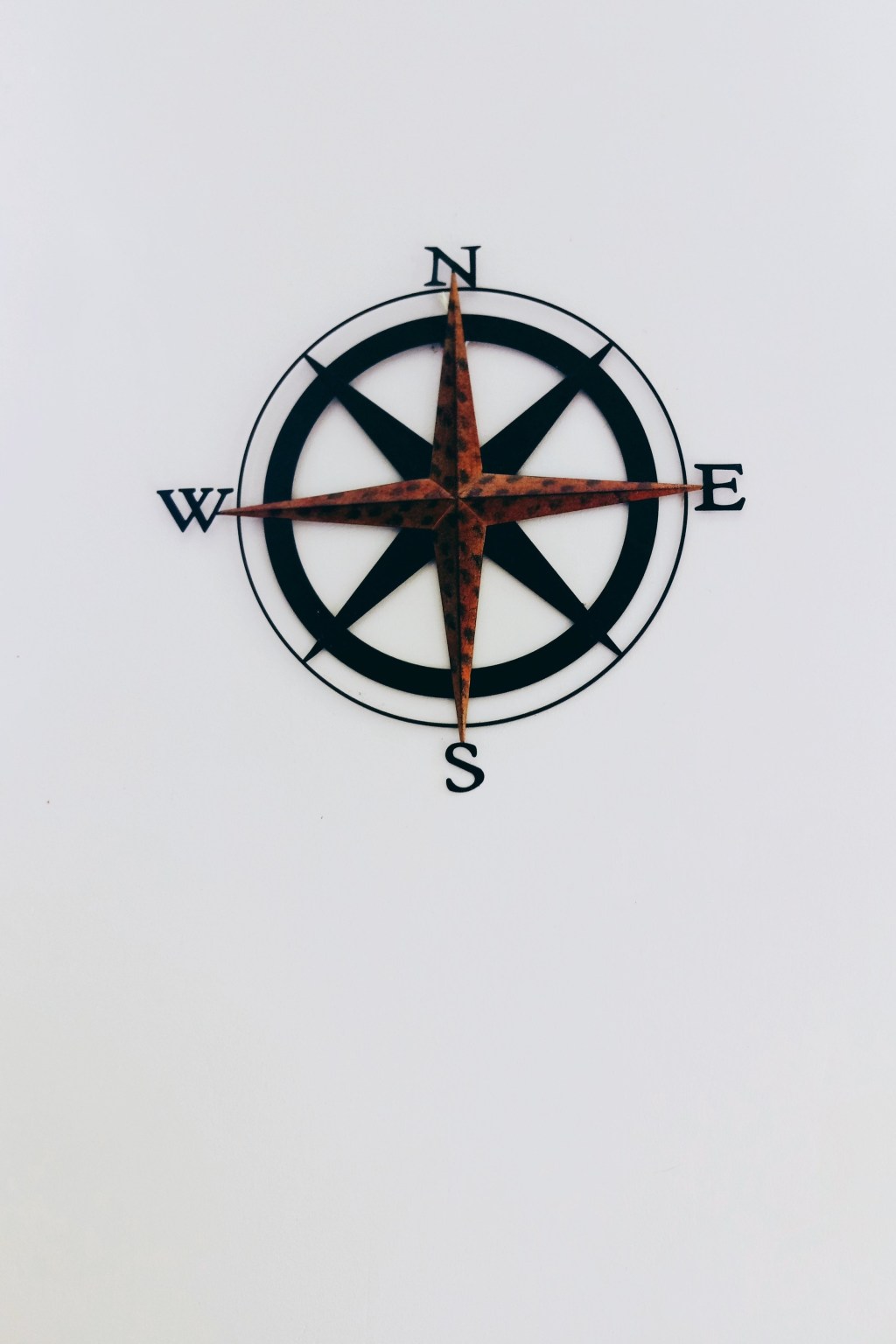
    Identifying and choosing our core values are like finding the true North on a compass. Redefining them feels like getting rid of negative magnetic interference and recalibrating this true north.  Finding this will help to find direction for our life and choices. 

    I will be the first to admit, surfacing and naming my core values has not been all that simple.  Most times I am not even aware how they direct my life; but they do direct my life in both habit and action.  It’s times of crisis, like our fostering co-parenting one, that I realise the importance of examining them and considering realignment and recalibrating them.  It is also in times of disquiet that I pause and consider what habits I need to change if I want to align my life and work to my core values. 

    Whose values guide your life?  When was the last time you identified the core values that direct yours?  Maybe the disquiet you feel or the crisis of belief is in invitation to realign or recalibrate and discover your true North. 

    As Jennifer Cummings says “Knowing my true north gives me the courage to focus my energy where I believe it should be, not according to what is popular or pleasing to others.” 

    Photo by Honey Yanibel Minaya Cruz on Unsplash.com

  • Is the Balanced Life a Myth?

    Is the Balanced Life a Myth?

    I grew up with a father who worked hard and gave his work his best.  He was the kind of man who left for work with a half hour to spare in case he got a flat tyre and thus ensuring he would not be late.  Most days he would be half hour early.  He was also the kind of man said “You can play when the work is done.”

    Researcher Ioana Lupu writes that our feelings about work-life balance are shaped by what we saw our parents do.  More often than not, our beliefs and expectations around the right balance between work and family are shaped early on and are subconscious. Our work ethic is internalised from childhood. Of course, people also make conscious choices to not be like their parents.   

    I made some conscious choices as a wife and mother to do things differently to my mother and yet often, I found myself subconsciously doing the same.  Not once though did I question my subconscious beliefs and expectations shaped by my father’s example.    I wonder now if that may have been the reason I have come close to burnout several times in my career and life. 

    Often, we blame the organisation and society for being the obstacle to getting work-life balance and satisfaction.  Lupu’s research highlights that the impediment is also within the individual themselves.  Instead of moving to work at another organisation, perhaps we should consider looking within and locating those internal drivers and subconscious beliefs we have towards work and rest. 

    What I forgot is that my parents grew up in an era where weekend trading was not offered. It was also normal to make Sunday a day of rest and worship.  Working hard all week was balanced with Sabbath rest.  My parents were also from farming families. They understood and practiced the rhythm of seasons. There were times to plant and times to harvest and times for land to lay fallow. 

    We now live in a world where communication technology makes our messages-and us available instantly and accessible twenty-four seven. There is no sabbath or seasons.  How can we play when our work day is never over? 

    We also live in a world where it is more common for women to have a career and a family.  While we aspire to have a more balanced life, many of us continue to work hard like our parents and yet forfeit the family life we seek. Our internal drivers often override the conscious promises we made ourselves and our family. 

    I do wonder though if the pursuit of this balance is not in fact mythical.  It is a bit like trying to catch a fairy.  Being in control of our lives is an illusion.  The sooner we give that up, the sooner we lighten up and enjoy the rhythm of work and rest.  By enjoying our sabbath rest, we give up the need to have everything perfect and may actually get a life in the process.  I think a balanced life does not exist! 

    Photo by Austin Neill on Unsplash