Category: speaker

  • Tweety’s last tweet.

    Tweety’s last tweet.

    Once upon a time, in a land far across the sea, two little girls gifted my daughter a tiny bird.  The little bird had been caught in the rain-forest near their village and  a piece of grass was carefully tied to its little leg to keep it captive.  My daughter loved this little bird and named it “Tweety”. 

    Tweety loved to eat insects.  While my daughter and her brother sat on their bed doing their home-schooling work, he would hop around the little hut eating spiders and other tiny insects.  Tweety would never encounter the huge cockroaches that roamed about at night poking their feelers out of the cavities in the concrete block-work. Tweety was murdered in his bed that night. 

    The murderer was a huge, hairy bush rat that entered our hut from the roughly hewn timber rafters that held up the corrugated- iron roof.  The rattling of the fishing rods first woke us, announcing that he was coming down to ground level.  We fumbled for our torches and aimed the beam towards the corner of our concrete room.  As soon as the light hit him, he would scamper back up and peek at us from above.  He was relentless. He was determined to carry Tweety away.  Something had to be done. 

    Clad in my pyjamas, I would hold the torch steadily while my husband held his spear gun in readiness.  At the appropriate time the elastic band was released and the barb impaled the rat.  The children were told that Tweety died of a heart attack. They believed this. They were eleven and nine.  The next morning, the same man would bury Tweety in a shallow grave alongside his murderer’s body. 

    This wouldn’t be the first time our family encountered a home invader in a Vanuatu village.  In one guest house, we would set traps to catch the rodents and would sleep with an overhanging mosquito net tucked around our mattress on the floor.  In another place, our sleep was interrupted by the sound of a rat gnawing on soap on our dresser before it scampered around our room that night.

    At no stage, did we fear for our lives. However, our possessions were not safe.  No muesli bar or piece of chocolate was safe from these nocturnal raiders. If we were not careful, the invaders would make a forced entry to steal these items.   While many lived another day, another did fall under the hammer of a trap.  We slept much easier knowing that while we slumbered one less Vanuatu bush rat was terrorising Australian tourists and their possessions.

    Tweety” 2001 R.I.P.


  • Are friendships necessary?

    Are friendships necessary?

    I caught up with a friend this weekend who I have not seen for several years.  She does not follow social media, so our communication has been irregular and mostly by occasional email. It was and is special to spend time together face to face.  It was as my friend said, “…like picking up where we left off last time.” 

    Some friendships are like that.  Separated by distance and time, the friendship endures and when we meet again, it is like we were never apart. 

    C.S Lewis said “Friendship is unnecessary, like philosophy, like art… it has no survival value; rather it is one of those things which gives value to survival.”  He also said, “…I have no duty to be anyone’s friend and no man has a duty to be mine. “ 

    Perhaps that is why I find friendships so beautiful.  I am free from the expectations of duty and responsibility: I can just be me and I can be.  And like spending time with art and philosophy, my life is enriched as a result of spending time with a friend. Friendship provides the gift of beauty and depth just by its presence. 

    I have noticed something else about friendships.  There are seasons where they are very welcomed and almost necessary.  I wonder if C.S. Lewis had considered the importance of girlfriends? 

    One season of my life where friendships were particularly meaningful were my years at university.  That block of years was a season in between childhood and adulthood, where there was just me and study; and the freedom to explore the bigger questions of life; or not.  These were the years before I picked up the role and the expectations of wife, mother and even daughter.  A season before those responsibilities would eclipse anything as unnecessary as friendships. These friendships have proven to be like my friend I caught up with this weekend. Whenever we get the chance to get together-and that has proven to be quite difficult, it is like we only met together yesterday.   Our friendships have transcended our roles and together we get to be the girls underneath life’s responsibilities. 

    Another season where my girlfriends and their friendships have been life giving has been this one. This season of my life is mid-life; a season where it feels as I have given the best of myself to marriage, raising children, to aging parents and to a would- be career.  I am staring into a space where many of my roles and responsibilities have ended. In the space remaining I have encountered both the plain and pain.  At times, I would say that my girlfriends have been more than necessary. Most certainly they have added colour and depth, just by their presence. 

    The more I reflect on my friendships, I am not sure that I entirely agree with C.S. Lewis. Maybe he did not understand what it means to be a woman and a girlfriend. What about you?  Do you think friendships have little survival value and are like art and philosophy?  Or would you say, they are necessary?    

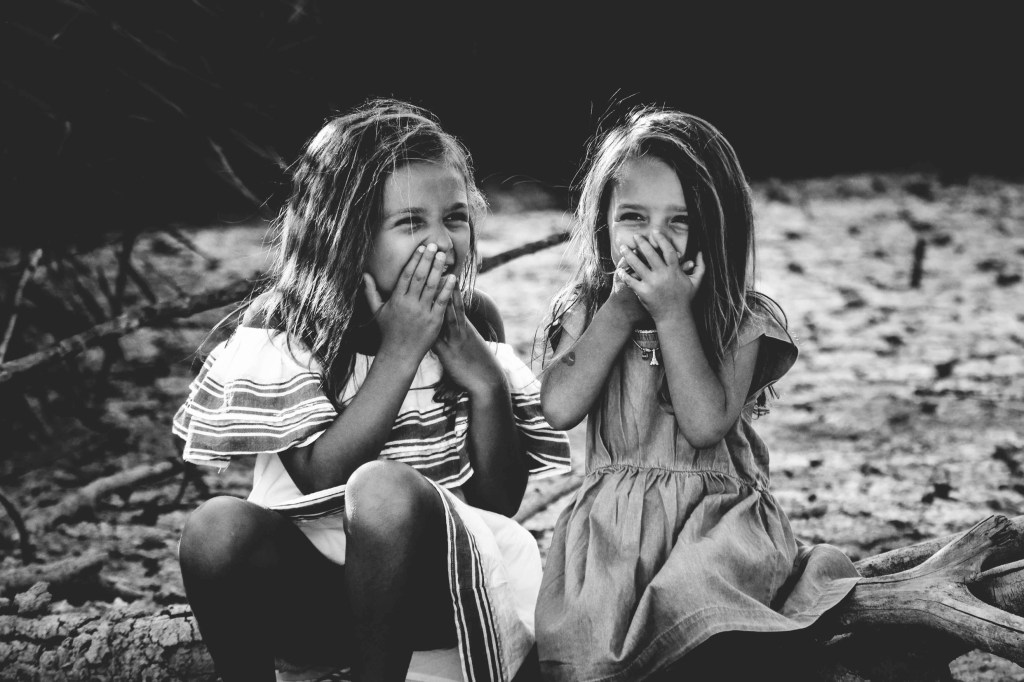
    Photo by Caroline Hernandez on Unsplash

  • Life is too short to drive boring cars!

    Life is too short to drive boring cars!

    Who said “Life is too short to drive boring cars”?

    No one told me when I hopped in my first bright red convertible that real life does not always deliver what you dream about. Life is indeed short! However, in spite of good intentions you get to drive plenty of boring cars.

    My first real car was a second-hand gold coloured Ford Escort I nicknamed Ernie. I bought Ernie on a student loan for $3,000 in the 1980’s. I qualified for my driver’s license in Ernie.  I drove through flooded rivers (with my nervous Nanna as a passenger) and learned to navigate the traffic of the big smoke in this little car.  Whilst Ernie suffered no penalty from traffic infringements or accidents, we did get into a few scrapes.  There was the embarrassing incident of side swiping a parked car while my workmates looked on from the staff-room…and there was also the matter of the brick mailbox we reversed over the top of!   Good old Ernie though, never missed a beat and would go on to be my younger sister’s first car. I would go onto another.   

    Along came marriage and then came family and there was no room for impractical cars.  Country roads and recreation, along with the children’s paraphernalia called for big four-wheel drive wagons. There was a procession of those; according to budget and season. First came the old two-toned ‘cruiser, which we rattled around Australia in and almost rattled ourselves out of, before it retired. Then there was the near new white one and later, a brand-new blue one- for a season.  

    Sometimes we did not get to choose the car. The time, the place and the promotion of the day would decide for us.  Occasionally though, life offered better than boring cars. 

    Another forty years would pass by before I got to drive-and own another convertible. This time it was a bright blue beetle that was in the right place at the right time.   For a season I enjoyed driving around in a less than boring, shiny blue convertible Beetle. Sadly, it too had to retire when Australia’s harsh climate played havoc with the electrics. Sometimes, practical reality crashes in on your dreams.

    Today, I’ve compromised. I drive a near new SUV that is bright red.   It’s not a convertible but it does have great air-conditioning and comes with new car warranty.  Who gets to define boring anyhow?!

    Life is not finished yet and I can still dream.  Maybe, just maybe one day I will get to drive my very own bright, red convertible again. 

  • For the love of a pet

    For the love of a pet

    This is Frank.  He is a very affectionate mini dachshund . I call him my ‘grand-fur baby’, as he belongs to my future daughter-in-law. He is gorgeous. But then I’m a sucker for pets; especially cute dogs.

    I grew up in a family that always kept pets. We had both dogs and cats, chickens, guinea pigs, budgies and a cow. The latter was kept so we had milk, the chickens for eggs and the rest were just pets. I can recall many days feeding one pet or many as a daily chore.

    It seemed natural when I started married life to keep pets. First came the kitten, rescued from the storeroom of my workplace. Then came the pup that was to go to work with my tradie husband. Later on, when our children came along I got my first little, fluffy, white dog. Then, for reasons forgotten, we added Spiky the pet white rat… then a cockatiel, followed by a chicken.

    Before children, my husband and I travelled Australia for 6 months. My parents would pet-sit for us. But first, we had to relocate 2 dogs and a cat 4,600 kilometres. That meant a 3 day journey in summer heat by road in a wagon that was not air conditioned. Can you imagine? The back seat was down, as were the windows. The cat was sedated and lay in her basket, shoulder to shoulder with 2 dogs sprawled across the seat, also catching the breeze.

    Today our pets are softer. They, like us, prefer an air conditioned car and bedroom. The queen sized bed is a little wider than the old double bed; although I suspect no matter what size our current bed, the blue healer would take up the most space.

    We have buried 3 dogs and one cat, euthanised 1 rat, given away birds and lost another. I have lost track of chooks lost to old age, dogs, a fox and snakebite.

    No matter what shape or size or how cute, every pet holds a special place in our heart and memory. My favourite pet though is the dog. I am inclined to agree with this saying” A dog comes into our lives to teach us about love. They depart to teach us about loss. A new dog never replaces an old dog, it merely expands the heart.”

  • Timber and iron make a house, but the laughter of a child makes it a home.

    Timber and iron make a house, but the laughter of a child makes it a home.

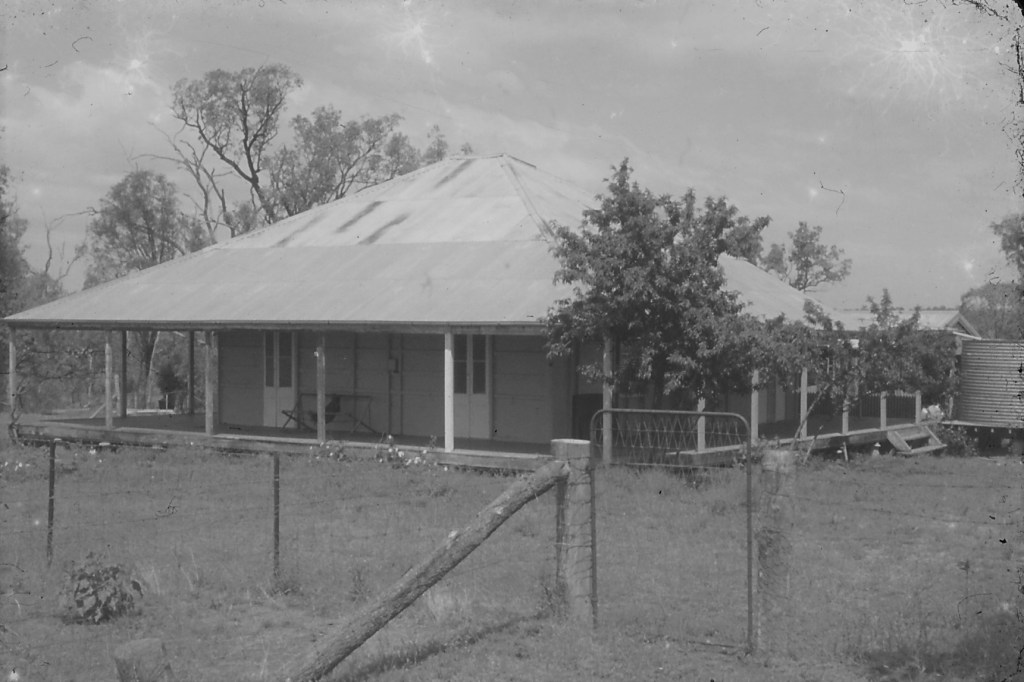
    Let me tell you about this house.  It seems a lifetime ago that I lived here, in this original Queensland homestead.  This was the first home of my parents as a married couple in the 1960s, and my first home as their first-born child.  I lived here for 9 years, before our family that had grown to six, relocated 300 kilometres away. 

    Born in the little country hospital half an hour away from the 6,000-acre property where my parents were share-farmers, I would spend my first summer lying in a wicker bassinet on the breezy verandas of this homestead.   

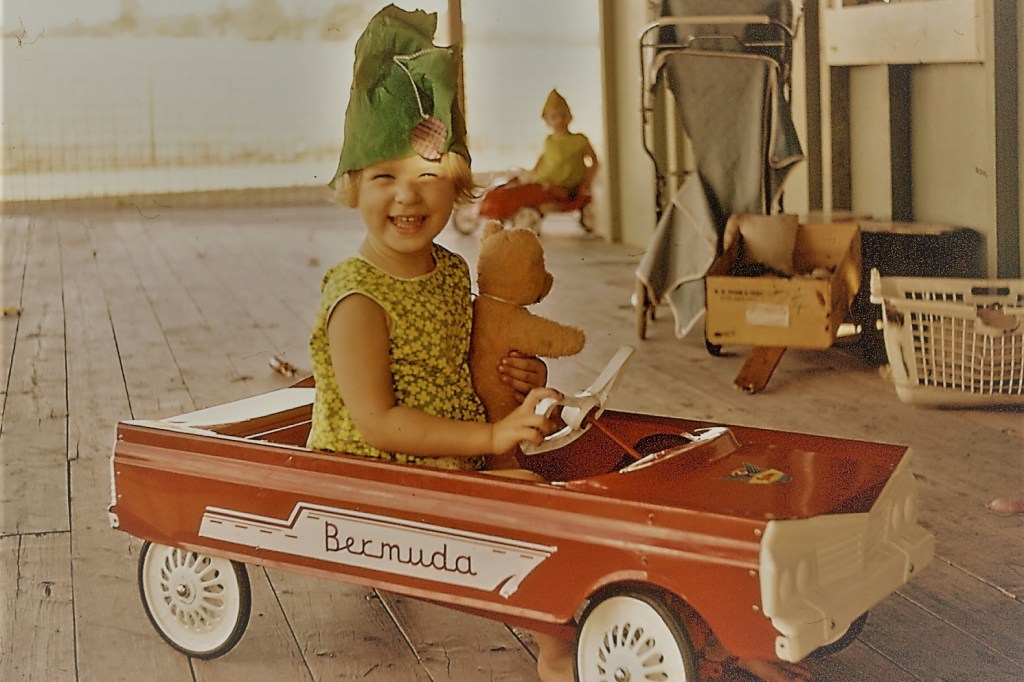
    These same verandas became the racetrack for my siblings and our pedal cars and trikes. Wooden and tyre swings hung from the rafters and a nearby tree.  Many a kitten and cat sunned themselves here alongside the drums of potted geraniums. 

    Water was either from a bore or from the rainwater tank. Very little was spared for the garden, so the yard did not offer lawn for us children to play on.  Instead, there was plenty of dirt to dig holes in and make mud pies or bricks from. 

    Bindi-eyes were a problem, and shoes were few, so we suffered many a prickle in our feet, if we ventured into the backyard. I am not sure what hurt the most, standing on the prickle or mum digging the offending item out with a needle and little mercy.

    There were many snakes as well.  Some were so long that their head touched the ground one side of the fence and their tail the other when slung over it to die.  My mother would shoot them with her .22 calibre rifle to kill.  There would always be another brown or black snake that would still lurk.  Death adders lived here too. 

    Mum, like dad used her rifle regularly.  Kangaroos would eat the tender shoots of their farming crops and at times existed in plague proportions.  ‘Roo shooting was a common past time and my siblings and I would consider it an evening out.  We would rug up and bounce along in the station wagon or on the back of the four-wheel drive Landcruiser ‘ute’, while mum and dad took it in turns to spotlight the paddock and shoot the kangaroos and wallabies there. 

    I always considered it an irony that any infant joeys found in the pouch of ‘roos that were shot, were then raised by my mother.  They found a warm place in a hessian bag, slung over the slow combustion stove in the kitchen. Mum would feed them with milk in old baby bottles. When they were too old for the makeshift pouch and could jump the fence outside, they would return to the paddock where they could be shot for eating a crop. 

    Our bathroom consisted of a claw foot bath on rough concrete in a lean- to on the side of the house.  We relied on the wood fired stove to heat the drum that heated the water for our bath.  Many a green frog lived in our bathroom and the adjacent laundry, where mum’s shiny Simpson washing machine,with a wringer stood.

    Our toilet, like most in those days was an outhouse in the backyard.  Of course, we never enjoyed that excursion. Even though we scared each other with red-back spider and snake stories, none of us were ever bitten.

    Electricity came from a diesel lighting plant that was crank-started in the carport. It was noisy and hard to start.  It was usually started early evening to provide us with lighting.  Occasionally mum would start the generator during the day to use her sewing machine or mix master.  Our refrigerator ran on kerosene. 

    Without insect screens or fans, the windows and French doors were most often left wide open.  We got used to inundations of seasonal insects from black ‘stink’ beetles, to flying ants and grasshoppers. All of these were attracted and spawned in the crops of nearby paddocks. 

    The plague of mice was the hardest to forget.  They ran across us as we slept. They ate holes in almost everything from our wool blankets to brake lines in the car.  No matter how many cats slept on our verandas, they could not catch enough mice.  Drums were set up with baits hanging over water. Each morning bucket loads of drowned mice were emptied out.  As children we were in awe of the single white mouse that presented himself amongst the thousands of brown field mice and begged mum to allow us to keep him as a pet. The mice were so thick under the bags of grain, that they could have carried the bags away. 

    Large grasshoppers were plentiful.  I recall as children catching them from the leaves of a grain crop, pulling off their legs and shoving them head first in a ‘meat’ ants nest.  I’m not sure if it was me or one of my siblings who used to eat them as a toddler, under the dining room table.

    Caterpillars that swarmed on nearby brigalow shrubs were a menace to children like me. Many a time I would be so itchy that my body would break out in hives.  Mum would be swift to bathe me and then paint me pink with calamine lotion.

    I have memories of amazing lightening shows as thunderstorms rolled in across the neighbouring plains.  Dad would often sit on the veranda in the cool of the evening watching the show. The sound of the rains was almost deafening on the corrugated tin roof.  Occasionally it included hailstones. 

    There were bush-fires too.  When they came, all able-bodied adults were given a wet hessian bag to start beating out the line of fire.  When the fires got away, neighbours were called to lend a hand. 

    There were floods too.  The creek below the house was most often dry except when the rains came it ran high.  It never threatened the house, but it did isolate us and we could not get out.  The soil was black and when the roads were wet, they were slippery and vehicles would often get bogged. 

    When I think back to my childhood, I surprise myself at some of the ghoulish things we did as children.  Snakes, floods, fires and the shooting of kangaroos were a part of everyday life in the bush and a part of my childhood. 

    This old house is derelict today. We were the last family to live in it. It became a place to store feed after we left and cattle knocked it around as they walked through it. 

    A house though is only a home when it is filled with people. My memories have outlasted its timber and iron.  To paraphrase a proverb: timber and iron makes a house, but the laughter of children makes a home. 

    Here’s to warm memories of a lifetime ago, evoked by an old photo of a homestead that used to be my childhood home.  

  • At what cost a hobby?

    At what cost a hobby?

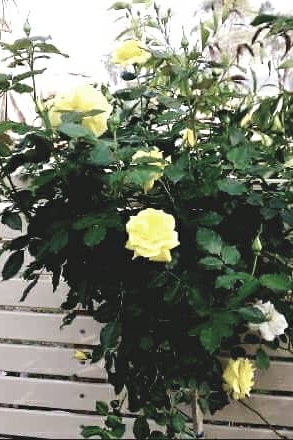
    A Jewish Proverb says ” When a habit begins to cost money it is called a hobby. ” I have quite a few hobbies it would seem. if that is the measure.    Growing roses is one of those.

    I came home from holidays this week to an abundance of blooms in the garden. Thanks to recent rains and previously added rose fertiliser, the bushes are covered in flowers. I have been quick to lop off the buds and blossoms and to stuff them into vases so I can enjoy both the perfume and their display of beauty inside. It gives me pleasure to give a bunch of my roses away. I also feel compelled to photograph them. I am almost embarrassed at the number of rose photos I have posted on social media over the past ten years.

    I planted my rose bushes especially to cut their flowers. Buying flowers seems a luxury and yet buying a bush, fertiliser and sprays does not feel quite the same. I enjoy pottering in my garden; although I would not go so far to say I have a “green thumb”.  My rose bushes would not win a gardening award. But then, that is not the reason I grow roses.

    I have never done the math to work out what a dozen of my roses cost; and I am reluctant to do so. Evidence says hobbies are good for the soul. Growing roses is good for my soul as fishing is for my husband. 

    We often joke that if we did the math on my husband’s fishing hobby the price per kilo of fish fillets might be closer to hundreds of dollars. Buying reef fish fillets seems a luxury and yet eating the bounty of a day’s ‘hunting and gathering’ does not feel quite the same. How do you put a value on leisure; on fresh air, sunshine and physical activity along with the joy of being on the water?

    What are your hobbies?  Do you think hobbies a luxury or a necessity? I do not think you can truly evaluate the cost of a hobby.  Hobbies are good for the soul. That is priceless!
     

  • Forged by a Master

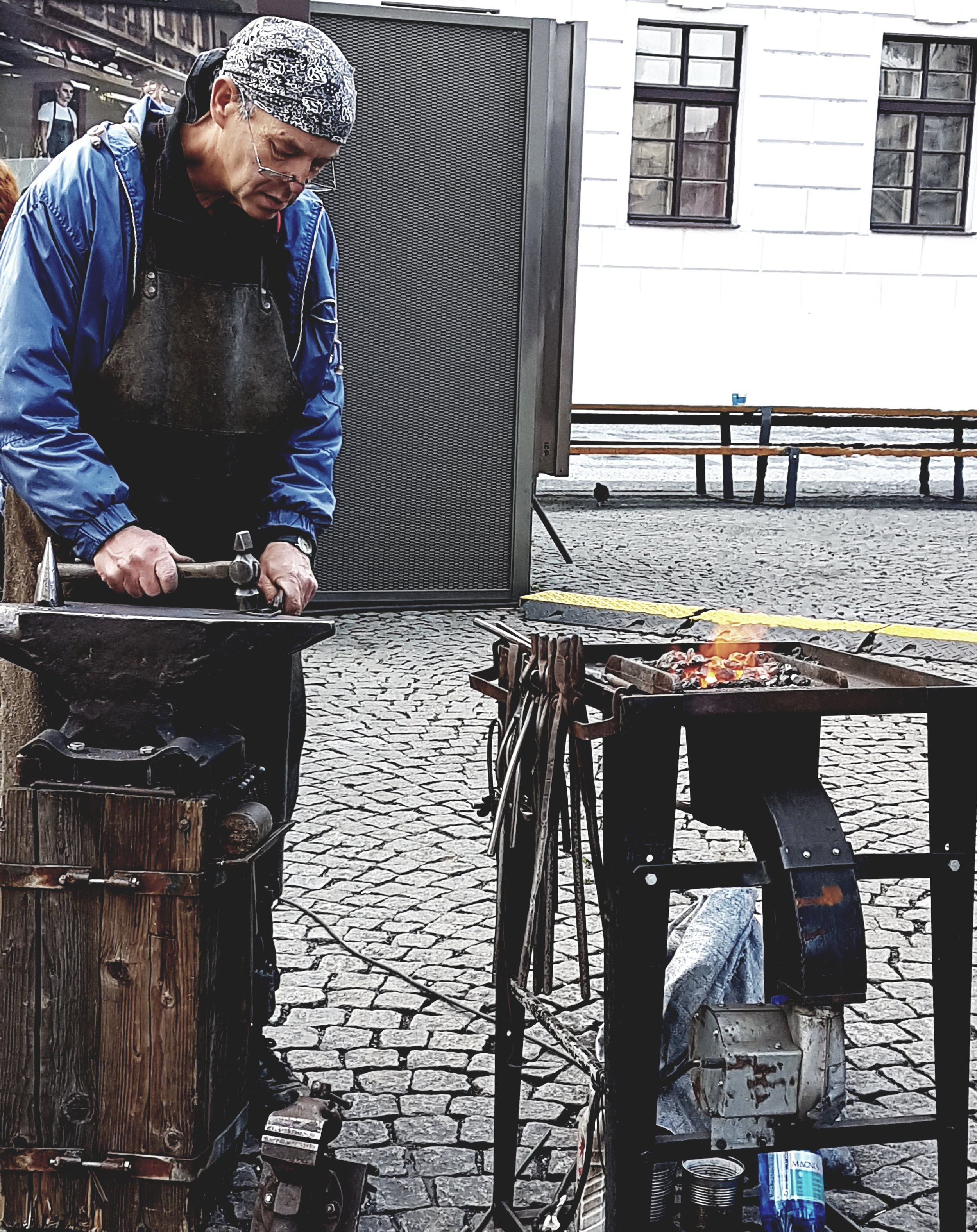
    It is not everyday you see a blacksmith working. I suspect this one in Prague was demonstrating for tourists only. He was selling small handmade iron items nearby.

    I find this artisan work and artistry fascinating. Perhaps it is because it is a trade from ancient times. There is not much call for the blacksmith trade since factories started manufacturing tools last century. Neither is there much call nowdays for handbeaten ploughs, swords and armour. 

    The blacksmith works mainly with iron. He heats up the iron in a fire and then hammers it on the anvil to change its shape and to strengthen the final object. Sounds simple but I suspect the mastery is complex.

    The process of heating and cooling and of hammering and shaping is equally simple and yet complex. The metal is heated just so to be malleable enough to be reshaped and also tempered enough so it remains strong and is not brittle when cool. 

    I often think my life in the hands of my Master and Heavenly Father can be likened to an artisan blacksmith’s work. At times I have wondered if the fire of life would consume me and if the hammering would break me. Under the hand of another perhaps it would. I take heart knowing that in His hands the process is necessary if the final object is to be worthy of the work it is shaped for. 

    The Blacksmith does not only create. He also repairs and reshapes. The object must go back into the fire and be beaten with the hammer on the anvil once again. And so with my life, if I am to be useful I too will find myself repaired and reshaped by the Master’s hand. I am forged by a Master blacksmith too.

    upload.jpg

  • If only stones could talk.

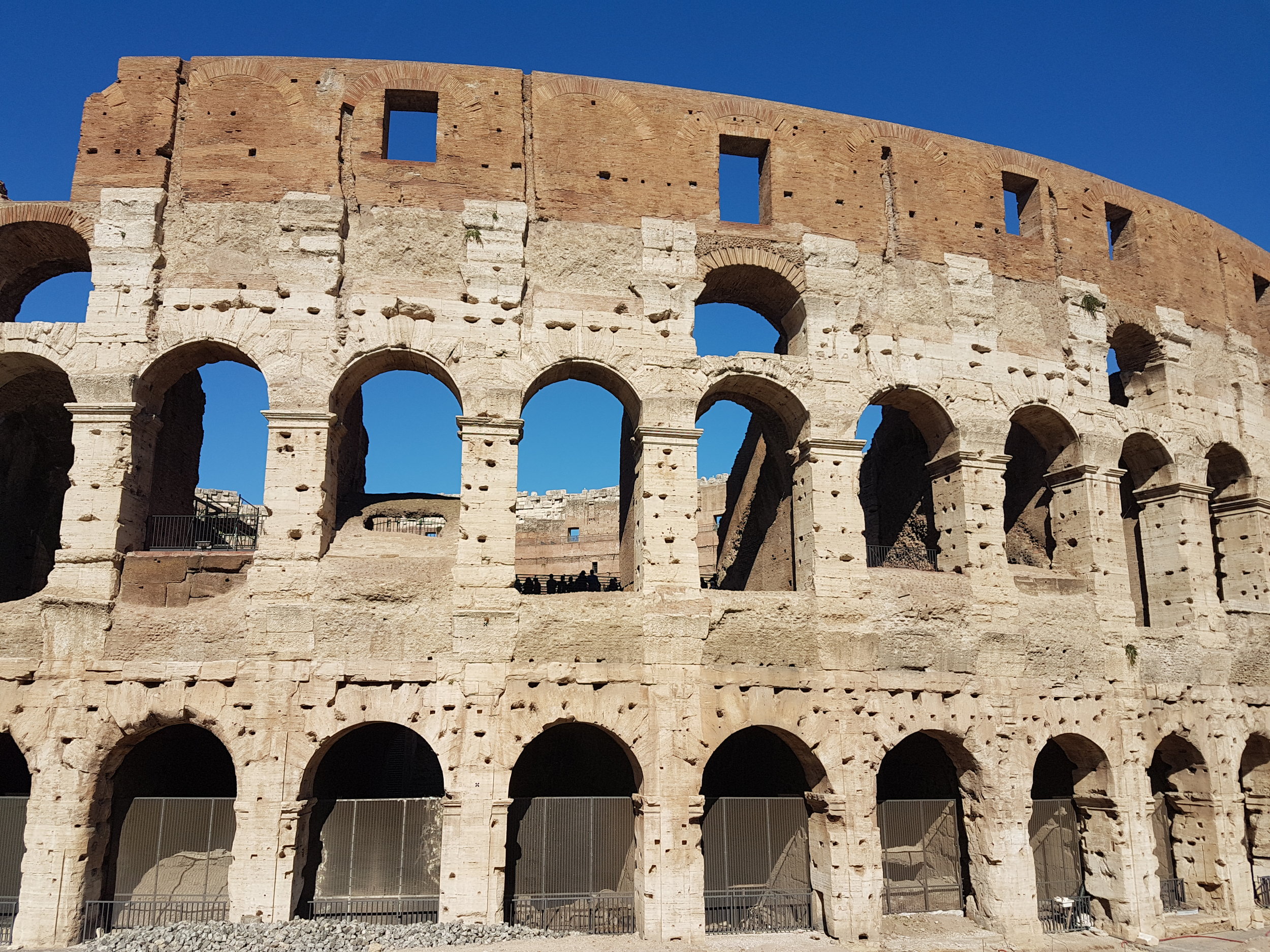
    These ancient ruins of the Colloseum in Rome are   spectacular. We shouldered our way through a crowd of tourists- just like us,  and a bunch of hawkers and beggars to look at it. We alternated between standing in front staring at the amazing feat of engineering and construction and then posing with our backs to it, smiling at our camera on a selfie stick. 

    Each year 4 million tourists, just like us visit this ancient Roman site. The arena’s original visitors did not have to pay to enter unlike the tourists who enter today.

    Some of the stones are crumbling and a big chunk of the ampitheatre has collapsed due to an  earthquake over 700 years ago. Even so, it stands proudly atop the city of Rome. 

    If those stones could talk I wonder what they would say? Would they tell us what the 60,000 Jewish slaves had to bear as they laboured for nearly eight years to build it?

    Could they name the 40,000 people who lost their life in the arena? What would they tell us about the 1,000,000 animals that shed their blood on the stadium floor? I wonder if they thought it entertainment or barbaric?

    If only those stones could talk. 


    upload.jpg

    Colosseum in Rome, Italy 

  • A masterpiece and me

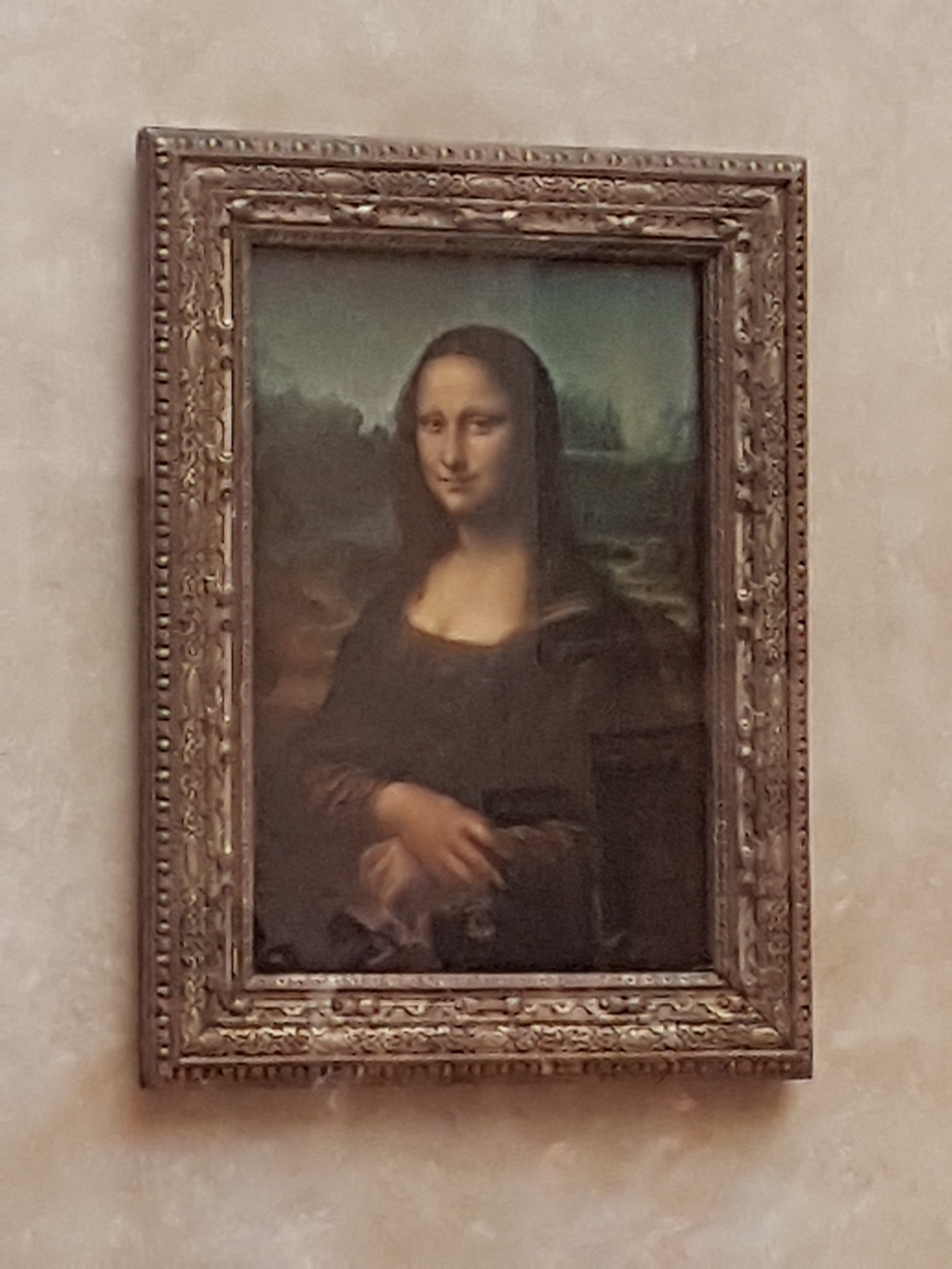
    A visit to the world famous Louvre in Paris this week meant I got up close for the first time in my life with a masterpiece; the Mona Lisa. What qualifies a piece of art as a masterpiece? Is it its age? Is it its creator? Is it its beauty? Or was it the right publicity?

    You may know more about art than I. That would not be difficult!  I am not qualified to qualify what makes a masterpiece so; nor cultured  enough to appreciate it. In spite of many of us jostling for a ‘selfie’ with Mona, this masterpiece was actually underwhelming at first glance. I only began to appreciate its value and significance once I understood its story and its creator’s story. 

    The Bible says I am God’s masterpiece. (Ephesians 2:10) It is not something that I have done that qualifies me. It is because I am His creation-made new in Christ Jesus. My creator attributes to me my worth and value. I am amazed that as underwhelming as I am at first glance, I am overwhelmingly of value and significance, because of what He has done!

    I am thankfuI that no person qualifies me as a masterpiece. It is my Creator and Saviour’s gift. Unlike the Mona Lisa, I am not locked behind glass in an art museum. I am a living being created to do good things. Good things He has planned for me long ago.

    upload.jpg

    What or whom makes Mona a masterpiece? The Bible says I am God’s masterpiece.

  • Finding meaning in the daily grind

    Finding meaning in the daily grind

    We speak of peak and mountain top experiences, and amazing adventures as if real life is only found in these moments when we are on top of the world; both metaphorically and literally. 

    The problem is the daily grind is then only a means to an end and not life itself.   What if though, the daily grind is where life is at and these mountain top experiences are the inspiration that encourage us in the valleys and the flats?  What if they are as equally important to life and they both belong? 

    If they both belong then how do we view the daily grind; the seemingly routine and ordinary, the messy, the sweaty and the imperfect?  Are they to be denied or wished away as we pursue the next inspirational adventure?

    We often divide the sacred and the secular; esteeming religious activities and dismissing the non-religious as less important.  When we do that as Christians, we forget that Christ is supreme overall and sufficient for all. He is Lord of what happens on the Sabbath and also the other six days of the week. We might say he is Lord of the ordinary; except as Lord of all, He makes all things extraordinary.  

    Our ordinary lives, that involve the daily grind are in fact the majority of our lives.  For most of us, we can neither entertain nor afford the time and resources to live on the mountain or to pursue the religious ‘sacred’ every day.  What if all of our life is  ‘sacred’? We must surely stop dismissing our ordinary lives as less than.  When we do this, what then are we saying about Christ’s dominion? 

    What if salvation, redemption, reconciliation, grace, hope, love, fellowship, and worship are relevant every day of the week and not just Sunday concepts?  How then do we live out these values in the daily grind; in our ‘ordinary’ life and ALL of life? What if we could be delightfully surprised to find God in the ordinary events of our life?  Can I invite you this week to join me in finding meaning in what is otherwise known as the daily grind?