Category: teacher

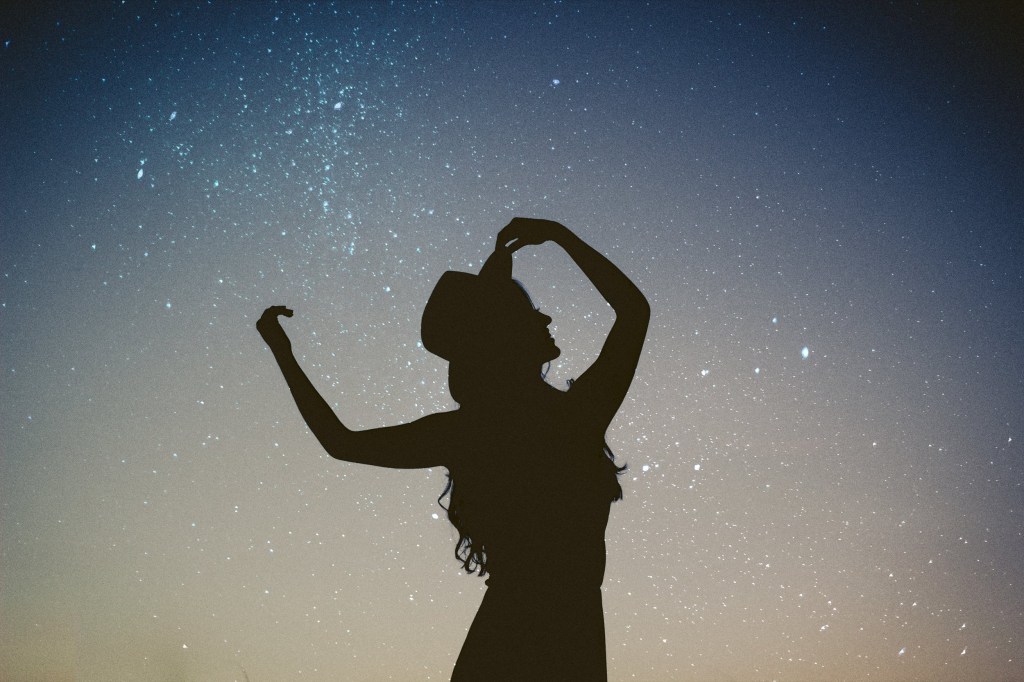
  • What is your song?

    What is your song?

    I live on a couple of acres- or a hectare, as the metric measurement goes.  Gum trees in the front yard are currently showering our deck with their blossoms and gifting us with increased bird life.  This week, I heard the flute like song of the butcher bird and the warble of the magpie. Both bird songs were beautiful and clear.  I stopped what I was doing to listen.

    It struck me that many birds sing just because they can.  They are not shy with their song, nor do they need an audience.  I wonder if they sing to praise their Creator; or do they sing to simply announce I am here!  

    I have heard it said that we each have a song and the world would be duller if we did not share that song.  Imagine the bush if only the butcher bird and the magpie were permitted to sing, and the other birds were silenced. There would be no more comic chatter from the lorikeets, no magical kookaburra laughter, nor the loud screech of the large white cockatoo overhead.  There would be no slurred warbling of the little finches, nor squeaky whistling of the willy wagtail.   As Henry Van Dyke said, “The woods would be very silent if no birds sang except those that sang best.”

    As you know, I have been writing a blog on and off for the past two and a half years. I started this journey as an outlet to practice my voice- or my song.  Of late, I have been silent. I have struggled to sing.  As time lapses, I wonder if I need bother at all.  Is anyone listening, anyway?

    Then I am reminded of the birds… It is enough that I am here-I am alive!  The very breath that allows me to speak-or sing at all, comes from the Creator himself.  That is reason enough to give praise- to use my voice at all. 

    Finch or butcher bird, cockatoo, or magpie; each has a song.  And so do you and I! Loud, soft, squeaky, melodious, comical or serious, every voice has a place, even if it is simply to announce I am here
    And for me, that is enough for today and this blog.

    Psalm 33:  I will sing to the Lord all my life; I will sing praise to my God as long as I live.

    Photo by Caroline Attwood on Unsplash

  • Does speed matter?

    Does speed matter?

    I collapsed in my chair at the end of last week, shattered physically, mentally, and emotionally. In a week marked by efficiency, busyness and speed borne out of necessity to deliver outcomes, I should have been delighted in all I had achieved. Instead I felt overwhelmed in the wake of my intense week and dismayed about the impact my overwhelm might have had on others.

    It does not matter what I did or where I did it, because this has happened before.  It does not really matter why either.  What matters is what lesson I am slow to learn. 

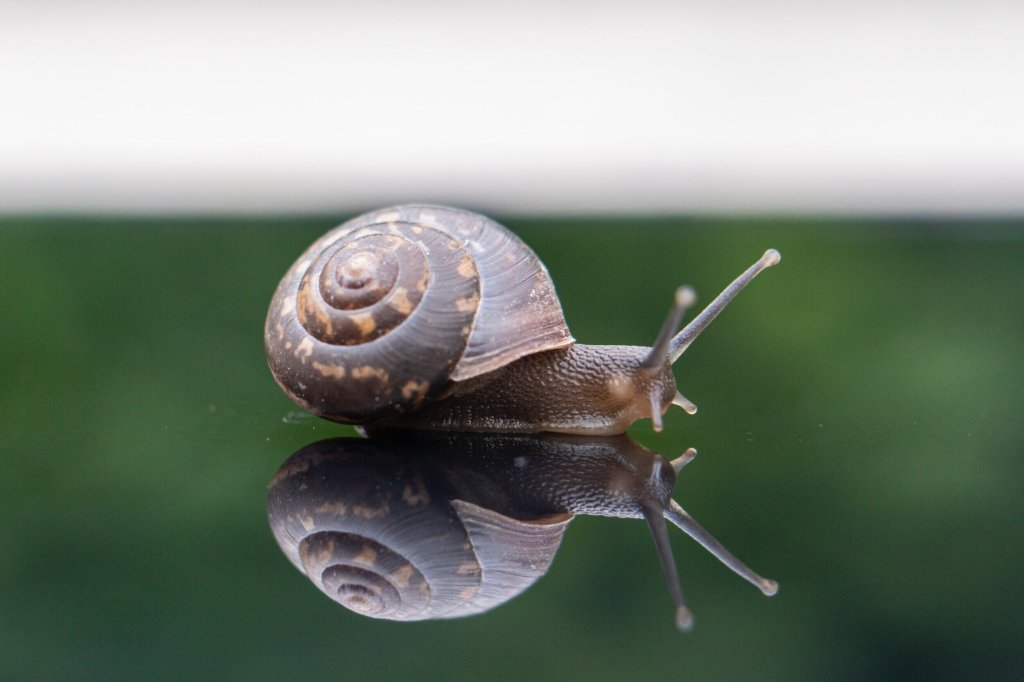
    A good friend, who prays for me and especially prayed for me this week passed on a message of encouragement with a Scripture to read.  She attached a P.S. suggesting that the picture of the snail that accompanied the verse, might in fact be just as important a message as the words.  A snail I thought? And then, I agreed. 

    I have been slapping my forehead the past few weeks, dismayed by my frustrations and exclaiming “Am I stupid? or Is there a lesson I have not learned?”  There is a lesson in this, I realised.  I need to go slower!  I suspect, in my case, this is not actually slow, but it will certainly feel slow for someone who multi tasks and has spent decades developing her efficiencies. 

    This is not a new thought.  For a long time, I have had a curiosity about the slow living and the slow food movement.  My weekends are spent pottering in my garden and in my kitchen; or hanging out with friends over a cuppa.  Why can’t I get this rhythm at work? Is it even possible? 

    I know why I cram so much into my workdays.  I do not think my motives are wrong, but the consequences are dangerous. Certainly, dangerous to my health, both physical and mental.  My body, already struggling with hormonal imbalances, does not need another squirt of stress hormone in the mix.  It is true if you run fast you risk stumbling. I felt that this week. 

    Did you know there is a ‘slow work’ movement too?  It focuses on mindfulness, creativity, and balanced work environment.  Paul Gentile in “How to make the slow movement work for you”, emphasizes using your time for more meaningful and productive ways, by taking controlled breaks and focus on individual tasks. For me that means no more multitasking and eating on the run. 

    Morgaine Gerlach suggests in addition, doubling the time estimate for the ‘to-do list’ items on your daily schedule, adding relaxation periods to each day and being patient with the process. 

    I know in my heart that slowing down allows me to go deeper and be present.  This is especially important for relationships not only with others, but with oneself and one’s God.  Just like the snail, going slower may mean I get to see the benefit and the beauty of every inch!

    Under duress, it all seems so hard and yet I know it is so important.  I rather like this Chinese Proverb and may have to post it on a note on my desk. “Be not afraid of going slowly, be afraid only of standing still.”

    And this one by Shakespeare “Wisely and slow. They stumble that run fast.”

    I will be sure to add a picture of a snail too. 

    P.S. Feel free to check in with me in a week’s time or a month’s time and ask me how I am managing ‘slow’. 

    Photo by amirali mirhashemian on Unsplash

  • My way or His way…

    My way or His way…

    My plans for a spiritual trek in Europe in June this year are on hold, due to this worldwide pandemic, and the closing of our country’s borders.  Sure, I can walk another year or even consider another place.  But this is not just any event I was looking forward to. It was something I was preparing myself for, both physically and spiritually. And I have felt for a long time that this well-worn path was calling me.

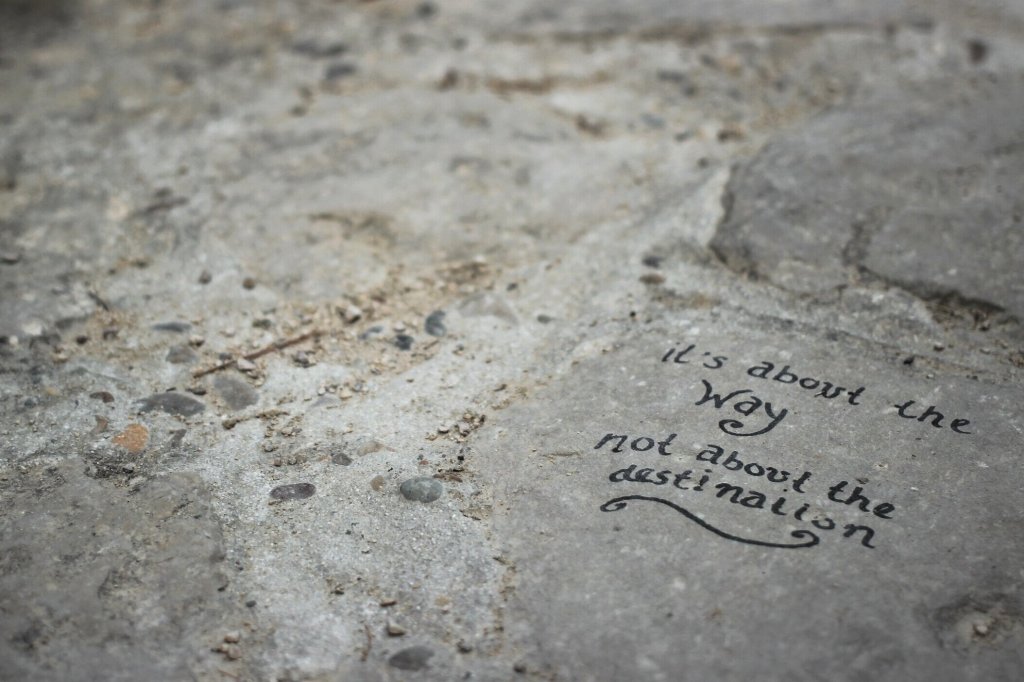
    The walking path I was to join is an ancient path that pilgrims walked, and still walk, leading to the Santiago de Compostela Cathedral on the North-West coast of Spain. Jesus’ apostle James’ bones are said to be enshrined there and for many it is the culmination of thirty days of journey by foot. In English, this walk is known as The Way of St James. 

    My training was to prepare me to walk twenty kilometres a day, while carrying a seven kilo backpack. I am to rely on the hospitality of local hostels each night, bunking down with many other pilgrims on the same path. For the past year I have sensed that this journey was one of the heart, and had already begun. It does not begin when I arrive in Europe, but it begins right here and now in my Australian home. My flight to Europe is only a part of that journey, as is my flight home. 

    Before being called Christians, followers of Jesus were known as followers of The Way.  (Acts 9:1-2). The same Jesus had explained to his doubtful disciple Thomas, that He was the Way (and also the truth and the life (John 14)). This weekend these followers remember that their leader was crucified-hung on a cross to die, outside of Jerusalem, nearly 2000 years ago.  We also remember that the tomb where he was buried is empty, because he rose from this grave, more alive than ever. 

    I have been reflecting on what this means if The Way is Jesus and not a well-worn walking trail. Does that mean I need not walk ‘The Way’. What if this well-worn walking track is a living metaphor for the journey in Christ Jesus? While I can download an app, read a map or ask a friend to know the route to that Cathedral in Spain, I can also read ancient texts, listen to devotions and sermons and know about The Way Himself. But unless one begins this journey by taking a step-one step of faith, trusting in the journey and the one who leads the way, one does not really ‘know’ the way at all! I am mindful that this journey of the heart is one of faith and putting one’s trust in the one we follow, rather than in the methods of others who have followed Him before us. 

    Jesus didn’t come to light a path or grade a trail. He came so that we would follow Him. He is the Way-maker. The Lord’s cross is the gateway into His life and the Resurrection means that He has the power now to convey His life to me. (Oswald Chambers)

    I am already following The Way. I began this journey twenty years ago, when I was in my 30s.  I was hoping to rekindle some of the early years of my faith journey, while on the The Way of St James’ trail in June.  For along time I have been weary of how complex I have made my life once again. I was looking forward to leaving behind many of my earthly possessions and to carry only the essentials.  I was planning to silence all the noises of this modern world and provide the space to hear from Jesus himself. 

    Of course, I can do this here, but pilgrimages while they are of the heart, are helpful in a physical and symbolic way to remind us afresh of what is most important in life. The arduous and physical path can be helpful to cut the ties with that which bind us and can tie us in knots in our daily lives.  As our regular lives or what we call ‘normal’ fall away, we make space to encounter the divine one on the path and invite spiritual renewal. 

    The irony is that this pandemic is changing my ‘normal’ to something different. I just did not choose it. My journey to the shops is only for the essentials these days and what I assumed is my rightful and typical day, is no longer the same.  Perhaps, instead of lamenting for what I have left behind in this season of social isolation, I can see it as a metaphor for spiritual pilgrimage which will bring renewal, without leaving my front door!

    Jesus never offered to make a path or required me to find that path. He simply asked me to come follow him. And I am doing that already.

    Once the world has settled back to the new ‘normal’, perhaps I will get the opportunity to walk that trail in Europe. For now, I am considering how I can ‘walk’’this day, in this place, trusting in the risen Jesus of Easter, one step at a time.

    In the words of Eugene H. Peterson, “The way of Jesus cannot be imposed or mapped — it requires an active participation in following Jesus as he leads us through sometimes strange and unfamiliar territory, in circumstances that become clear only in the hesitations and questionings, in the pauses and reflections where we engage in prayerful conversation with one another and with him.”
    ― The Jesus Way: A Conversation on the Ways That Jesus Is the Way

    Photo by Les routes sans fin(s) on Unsplash

  • What’s your source?

    What’s your source?

    At the mention of pandemics and army building nations, anxiety stirs and dread settles like a rock in my gut.  My fears are not always alleviated by the media, who in the pursuit of news stories; or should I say new stories, feed these fears and a sense of powerlessness.  Even without the news, I am very capable of building doomsday scenarios and conspiracy theories in my mind and conversation. 

    I have been working hard to make my mind my friend this week. I have sometimes been ruthless in my conversations, asking people who or what was their source of information.  I wanted facts not interpretation.

    When I first started teaching history studies to high schoolers over ten years ago, I spent a whole lesson explaining the importance of knowing your source.  A primary source is a first-hand account while a secondary source is usually based on the firsthand account. Facts are different to opinions. And just because it is on the internet, does not make it is true!  Know your source, I would say to my students.  Of course, not all of us are privileged to have a firsthand account of events, so we rely on credible witnesses, who were present. 

    The Prophet Isaiah lived through a time of impending invasion by some serious marauders, some 2,700 years ago. He wrote about it and that is recorded in the Bible.  He witnessed people all around him being fearful, believing conspiracy theories and living with dread.  His God spoke to him and told him not to fear what they feared, but rather fear God himself. It was a time where people would rather consult the dead or spiritists, instead of inquiring of God himself and his law and testimony.  And yet, when things went wrong, they would be the first to curse God -and their country’s leader! (Isaiah 8) 

    For those of us that believe in a God that is far greater than our earthly fears, I ask you how seriously do you fear God himself?   Do you seek Him as your primary source of reassurance and wisdom?  Do you regard Him as truly holy?  Do you spend as much time reading the Bible as you spend watching the news or scrolling through social media? 

    As we approach the Easter weekend, a Christian religious holiday remembering the resurrection of Jesus from the dead, let us remember that the same Spirit that raised him from the dead also gives life to our mortal bodies. (Romans 8:11) And believers, that is the same Spirit that lives in us today!

    I am not going to stop watching the news or ignore what is happening in the world around me.  As hard work as it is at times, I plan to seek out the facts and respond accordingly.  But I am not going to live in fear of what might happen either. It is enough to fear the living God; the one who raised Jesus from the dead. I want to seek Him as my primary source of assurance and sanctuary, for without Him this world is filled with distress, darkness and gloom.

    Photo by Elijah O’Donnell on unsplash.com 

  • Stay on the Path!

    Stay on the Path!

    Some of us are rule followers more than others.  I notice that with the students that I teach. There are those who just because I say, ‘do not touch’, will touch and poke and prod just before you yell no!

    And then there are others who happily leave the item alone as instructed. Of course, there are also the ‘why’ people who are not willing to follow the rule until they are satisfied they understand the ins and the outs.   And then there are some who just did not listen at all, despite my repeating the instructions.  Later, when I chastise them or give some other consequence, they are adamant they were never told in the first place.  Sigh….

    Why am I not surprised then when last weekend, the NSW government had to shut down Bondi beach, after communicating to all Australians about the need for social distancing and a ban on large outdoor gatherings!  Did these people not hear, or did they think “this rule does not apply to me”?

    My husband booked a weekend for two at the Gold Coast for last weekend.  The night before, I was anxious.  He was adamant about going and I thought of a dozen scenarios of why it was a bad idea.  Getting stuck inside a hotel room was not my idea of a weekend away on the Gold Coast.  As a foodie, my idea of a good weekend involves hanging out in restaurants and coffee shops; and that was looking less appealing.  The Gold Coast also had known Coronavirus cases and my hometown had none. I did not want to be the one to bring the virus back to our regional town or the school I worked at.  If I had to isolate or recuperate, I would lose much needed income.  And finally, I reasoned our government had made a recommendation. 

    I was relieved that after watching the news, my husband agreed it was a good idea to stay home. He postponed our plans and we stayed home. Meanwhile, I watched many of my friends on Facebook go to parties and restaurants.  Only few it seemed reduced their contact with others.

    I admit that during these unprecedented times, it has been challenging to wade through the hyper anxious scenarios and sometimes even to admit the sober truth.  At first, as the rest of the world were falling sick and many vulnerable were dying, I was responding to my students who struggled to understand our school’s request to wash their hands.  Some were defiant of protocol, others obsessive in following it.  Some were not convinced it was a threat at all and wanted more information.  Even my suggestion they source their information from a reliable online source met with mutterings about conspiracy theories.  Sound familiar? 

    As teenagers are inclined to be, many self-focused young people could not see why they needed to worry. After all, teenagers were not the ones dying from this virus.  And then, they argued there are no cases here in our town. 

    Fast forward a week and the situation is different.  And the rules have changed.  Our state borders have now closed and next week teachers like me will go to school, while most students will stay home on student free days.

    At the beginning of this week, I was feeling like the proverbial sacrificial lamb heading into school. Why did I just stay home in isolation all weekend to then head into a classroom of teenagers who like to hug, high five and lean all over the furniture and even meHow much sanitizer and cleaning are enough, I fretted?  I too was beginning to question the rules.

    Flipping through my Bible Monday night, the words of Romans 13 presented me with a challenge.  Paul specifically said to those in Rome; as well as all Christians “Everyone must submit himself to the governing authorities, for there is no authority except that which God has established… Do what is right…”  And as a God follower, how clear was that?, I thought.

    If our Prime Minister says stay home and do not go out unnecessarily, we should stay home.  And if we teachers are to stay teaching then that is the right thing to do for now…no matter how hard that is.  Afterall, it is for the good of the whole nation and not just the individual. 

    Just when I think I have worked through following these rules, there is the matter of this weekend’s local government election.  If I do not vote, I am breaking the rules. If I do vote, I must brave yet another gathering of people, risking catching Coronavirus.  How fair is that?

    What is it about so many Australians that question and do not follow rules?  Is it our convict ancestry or is it our rugged individualism?  We esteem bushrangers and anti-heroes and yet criticise those in authority, like it is a national sport.

    One psychologist, Douglas LaBier PhD says it comes down to how we define what is “fair”.  Apparently, people who see themselves as special or are entitled in some way that others are not, are likely to disregard the rules that others will follow, believing the rule is an ‘’unfair” proposition to them.  Researchers have found it is very hard to get entitled people to follow instructions.  “The entitled people did not follow instructions because they would rather take a loss themselves than agree to something unfair…”

    Following this logic, if we do not follow the rules, that makes us entitled or special. If we think something is unfair, then perhaps we are thinking more of ourselves than we ought. 

    I agree there has been enough abuse of power, including from those in authority. But there are checks and measures in place for that.  Surely every time we encounter a policeman, we do not argue with him.  What makes us think that in an international pandemic crisis, we are entitled to choose which rules we follow and which we cry “unfair” to? Why do we do our own thing or do the right thing- when we are ready, instead of simply following the instructions of those in authority?

    My concern is, just like in the classroom; when too many people do not follow the rules, the consequences will be negative for both rule followers and those that do not.  As I often think when I am trying to manage a classroom of teenagers, why can’t people just do as they are told!

    And then, I realise I do not immediately think ‘’yes sir’’ or ‘’yes ma’am’’, I can do that!  Maybe I am one of those annoying ‘why ’people, who must always know the ins and the outs before I agree to follow the rules.

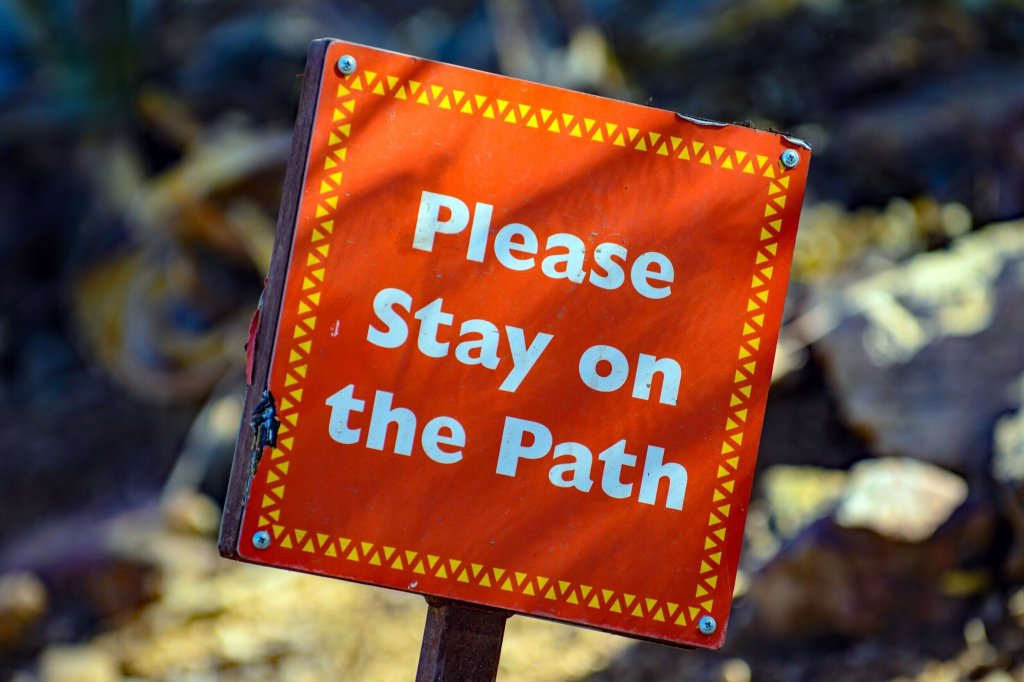
    What about you? If a sign says, “stay on the path”, do you walk on the path,? Or do you question ‘why’ ? Maybe you cry unfair and walk on the grass instead. And if my class is a true sample, some of you will complain when you get in trouble, and say “What sign?”

    Photo by Mark Duffel on Unsplash

  • A life lived slowly and deeply…

    A life lived slowly and deeply…

    It is February 2020 already.  January is gone. I am back to work and this week I have another birthday that is moving me further away from middle age- and to old age.  ‘Normally’ and by now, my goals for the new year and the new me would have been printed and posted somewhere I could read and action daily.  For reasons I am only now defining, I have put off creating this list.  That seems so out character for me. 

    I discipline myself to first go back over 2019 instead and list the highlights and the challenges. With sadness, I realise another year has passed and it feels like I have skimmed over the surface of life without living deep enough.  In spite of my activity and achievements, I have lost more than I have gained in the process. 

    Take my health, for instance.  I started off last year with good habits that were rewarded with improvement in my health and weight. But there came a tipping point, when an overloaded adrenal system upset all my hormones and progress.  Doing more was not the answer. Doing less was, but it was also so counterintuitive, especially when I was in the habit of pushing myself for so long.   

    And then there is my creativity.  For those of you that read my blog regularly, you will notice how little I have written in the past six months.  I am very aware of this. I can do analytical any old day, but my ability to express myself creatively seems to be squeezed out when life is reactive and seemingly frantic and shallow.

    I suspect that this year, is a year to shed some of those good things that are making me too busy to experience life deeply.   My preoccupation with ticking boxes and kicking goals has gotten out of hand.  I forgot how to live in the moment.  As I rush onto the next thing, I find myself shovelling food into my mouth. If I am going to slow down, perhaps I can start by chewing and tasting my food instead.   Instead of cramming in another workout, perhaps I would be better off pausing enough to breathe deeply. 

    I have book on my bookshelf called ‘’In Praise of Slowness: Challenging the Cult of Speed”. The author Carl Honore challenges us by pointing out human’s history of speed and efficiency. He identifies the benefits of a slower paced lifestyle.  “The great benefit of slowing down is reclaiming the time and tranquility to make meaningful connections–with people, with culture, with work, with nature, with our own bodies and minds.”

     If this year is going to be different to last year, I will have to forgo much of my speed and efficiency that I have spent decades perfecting. If I am to live life slowly and deeply, I wonder can I to do that without making lists and setting goals?

    Photo by Pablo Orcaray @pborcaray on Unsplash.com

  • The Importance of Silence

    The Importance of Silence

    Packing my bag for a recent camping holiday, I made a decision not to bring or download novels.  Whilst I absolutely love to read and desperately needed to relax, I also was missing being creative.  I hadn’t blogged in ages and wanted to produce something myself rather than read something someone else had created. 

    So instead of packing my Kindle, I packed journals and pencils.  I also took my Bible as a book, rather than reading the app on my phone.  The island we camped on is remote and wi-fi free; and most times mobile coverage free. For ten days, I was technology free and not connected to the random visual and audio kaleidoscope from my phone that usually distracts me.  It was amazing! 

    Now, less you think we are too good, the temptation did remain to be connected to our devices.  I did dig out a few reference books on my kindle app and certain other family members still found games to play on their devices.  For the most part though, when we were not active on or around this amazing section of the Great Barrier Reef, we were playing cards or games as a family.  Or resting. 

    I did not realise how tired my body and mind were until I slowed down.  There were no emails to read or to respond to, nor housework or yard work to do.  There was no rushing and no agenda. Just time to rest and relax.   How absolutely wonderful and restorative.

    The first thing I did when I returned home was to revisit my habits.  My first priority was to buy a bedside alarm clock and charge my phone in my office overnight.  I have stopped reading novels for now and have used this time to write in a journal, in order to unpack the complex emotions and thoughts that almost assault me everyday in just living and working in this modern world.  This helps to clear my mind enough so I can explore something more creative and life giving- and to sleep better at night. I have a little giggle to myself when a thought crosses my mind and I automatically reach out to “google-it” on a phone no longer there. I have also removed my work email app from my mobile.

    Secondly, I am trying to break my habit of efficiency.  Dr Susan Biali Haas in her article “Slow Down to Wake Up Your Life” reminded me that like her, I too had been rushing through my life with pressured, driven detachment.  I want to pull myself out of the habit of connecting superficially with my life and instead connect with it deeply.  As she puts it so well “instead of spending all your time scrambling up and down the superficial scaffolding of ‘to-do’s’ and distractions, you get reminded of what counts.”  For me, that is reconnecting with my heart and with God’s heart.  I can do this reasonably well on the weekend, but I am seriously finding this difficult during the week, as a high school teacher in a demanding school.

    As an introvert, I have known for a long time that solitude recharges me. I have missed that and am grateful that my holiday reminded me of its importance.  Slowing down, breathing, not reaching for my mobile phone and rediscovering small moments of solitude in my weekdays is new habit I am determined to develop.     Richard Foster in his book “Celebration of Disciplines” says silence goes hand in hand with solitude.  For someone who loves words, it is quite a challenge to consider one of his recommendations – to spend a day or part of a day without speaking to anyone. 

    While I was rediscovering the importance of silence, a girlfriend of mine stumbled on hers overseas.  She spent a day alone on a remote mountain top, while the mist rolled in.  In that short amount of time, she was inspired to fill a page with the titles of articles and chapters she will now write. 

    The words of James Altucher ring true, “Out of silence comes the greatest creativity. Not when we are rushing and panicking.” 

    But silence is more than the absence of speaking and going technology free.  As one desert father is quoted as saying “…There is silence of the tongue, there is silence of the whole body, there is silence of the soul, there is silence of the mind, and there is silence of the spirit.”   

    That sounds like being still, that the Bible talks about. (Psalm 46:10 and 37:7)  Boy, that’s hard in this crazy busy, 24/7 technology day and age. But I think I’m finally learning the importance of silence and I’m clawing it back, one habit at a time. 

  • When your story ends, what will your best chapters be?

    When your story ends, what will your best chapters be?

    When your story ends, what will your best chapters be? Will it be the last chapter of your story or will it be chapters written a long time ago?  Will your final story be a testament of flourishing or just survival?

    Sometimes it feels like my best years are behind me.  They certainly are, if the measure I use is linked to my youthful qualities.  Especially if that involves one’s skin’s elasticity and lack of grey hairs.  The body tires easily now and doesn’t bounce back as well as it did in my 20s and 30s.  I have far more aches and creaks in my joints too, and I do not expect that will lessen. 

    It makes me sad to see people give up on living when they get older and yet, I realise that sometimes you just run out of oomph!  Instead of leaping out of bed in the morning with optimism, you drag yourself out with a hint-or more of cynicism. When recent chapters of your story are lack lustre, you question if it isn’t all down hill from now. 

    Something far sadder, is young people declaring their life is not worth living.  My heart hurts when a beautiful young person’s first few chapters are filled with hardship, grief and loss instead of love and promise.  Recently I looked into a beautiful young person’s eyes, declaring that I would miss them, if they gave up on life.  And ‘so, would your friend miss you too’, I declared.   I wanted to say so much more. I wanted to say that with help you can write new chapters; better chapters.  The beginning need not dictate the end. There are different and better chapters ahead.   

    I am always encouraged when I see older women-and men, flourishing in their final chapters of their lives.  They inspire me to keep on pressing on.  My own father would plant trees, expecting to enjoy their fruit.  He would make plans for his next adventure, willing to keep writing those chapters until the very end. 

    I see older women, even elderly women working out in the gym, stepping out on the line dancing floor and joining me for a 5 km park-run, and I am inspired.  I only started line dancing this year.  Some days I despair of ever getting the steps right or being able to enjoy the movement without my brain hurting. As if sensing my frustrations, one experienced dancer, twenty years my senior told me, ‘I started dancing when I was your age. Don’t give up.’  And so, I keep going. There’s hope for me yet, I realise.  And then there’s the fact that dancing is also good for my brain. Research tells me it can even make my brain younger!  

    I want my final chapters to be my best chapters yet.  I want them to be chapters of flourishing and not just surviving. By flourishing, I mean growing, blossoming and bearing fruit.  Not just existing and staying alive until I die.  What if, the best chapters of my life are yet to be lived?  What if ALL of my experiences have prepared me for this moment and the one’s ahead?  How could ALL of that be used for good?   

    There is something altruistic about doing good and leaving behind a legacy.  Not so that we are famous or infamous, but rather so that our life is bigger than the sum of one.  I also take heart to know that my life is not my own; I am first loved by God and He has a purpose for me being here.    I take comfort in knowing that no other person is like me and I have a place here just by being me.   I want that beautiful young person to know that too. 

    No matter how much I’ve messed up or my previous chapters have been messed up, I draw comfort from these words from the Bible And we know that in all things God works for the good of those who love him, who have been called according to his purpose. (Romans 8:28 NIV)

    And with His help, I am hopeful that when my story ends, the best chapters will be my last. 

    Photo by Allef Vinicius on Unsplash

  • Old fashioned or not? Whatever happened to hospitality?

    Old fashioned or not? Whatever happened to hospitality?

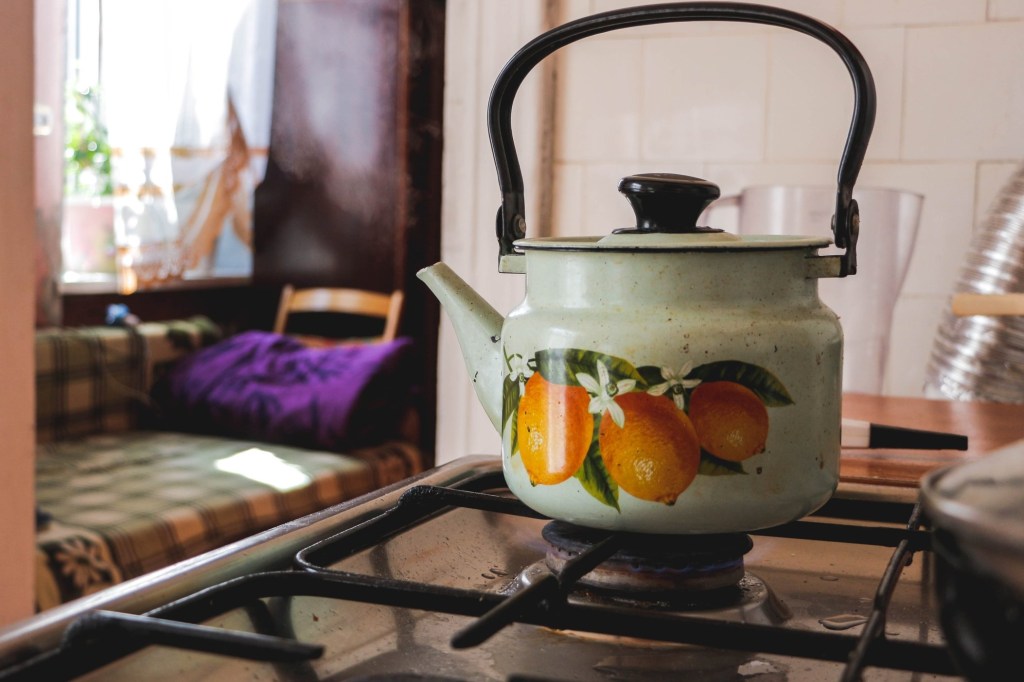
    I grew up in a home where the kettle was a few whistles short of a fresh pot of tea.  And dinner only required a few more potatoes before your family could join ours too.  If you needed a bed, we could give you one as well; sometimes that was just a mattress on the floor.  None of this was at all fancy, but I watched my parents do this with sincerity and joy, in the name of good ol’ country hospitality.

    According to the Oxford dictionary, hospitality means ‘the friendly and generous reception and entertainment of guests, visitors, or strangers.’  My parents were always friendly to anyone that came down the driveway or knocked on their door.  Whatever we had, we shared and it always seemed to be accompanied by a fresh pot of hot tea.

    My husband’s grandmother was from the country too.  I remember arriving with my then boyfriend after a very long road trip.  The mountain air was cold before we entered her warm country kitchen, where she immediately bustled about making fresh tomato soup, and a fresh pot of hot tea.  She did it with such enthusiasm and love. And, to this day I have never tasted a tomato soup quite like hers did that night.

    A couple of weekends’ ago, I had two lots of house guests.  One of my guests, after she patted my friendly dog and enjoyed my home-made jam on her breakfast toast, suggested I should open my own Bed and Breakfast.  I admit I was surprised at the suggestion. I had never thought of myself as someone who would charge for this type of hospitality.

    I have formal qualifications in Hospitality and I teach high-schoolers the same, but I have separated this type of professional hospitality from that of home and hearth; good ol’ country hospitality.  At times, it feels that the theory side bears little resemblance to the spirit of hospitality in the home.  But, it should!   Hospitality is about love and care.

    In ancient times and especially biblical times, offering hospitality to strangers was considered a virtue; even a command.  Sharing food with someone else was akin to sharing life and an act of love.  Sometimes, one might even offer hospitality to angels. (Abraham did. This is recorded in Genesis 18.)

    I wonder if the local coffee-shop isn’t a blend of commercial hospitality with good ol’ fashioned home hospitality? I love it when I stumble upon a coffee shop imbued with the spirit of generosity and love; sharing life along with food and drink in a communal sense.  Of course, so much of the Australian coffee shop scene belongs to small business owners, as opposed to larger and more commercial hospitality chains.  Perhaps that is why the spirit of hospitality is so much more noticeable.

    I used to dream of a home where I could entertain and the kitchen and my mess could be hidden from guest’s view.  I don’t want that any longer.  I enjoy it when I have guests, who sit at the breakfast bar chatting while I prepare their meal or they chop something up too.  Just like my visitors did a couple of weekends ago.   And yes, there was cups of tea-and coffee too! 

    As Shana Niequest, is quoted as saying in her book Bread and Wine: A Love Letter to Life Around the Table with Recipes, “The heart of hospitality is about creating space for someone to feel seen and heard and loved. It’s about declaring your table a safe zone, a place of warmth and nourishment.”

    I am not going to open a Bed and Breakfast anytime soon, but I think I’d like to create more opportunities to welcome people around my table, sharing warm and nourishing food as well as fellowship…along with cups of fresh, hot tea.   Does that make it food for the soul? Or just good ol’ fashioned hospitality?  Or not…perhaps it’s just the forgotten heart of hospitality.

    photo by John-Mark Smith @mrrrk_smith on unsplash.com

  • Happy Mother’s Day to my Mumma in heaven.

    Happy Mother’s Day to my Mumma in heaven.

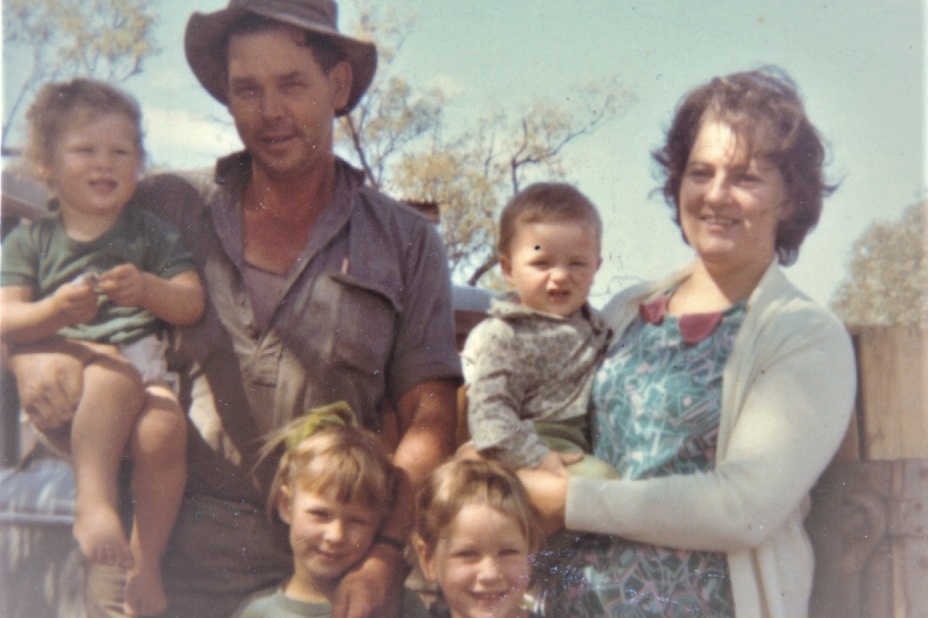
    My Mumma loved babies-she had four of them.  I was her first born; born in a little Central Queensland hospital, just short of her 21st birthday.  By the time she was twenty-five, she was the mother of four children under four years old.  If she was still alive, she would see her youngest baby turn fifty this year.

    The first ten years of motherhood were spent in relative isolation for my Mumma.  She would care for her babies in an old wooden Queensland home, surrounded with verandas and big wide paddocks filled with grain.  The nearest neighbour would be miles away, accessed only by dusty-sometimes boggy, narrow country roads, across bumpy cattle grids and through multiple farm gates.  When her babies were old enough, they got the job of opening and shutting those gates.    

    Mumma had to be brave. She would wrestle a gun to shoot snakes that threatened her babies and kangaroos that threatened my Daddy’s crops.  She was paranoid her babies would get bitten and would insist we stay nearby.  Some nights, when Daddy came home, she would show him the snake she had shot that day. Its tail touched the ground one side of the fence she had slung it over. It’s head touched the ground the other side. 

    Before my Mumma could cook, she had to stoke up the fire in the old, cast-iron, slow combustion stove, that was tucked away in the recess of her kitchen. Daddy would chop the wood, and often light the fire, but she had to keep it from going out.  The big, cast iron kettle would sit at the rear of the stove, filled and warm; ready to bring to the boil again when the workmen returned or a visitor turned up.  The warmth of the stove would raise the most amazing bread dough and sweet German Kuchen.  The same stove would keep rescued baby ‘roos warm in their hessian bags, little chicks alive at night and many kittens purred in it’s glow. 

    My Mumma’s babies were bathed in a little, plastic tub atop the melamine kitchen table, alongside of the warmth of that stove.  When we were older, she would often place all four of us in the enamel claw foot bath. The bath sat on top of grey, cold concrete in the roughly built bathroom set down four stairs below the kitchen. Sometimes the neighbour’s kids would end up in the bath with us, when they came to visit.  Especially when we all came up in welts from the itchy grubs that lived amongst the brigalow scrub we liked to play in. 

    Water was precious.  Our family of six relied on rain to be caught and stored in the attached corrugated iron tank.  The harsh, mineralised water pumped from the artesian bore was available but rarely used.  Maybe my Mumma used it in her shiny, new, Simpson wringer washing machine that stood proud and centre of the open laundry, alongside of our little bathroom. On a cold winter’s morning the water was often held hostage and frozen in the old lead pipes.  Warm water was only possible and available in the bathroom, if the fire was hot and water passed by the heater attached to the stove. 

    Mumma had to be strong. If Daddy wasn’t home by dark, she had to visit the garage, with its dirt floor and smell of diesel-and always the threat of snakes, to crank the generator.  The steel wheel with its attached handle, required a firm grip and strong arm to turn the crank handle and fire the diesel generator.  (Wealthier neighbours could afford a press button generator.)  She sometimes cranked the generator during the day, if she wanted to use her Sunbeam mix master to mix cakes and cookie doughs to bake for her babies and my Daddy.  At night, the generator would provide the electricity for our single, incandescent bulbs that glowed in each room.

    Mumma had to be careful. She was a Mumma before child restraints were mandatory in cars.  Her babies were transported in a wicker bassinette that would sit on the bench seat.  Her toddlers would usually stand on the same bench seat, no doubt distracting her while she drove and shifted the gears on the column. On Sundays, Daddy would drive our family wagon, giving her a rest.  One of us could sit on the front bench seat between Daddy and Mumma. Mostly, her bigger babies sat wearing their Sunday best on the bench seat behind them.  On special occasions and long distances, we would get to lie down in the back of the wagon. Daddy would carry the sleeping babies inside, when we got home to the dark homestead.

    There are many more things I remember about my Mumma and my childhood in that country home.  They are distant but good memories.  Mumma was mostly happy in those years.  In her latter years, she was mostly sad until she left us far too young at sixty-six. 

    Today, is Mother’s Day and I choose to remember her in those early years, when she poured out her life caring for her babies, including me.  In these years she stood shoulder to shoulder with my Daddy in outback Queensland, when they were share-farmers.  I choose to remember her as our loving Mumma; brave, strong and full of care.  I love you Mumma. Happy Mother’s Day.