Category: writer

  • The gift of belonging to a bigger story

    The gift of belonging to a bigger story

    As a young girl, I spent many afternoons after school sitting in my grandparent’s caravan, sipping milky sweet tea, and dunking biscuits.  The challenge was to dunk those biscuits just long enough to soften them, without them landing in the bottom of my teacup. Pop needed to dunk his biscuits for lack of teeth. I did it because he let me.  

    Nan made the pot of tea; brewed with tea leaves and freshly boiled rainwater.  She also stocked up on those dunking ‘bikkies every pension day shop.  Arnott’s, I recall; Scotch fingers and Gingernuts. 

    My Pop was a storyteller. He loved to yarn about his childhood and his working days, along with stories of farms and family. He listened to my stories as well and answered my many questions. My grandparents gave me the gift of belonging to a bigger story- our family’s story.     

    I never got to hear stories from my Dad’s parents.  Grandad died before I was born, Grandma died when I was nine.  It wasn’t until later in life that my Dad would tell me stories about Grandma, and his childhood. Books printed for family reunions, told stories of my German and Protestant ancestry, giving me a larger framework to understand the stories of this side of my family.   

    Michael Jensen  says storytelling is the impulse that lies deep within human cultures, to the point that it is almost fundamental to the very concept of our culture itself.    We belong to bigger stories than just our own.  Both the bigger story and our own stories help us create meaning.

    I have a friend who is adopted. She has never heard stories from her biological grandparents or birth mother.  I do not understand what that is like.  She has very few stories of her birth, her abandonment, and little opportunity to gain another perspective.

    Gaining another perspective involves hearing another’s story. This is helpful to reframe some of our own negative stories and can bring new meaning and healing.  For over forty years, I believed a story that I said I was not lovable.  This story was based on fragmented memories of abandonment.  It was not until decades later, when my mother told me another story, that I realised my version of the story was incomplete.   

    I have found journaling helpful to reframe some of my stories.  Often, I get stuck on one grievance or perspective and cannot get past my story of hurt and disappointment.  By asking different questions of my day, or year or season, I inevitably end up with a reframed version of my story.   I will often ask myself, what do I have to be grateful for, what have I learned, and what is God saying to me in this?  Questions like these help me to gain a different perspective, and brings deeper meaning to the stories of my life. 

    As a Christian, I believe I belong to a bigger story; and this grand story helps me make sense of both the beauty and the brokenness of my life, and the world I live in. When I view my life through Jesus Christ, all the little stories of my life have purpose and meaning.   

    One day, I hope to tell stories to my grandchildren, just like my Pop did all those years ago.   I hope that I can share a little of the bigger story with them, so that they may know a sense of belonging as well. I want to serve them tea and bikkies, and listen to their stories too.

    Photo by pine watt on Unsplash 

  • Loving Wholeheartedly

    Loving Wholeheartedly

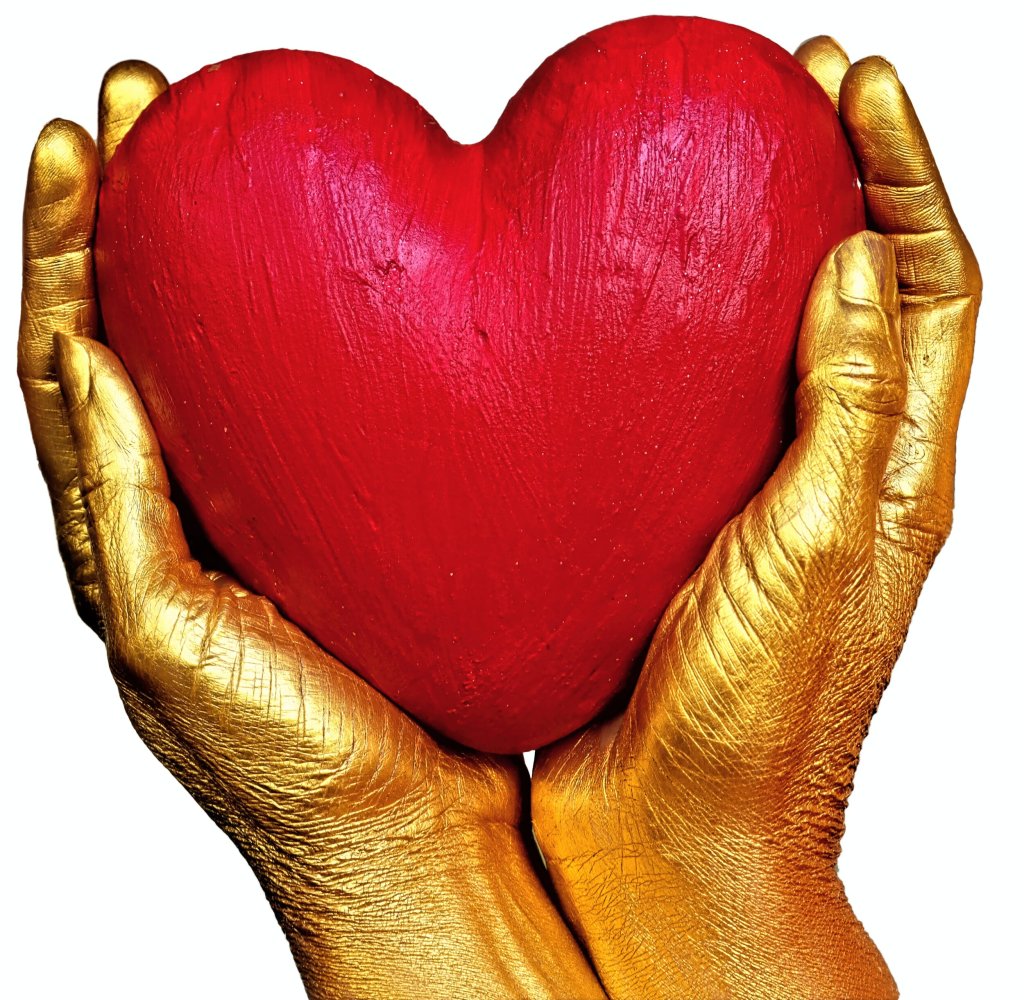
    If you have read my past two blogs, you will know that I am seeking to live a life that is much deeper this year.  Daisy, my new puppy has certainly contributed to that richness- and I might add, also the messiness of this thing called life.  The arrival of my first grandbaby- a grandson, has taken life to another level.  If I could paint, I would make an image of my heart overflowing.  I confess though, as I gazed down into the eyes of the newborn in my arms, I felt a hand squeeze my heart with fear. I realised that living life deeply involves loving deeply; and that makes me vulnerable and a little scared.  Perhaps this is what Brene Brown means when she speaks of wholeheartedness? 

    Brown, a professor in sociology, defines wholehearted people as people who fully embrace vulnerability by living and loving fully with their whole heart, knowing there are no guarantees.  Her ten guideposts for wholehearted living includes letting go of much – including fear, and in its place cultivating a list of positive qualities and behaviours.

    While our heart is considered the centre of our emotions, we also know it is the very organ that pumps our blood that gives us life.  In ancient times, the heart represented all our will, emotions, and reason.    Wholeheartedness is complete and earnest commitment.  As soon as we start protecting our heart from hurt, we start hiding from love and life loses its depth.   Life is then lived half-heartedly.   

    It takes courage-and faith, to live vulnerably, to love deeply and to be wholehearted.  We cannot guarantee our future, so why do try to control it?   How many of us then live life half heartedly most of the year?

    As a believer, I noticed that wholeheartedness is asked a lot of believers in the Bible. Jesus said that believers are to love God wholeheartedly (with all their heart, soul, mind, and strength) and to love our neighbor as ourselves. This means an earnest commitment to our love of God, ourselves, and others.  You know, I can honestly say that loving God, myself, and others does require courage; especially in the face of some of the situations and circumstances life throws at us.  Loving some people and myself, can be downright hard!   What’s the alternative though?  Halfhearted living. Doesn’t Revelation 3:16 tell us that this is distasteful lukewarm living!   

    How then do we love if we are to love wholeheartedly?  What perfect example of love, then God’s example Himself!  While I am not a big supporter of Valentine’s Day, I am a big supporter of love; of being loved and loving every day of the year.  Loving wholeheartedly, and living wholeheartedly is a lifestyle and not a day.  If I want to live life deeply, then I must have an earnest commitment to love no matter what tomorrow brings.  How would you paint that?   

    Photo by Marek Studzinski on Unsplash

  • Going Deep

    Going Deep

    I journaled at the end of last year, I feel that deep down I am missing stuff.  Life is not slow enough… not wondrous enough… not worshipful enough…. 

    This has been my heart’s yearning for a long time, but despite my best intentions, I often overcommit and over function and instead of paring back like I should, I crank up efficiency and organisation.   Now sometimes this is a strength, but I have come to realise that what I lose in doing so, is sometimes far greater than what I gain.  Very soon I become fixated on my goals, and my world shrinks and along with it my joy and all these things I yearn for. 

    Frank Dimitri (2018) says that “Wonder is the impulse behind scientific, and philosophical inquiry, artistic creativity and spiritual yearning.” While we have all experienced wonder as a child and at least once as an adult, the reality is that it often becomes blocked- perhaps even used up as we get older.  I discovered during some research, that if I wish to be open to experiencing wonder, I must be mindful of my senses. That means going slow enough and being mindful or open to experiencing the depth of my sensory experiences.  Too often I shovel food in my mouth without tasting it, rush a shower without feeling it or rush throughout my garden tending it, without smelling the roses.  No wonder I am missing ‘stuff‘ and feel my life lacks wonder and I yearn to be worshipful.   

    For the past ten years, our family have often holidayed on the Great Barrier Reef.  I remember the first time I saw baby turtles hatching and held one of those leathery tiny creatures in the palm of my hand. I recall standing in wonder, watching the hatchlings scramble for the ocean in the moonlight. Fast forward several trips later, and I lamented my lack of wonder, having seen this sight many times.  It took a child, filled with joy and delight at the sight, to challenge me to reactivate mine.

    For a long time, I have relied on the promise of travel to bring relief to my everyday busyness and fixation on doing.  Without realising it I have sought new adventurous experiences to fill my senses and activate this wonder, which fuels my sense of worship.  What can be considered culture shock in a foreign land, I have come to draw on to fill my sensory ‘wonder’ bank with new smells, tastes, sounds and sights.

    I have been lamenting for too long now, that this global pandemic has thwarted all my plans for travel. I woke up one morning in the new year and decided ‘if I can’t go wide with travel, I am going to go deep with the life I have’.  I am still working out exactly what that looks like and how to reduce overload and overwhelm.  The early birthday gift of a puppy we called Daisy has helped me to make a change. Daisy has been my invitation to go slow. I wonder at her energy in her little body.   I smile at her antics, draw in her puppy scent and giggle like a child when she licks and wriggles. I marvel at this cute creature, part of God’s creation.  I believe that while it is true that worship can lead to wonder; I am discovering that wonder leads to worship. 

    It feels a lot like mining meaning in what it is front of me, instead of seeking more.and more.  Perhaps that is exactly what going deep means. Instead of finding the shiny at the surface, I can dig deep and find the riches there.  I am looking forward to a year that includes more of slow, more wonder and more worship.   

    Photo by Hulki Okan Tabak on Unsplash

  • The illusion of being in control

    The illusion of being in control

    If 2020 taught us anything, it is that being in control of our lives is an illusion.  There was little need for a planner last year; my grand plans came to naught.  What does that teach us as we go into 2021? 

    True, the challenges of 2020 are not yet behind us.  Covid-19 has not gone.  I am accepting the fact that international travel plans are unlikely to eventuate this year either.  And there are no guarantees that interstate travel in Australia will happen if recent border closures are an example.   So much of what I have taken for granted, as I have planned my life, has changed, and will stay changed for some time, with far reaching consequences.

    James in the Bible is clear that we do not even know what will happen tomorrow, let alone for the rest of the year.  He says it like this, ‘Now listen, you who say, “Today or tomorrow we will go to this or that city, spend a year there, carry on business and make money.” Why, you do not even know what will happen tomorrow. What is your life? You are a mist that appears for a little while and then vanishes. He continues, ‘Instead, you ought to say, “If it is the Lord’s will, we will live and do this or that.” (James 4:13-15)

    At first, I thought, Aw James, but surely the listener set commendable and SMART goals. Afterall, they were specific about where they would go and what they would do. Their goals were measurable, attainable, realistic and time bound. 

    The real issue is not the goal setting per se- as James points out, but the fact that listener failed to acknowledge God and recognise that they were not actually in control of their future.   Now, whether you believe in God or not; many of us know deep down that we cannot control our future – let alone the future of others or the world around us.  And, if we are not in control, and we do not trust in a God who is, that surely only leaves us with chance.  I cannot believe that.

    These verses remind me that even our very lives are not guaranteed beyond each breath that we take. Our life is but a mist, a vapor.  Here one moment; gone the next.  A sobering thought, but nevertheless very real when I consider the lives of loved ones lost in recent years. 

    What does this precious life of mine look like then, when I start my plans and resolutions in 2021 with “If the Lord wills…”?

    I do not believe this means passivity or inaction.  This is more about attitude than actions. James qualifies in the next verse (16) that to not preface our plans with “if the Lord wills” is to be arrogant, boastful, and evil. Ouch!  These are tough words.  How easy it is to forget that we don’t get to govern how long we live or what we achieve with this life we have.  To think so is an illusion.

    It is not powerlessness either. It has nothing to do with giving up any responsibility I have for my life.  It is not permission to blame others or God.  It is an attitude of surrender that evokes humility and thankfulness.  It is humbling to acknowledge I do not get the last say in my todays and tomorrows.  And if this past year has taught me anything, it is that much I take for granted is not guaranteed. What I do have is worth being thankful for, including my very life.  

    I am usually very zealous with new year resolutions and plans. I believe because my goals have been SMART, I have had reasonable success in ticking them off as the year progresses.  I have noticed though, that goal fixation can be problematic for me, even when I include God.  As last year has shown me, it leads to disappointment when I fail to reach them. No matter how much I planned to be in France to walk some of the Camino de Santiago, I couldn’t travel!  The sheer force of striving can also be counterproductive, as my weight loss plans showed. I wanted to lose a chunk of weight because that is good for my health.  However, because of an underlying autoimmune disease, restricting calories and working out harder worked against my metabolism.  So, I failed in reaching my target.  But what if my target was not God’s will this year?  As a friend has pointed out, I gained strength and flexibility! And what about the amazing new friends I made- and reconnection with an old one, who shared the journey with me. That is a lot to be thankful for; even surprised about.

    This year-2021, I will still set goals and make plans but with less fixation. More.important is my resolution to preface them all with “If the Lord wills…”    By holding my goals lightly- and less tightly this year, I am looking forward to more serendipitous moments and being surprised by God!  This time next year, I plan not to ask how did I go with my goals? ; instead, I plan to ask, what was in fact God’s will in 2021?

    Photo by Randy Jacob on Unsplash

  • Reclaiming Joy, Peace, Hope and Love

    Reclaiming Joy, Peace, Hope and Love

    Someone once gifted me handmade Christmas decorations with the words joy, peace, hope, and love carefully stitched across the front.  Growing up in a family that had many Christmas traditions, I was familiar with candles, angels, and tinsel but never decorations that were words.  Shops then and now lean more towards snowflakes, reindeers, and Santa Claus, so I didn’t expect to see words there. 

    It got me thinking.  From a Christian context, I wanted to know why these four words and why not a bunch of others: like faith, grace, Jesus?

    It wasn’t until I started to research Christmas traditions that I discovered why we use these four words and why they are so significant at this time of the year.  Do you know why? 

    These words are connected to the tradition of Advent.  Some Christian churches who follow a liturgical calendar include this season called Advent, in the lead up to Christmas Day.  Advent is the Latin word for coming, arrival and birth.  Evidently, this season is one about remembering the birth of Jesus Christ and because he has already come, the anticipation of his second coming.  What I had forgotten was those four candles on the Christmas wreath in my childhood church, represented these four words.  Sure, wreaths have roots in folk traditions of Northern Europe, but the symbolism of each of these candles is worthy of reflection.  And the message behind these words is timeless.  I don’t know about you, but I believe everyone is seeking joy, peace, love, and hope. I am and do. Who better to find that, than God with us-Immanuel- Jesus Christ? 

    The reality is that if I possess any of these qualities at all, they seem to disappear when I get caught up in the expectations of Christmas celebrations and the end of year wrap-up. Hope might be the most tenacious, or then again, it has possibly morphed into wishful thinking.  Joy is the first to go, as I press on to meet the expectations and demands I place on myself this season.  Love of self and others is hanging by a thread, especially on a day when I dare brave the hustle and bustle of the shops in our summer heat.  Peace: well that went out the window when Joy walked out the door.    

    I am calling joy and peace to come back into our home and asking love and hope to stay. I am planning to start this with new Christmas decorations. The tired me, was going to skip them this year, and start fresh when my first grandchild is on the scene in 2021.  Besides, it was all feeling too hard to decide what I needed to spend money on; especially when I don’t particularly want Santa Claus or reindeers as centerpiece.  I want to reclaim the spirit of Christmas; and I have decided to give it a name; or names.  Centerpiece this year is peace, hope, love, and joy- in no specific order, and established in Jesus Christ- God with us.

    Photo by Alexandra Fuller on Unsplash

  • What is your song?

    What is your song?

    I live on a couple of acres- or a hectare, as the metric measurement goes.  Gum trees in the front yard are currently showering our deck with their blossoms and gifting us with increased bird life.  This week, I heard the flute like song of the butcher bird and the warble of the magpie. Both bird songs were beautiful and clear.  I stopped what I was doing to listen.

    It struck me that many birds sing just because they can.  They are not shy with their song, nor do they need an audience.  I wonder if they sing to praise their Creator; or do they sing to simply announce I am here!  

    I have heard it said that we each have a song and the world would be duller if we did not share that song.  Imagine the bush if only the butcher bird and the magpie were permitted to sing, and the other birds were silenced. There would be no more comic chatter from the lorikeets, no magical kookaburra laughter, nor the loud screech of the large white cockatoo overhead.  There would be no slurred warbling of the little finches, nor squeaky whistling of the willy wagtail.   As Henry Van Dyke said, “The woods would be very silent if no birds sang except those that sang best.”

    As you know, I have been writing a blog on and off for the past two and a half years. I started this journey as an outlet to practice my voice- or my song.  Of late, I have been silent. I have struggled to sing.  As time lapses, I wonder if I need bother at all.  Is anyone listening, anyway?

    Then I am reminded of the birds… It is enough that I am here-I am alive!  The very breath that allows me to speak-or sing at all, comes from the Creator himself.  That is reason enough to give praise- to use my voice at all. 

    Finch or butcher bird, cockatoo, or magpie; each has a song.  And so do you and I! Loud, soft, squeaky, melodious, comical or serious, every voice has a place, even if it is simply to announce I am here
    And for me, that is enough for today and this blog.

    Psalm 33:  I will sing to the Lord all my life; I will sing praise to my God as long as I live.

    Photo by Caroline Attwood on Unsplash

  • Does speed matter?

    Does speed matter?

    I collapsed in my chair at the end of last week, shattered physically, mentally, and emotionally. In a week marked by efficiency, busyness and speed borne out of necessity to deliver outcomes, I should have been delighted in all I had achieved. Instead I felt overwhelmed in the wake of my intense week and dismayed about the impact my overwhelm might have had on others.

    It does not matter what I did or where I did it, because this has happened before.  It does not really matter why either.  What matters is what lesson I am slow to learn. 

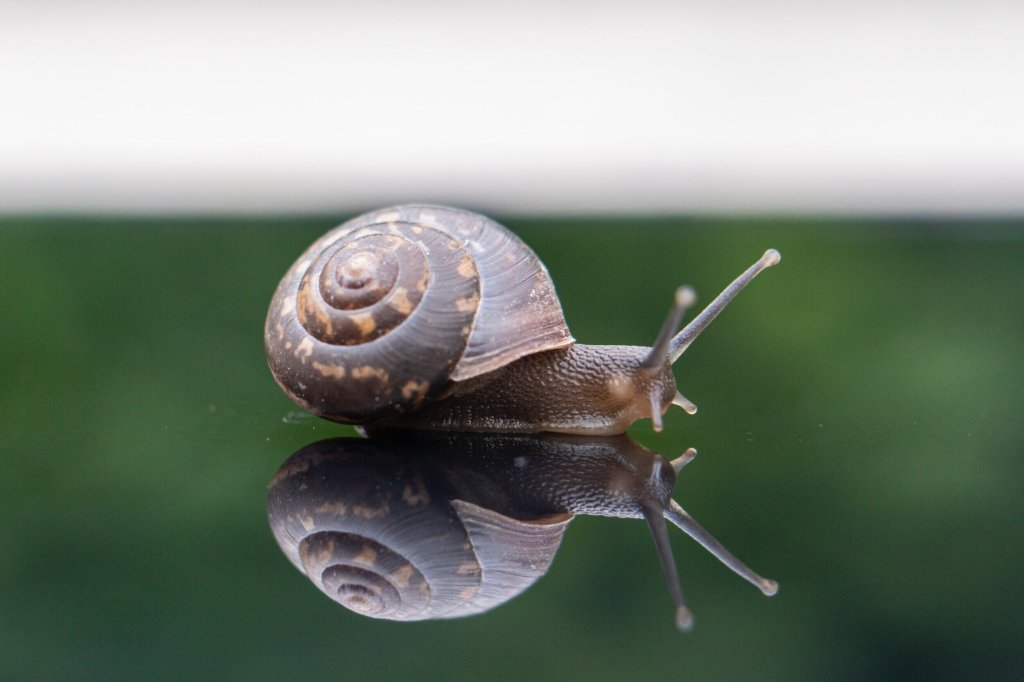
    A good friend, who prays for me and especially prayed for me this week passed on a message of encouragement with a Scripture to read.  She attached a P.S. suggesting that the picture of the snail that accompanied the verse, might in fact be just as important a message as the words.  A snail I thought? And then, I agreed. 

    I have been slapping my forehead the past few weeks, dismayed by my frustrations and exclaiming “Am I stupid? or Is there a lesson I have not learned?”  There is a lesson in this, I realised.  I need to go slower!  I suspect, in my case, this is not actually slow, but it will certainly feel slow for someone who multi tasks and has spent decades developing her efficiencies. 

    This is not a new thought.  For a long time, I have had a curiosity about the slow living and the slow food movement.  My weekends are spent pottering in my garden and in my kitchen; or hanging out with friends over a cuppa.  Why can’t I get this rhythm at work? Is it even possible? 

    I know why I cram so much into my workdays.  I do not think my motives are wrong, but the consequences are dangerous. Certainly, dangerous to my health, both physical and mental.  My body, already struggling with hormonal imbalances, does not need another squirt of stress hormone in the mix.  It is true if you run fast you risk stumbling. I felt that this week. 

    Did you know there is a ‘slow work’ movement too?  It focuses on mindfulness, creativity, and balanced work environment.  Paul Gentile in “How to make the slow movement work for you”, emphasizes using your time for more meaningful and productive ways, by taking controlled breaks and focus on individual tasks. For me that means no more multitasking and eating on the run. 

    Morgaine Gerlach suggests in addition, doubling the time estimate for the ‘to-do list’ items on your daily schedule, adding relaxation periods to each day and being patient with the process. 

    I know in my heart that slowing down allows me to go deeper and be present.  This is especially important for relationships not only with others, but with oneself and one’s God.  Just like the snail, going slower may mean I get to see the benefit and the beauty of every inch!

    Under duress, it all seems so hard and yet I know it is so important.  I rather like this Chinese Proverb and may have to post it on a note on my desk. “Be not afraid of going slowly, be afraid only of standing still.”

    And this one by Shakespeare “Wisely and slow. They stumble that run fast.”

    I will be sure to add a picture of a snail too. 

    P.S. Feel free to check in with me in a week’s time or a month’s time and ask me how I am managing ‘slow’. 

    Photo by amirali mirhashemian on Unsplash

  • My way or His way…

    My way or His way…

    My plans for a spiritual trek in Europe in June this year are on hold, due to this worldwide pandemic, and the closing of our country’s borders.  Sure, I can walk another year or even consider another place.  But this is not just any event I was looking forward to. It was something I was preparing myself for, both physically and spiritually. And I have felt for a long time that this well-worn path was calling me.

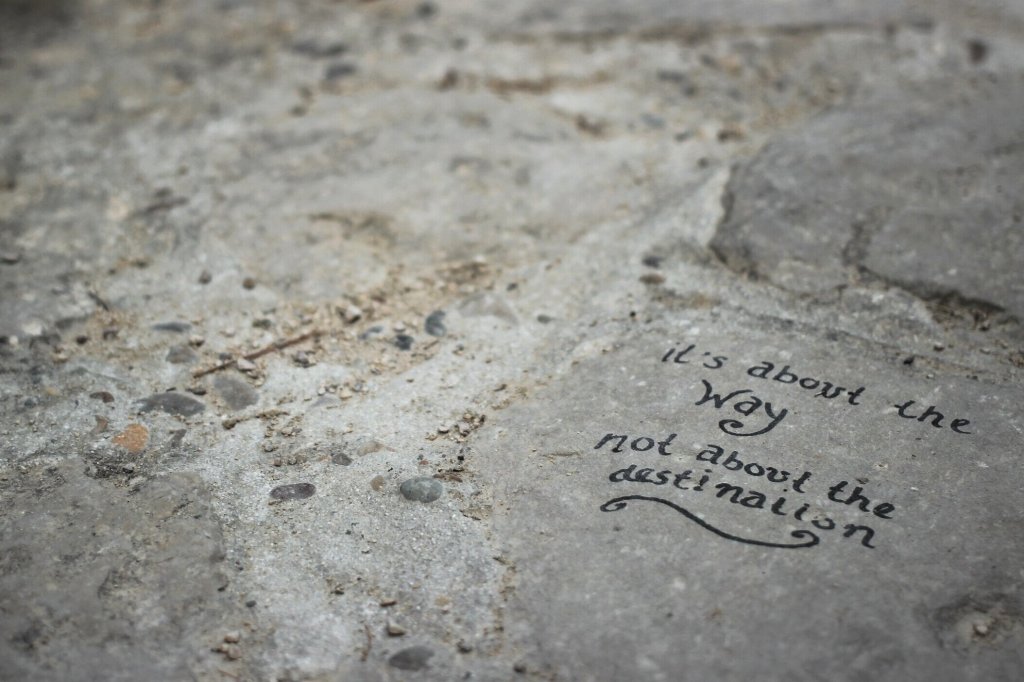
    The walking path I was to join is an ancient path that pilgrims walked, and still walk, leading to the Santiago de Compostela Cathedral on the North-West coast of Spain. Jesus’ apostle James’ bones are said to be enshrined there and for many it is the culmination of thirty days of journey by foot. In English, this walk is known as The Way of St James. 

    My training was to prepare me to walk twenty kilometres a day, while carrying a seven kilo backpack. I am to rely on the hospitality of local hostels each night, bunking down with many other pilgrims on the same path. For the past year I have sensed that this journey was one of the heart, and had already begun. It does not begin when I arrive in Europe, but it begins right here and now in my Australian home. My flight to Europe is only a part of that journey, as is my flight home. 

    Before being called Christians, followers of Jesus were known as followers of The Way.  (Acts 9:1-2). The same Jesus had explained to his doubtful disciple Thomas, that He was the Way (and also the truth and the life (John 14)). This weekend these followers remember that their leader was crucified-hung on a cross to die, outside of Jerusalem, nearly 2000 years ago.  We also remember that the tomb where he was buried is empty, because he rose from this grave, more alive than ever. 

    I have been reflecting on what this means if The Way is Jesus and not a well-worn walking trail. Does that mean I need not walk ‘The Way’. What if this well-worn walking track is a living metaphor for the journey in Christ Jesus? While I can download an app, read a map or ask a friend to know the route to that Cathedral in Spain, I can also read ancient texts, listen to devotions and sermons and know about The Way Himself. But unless one begins this journey by taking a step-one step of faith, trusting in the journey and the one who leads the way, one does not really ‘know’ the way at all! I am mindful that this journey of the heart is one of faith and putting one’s trust in the one we follow, rather than in the methods of others who have followed Him before us. 

    Jesus didn’t come to light a path or grade a trail. He came so that we would follow Him. He is the Way-maker. The Lord’s cross is the gateway into His life and the Resurrection means that He has the power now to convey His life to me. (Oswald Chambers)

    I am already following The Way. I began this journey twenty years ago, when I was in my 30s.  I was hoping to rekindle some of the early years of my faith journey, while on the The Way of St James’ trail in June.  For along time I have been weary of how complex I have made my life once again. I was looking forward to leaving behind many of my earthly possessions and to carry only the essentials.  I was planning to silence all the noises of this modern world and provide the space to hear from Jesus himself. 

    Of course, I can do this here, but pilgrimages while they are of the heart, are helpful in a physical and symbolic way to remind us afresh of what is most important in life. The arduous and physical path can be helpful to cut the ties with that which bind us and can tie us in knots in our daily lives.  As our regular lives or what we call ‘normal’ fall away, we make space to encounter the divine one on the path and invite spiritual renewal. 

    The irony is that this pandemic is changing my ‘normal’ to something different. I just did not choose it. My journey to the shops is only for the essentials these days and what I assumed is my rightful and typical day, is no longer the same.  Perhaps, instead of lamenting for what I have left behind in this season of social isolation, I can see it as a metaphor for spiritual pilgrimage which will bring renewal, without leaving my front door!

    Jesus never offered to make a path or required me to find that path. He simply asked me to come follow him. And I am doing that already.

    Once the world has settled back to the new ‘normal’, perhaps I will get the opportunity to walk that trail in Europe. For now, I am considering how I can ‘walk’’this day, in this place, trusting in the risen Jesus of Easter, one step at a time.

    In the words of Eugene H. Peterson, “The way of Jesus cannot be imposed or mapped — it requires an active participation in following Jesus as he leads us through sometimes strange and unfamiliar territory, in circumstances that become clear only in the hesitations and questionings, in the pauses and reflections where we engage in prayerful conversation with one another and with him.”
    ― The Jesus Way: A Conversation on the Ways That Jesus Is the Way

    Photo by Les routes sans fin(s) on Unsplash

  • What’s your source?

    What’s your source?

    At the mention of pandemics and army building nations, anxiety stirs and dread settles like a rock in my gut.  My fears are not always alleviated by the media, who in the pursuit of news stories; or should I say new stories, feed these fears and a sense of powerlessness.  Even without the news, I am very capable of building doomsday scenarios and conspiracy theories in my mind and conversation. 

    I have been working hard to make my mind my friend this week. I have sometimes been ruthless in my conversations, asking people who or what was their source of information.  I wanted facts not interpretation.

    When I first started teaching history studies to high schoolers over ten years ago, I spent a whole lesson explaining the importance of knowing your source.  A primary source is a first-hand account while a secondary source is usually based on the firsthand account. Facts are different to opinions. And just because it is on the internet, does not make it is true!  Know your source, I would say to my students.  Of course, not all of us are privileged to have a firsthand account of events, so we rely on credible witnesses, who were present. 

    The Prophet Isaiah lived through a time of impending invasion by some serious marauders, some 2,700 years ago. He wrote about it and that is recorded in the Bible.  He witnessed people all around him being fearful, believing conspiracy theories and living with dread.  His God spoke to him and told him not to fear what they feared, but rather fear God himself. It was a time where people would rather consult the dead or spiritists, instead of inquiring of God himself and his law and testimony.  And yet, when things went wrong, they would be the first to curse God -and their country’s leader! (Isaiah 8) 

    For those of us that believe in a God that is far greater than our earthly fears, I ask you how seriously do you fear God himself?   Do you seek Him as your primary source of reassurance and wisdom?  Do you regard Him as truly holy?  Do you spend as much time reading the Bible as you spend watching the news or scrolling through social media? 

    As we approach the Easter weekend, a Christian religious holiday remembering the resurrection of Jesus from the dead, let us remember that the same Spirit that raised him from the dead also gives life to our mortal bodies. (Romans 8:11) And believers, that is the same Spirit that lives in us today!

    I am not going to stop watching the news or ignore what is happening in the world around me.  As hard work as it is at times, I plan to seek out the facts and respond accordingly.  But I am not going to live in fear of what might happen either. It is enough to fear the living God; the one who raised Jesus from the dead. I want to seek Him as my primary source of assurance and sanctuary, for without Him this world is filled with distress, darkness and gloom.

    Photo by Elijah O’Donnell on unsplash.com 

  • Stay on the Path!

    Stay on the Path!

    Some of us are rule followers more than others.  I notice that with the students that I teach. There are those who just because I say, ‘do not touch’, will touch and poke and prod just before you yell no!

    And then there are others who happily leave the item alone as instructed. Of course, there are also the ‘why’ people who are not willing to follow the rule until they are satisfied they understand the ins and the outs.   And then there are some who just did not listen at all, despite my repeating the instructions.  Later, when I chastise them or give some other consequence, they are adamant they were never told in the first place.  Sigh….

    Why am I not surprised then when last weekend, the NSW government had to shut down Bondi beach, after communicating to all Australians about the need for social distancing and a ban on large outdoor gatherings!  Did these people not hear, or did they think “this rule does not apply to me”?

    My husband booked a weekend for two at the Gold Coast for last weekend.  The night before, I was anxious.  He was adamant about going and I thought of a dozen scenarios of why it was a bad idea.  Getting stuck inside a hotel room was not my idea of a weekend away on the Gold Coast.  As a foodie, my idea of a good weekend involves hanging out in restaurants and coffee shops; and that was looking less appealing.  The Gold Coast also had known Coronavirus cases and my hometown had none. I did not want to be the one to bring the virus back to our regional town or the school I worked at.  If I had to isolate or recuperate, I would lose much needed income.  And finally, I reasoned our government had made a recommendation. 

    I was relieved that after watching the news, my husband agreed it was a good idea to stay home. He postponed our plans and we stayed home. Meanwhile, I watched many of my friends on Facebook go to parties and restaurants.  Only few it seemed reduced their contact with others.

    I admit that during these unprecedented times, it has been challenging to wade through the hyper anxious scenarios and sometimes even to admit the sober truth.  At first, as the rest of the world were falling sick and many vulnerable were dying, I was responding to my students who struggled to understand our school’s request to wash their hands.  Some were defiant of protocol, others obsessive in following it.  Some were not convinced it was a threat at all and wanted more information.  Even my suggestion they source their information from a reliable online source met with mutterings about conspiracy theories.  Sound familiar? 

    As teenagers are inclined to be, many self-focused young people could not see why they needed to worry. After all, teenagers were not the ones dying from this virus.  And then, they argued there are no cases here in our town. 

    Fast forward a week and the situation is different.  And the rules have changed.  Our state borders have now closed and next week teachers like me will go to school, while most students will stay home on student free days.

    At the beginning of this week, I was feeling like the proverbial sacrificial lamb heading into school. Why did I just stay home in isolation all weekend to then head into a classroom of teenagers who like to hug, high five and lean all over the furniture and even meHow much sanitizer and cleaning are enough, I fretted?  I too was beginning to question the rules.

    Flipping through my Bible Monday night, the words of Romans 13 presented me with a challenge.  Paul specifically said to those in Rome; as well as all Christians “Everyone must submit himself to the governing authorities, for there is no authority except that which God has established… Do what is right…”  And as a God follower, how clear was that?, I thought.

    If our Prime Minister says stay home and do not go out unnecessarily, we should stay home.  And if we teachers are to stay teaching then that is the right thing to do for now…no matter how hard that is.  Afterall, it is for the good of the whole nation and not just the individual. 

    Just when I think I have worked through following these rules, there is the matter of this weekend’s local government election.  If I do not vote, I am breaking the rules. If I do vote, I must brave yet another gathering of people, risking catching Coronavirus.  How fair is that?

    What is it about so many Australians that question and do not follow rules?  Is it our convict ancestry or is it our rugged individualism?  We esteem bushrangers and anti-heroes and yet criticise those in authority, like it is a national sport.

    One psychologist, Douglas LaBier PhD says it comes down to how we define what is “fair”.  Apparently, people who see themselves as special or are entitled in some way that others are not, are likely to disregard the rules that others will follow, believing the rule is an ‘’unfair” proposition to them.  Researchers have found it is very hard to get entitled people to follow instructions.  “The entitled people did not follow instructions because they would rather take a loss themselves than agree to something unfair…”

    Following this logic, if we do not follow the rules, that makes us entitled or special. If we think something is unfair, then perhaps we are thinking more of ourselves than we ought. 

    I agree there has been enough abuse of power, including from those in authority. But there are checks and measures in place for that.  Surely every time we encounter a policeman, we do not argue with him.  What makes us think that in an international pandemic crisis, we are entitled to choose which rules we follow and which we cry “unfair” to? Why do we do our own thing or do the right thing- when we are ready, instead of simply following the instructions of those in authority?

    My concern is, just like in the classroom; when too many people do not follow the rules, the consequences will be negative for both rule followers and those that do not.  As I often think when I am trying to manage a classroom of teenagers, why can’t people just do as they are told!

    And then, I realise I do not immediately think ‘’yes sir’’ or ‘’yes ma’am’’, I can do that!  Maybe I am one of those annoying ‘why ’people, who must always know the ins and the outs before I agree to follow the rules.

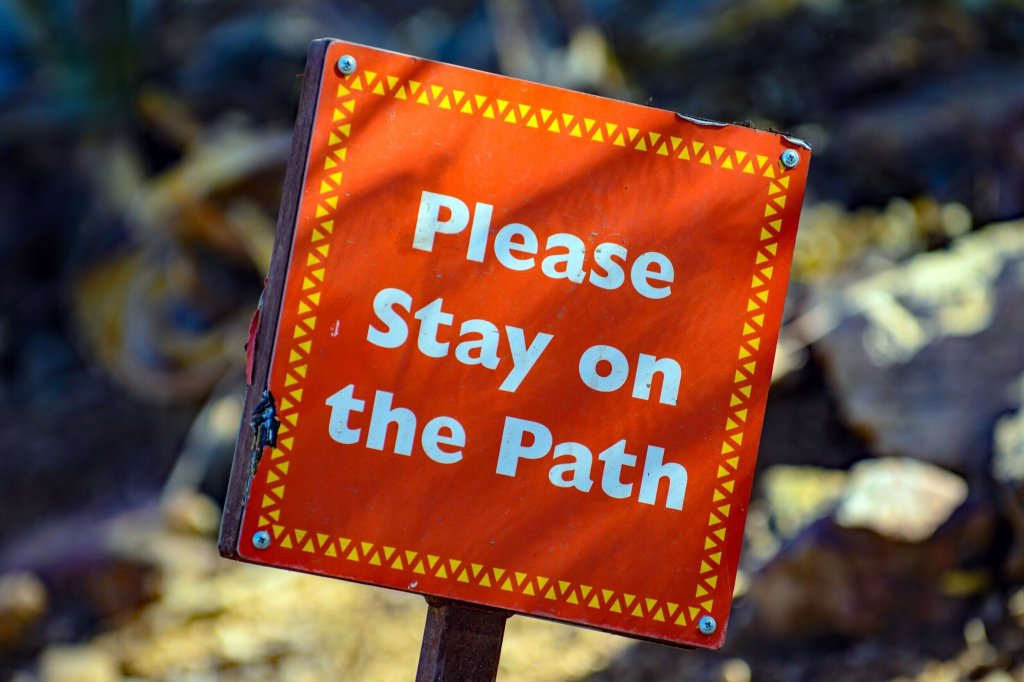
    What about you? If a sign says, “stay on the path”, do you walk on the path,? Or do you question ‘why’ ? Maybe you cry unfair and walk on the grass instead. And if my class is a true sample, some of you will complain when you get in trouble, and say “What sign?”

    Photo by Mark Duffel on Unsplash