Category: writer

  • A week in the slow lane

    A week in the slow lane

    I spent this past week away from home and looking after my adult daughter who had a knee reconstruction on Monday.  The rehabilitation process demands she walks on her injured leg and she started that immediately following surgery.  This means she still walks; but she is slow.

    I laughed with her the first day joking that God had allowed her to snap her ligament so she would slow up and allow her soul catch up with her body.  We both knew that the past few years her pace has been fast.  First the injury and now the necessary surgery has slowed her down.  As her carer that meant that I too had to go slow.   

    Getting out the door from the third-floor apartment, down the three flights of stairs and into my car parked on the street took considerably longer than normal for both of us.  Meeting up with people elsewhere for a coffee or a meal required us to leave much earlier to allow time for her to walk slowly.  There was no point in being impatient. In fact, impatience could undo all the good work of surgery and healing. Being pushed in a wheelchair or taking off on crutches was not an option either as her healing depends on her using her muscles and walking; just slowly.

    I love spending time with my daughter so visiting the local coffee shop recently opened by friends of hers was no chore. There was no popping in for a quick coffee however. The sheer effort of getting there and back as well as the luxury of her being on medical leave, meant we could linger.  There is something special about lingering over a good coffee with friends; sprawled out on cushioned seating, leaning against the wall awash in the morning light and its warmth.  Even now I remember the scene as if the slower pace permitted the enjoyment of the experience to permeate my soul.

    This slower pace necessitated setting priorities for each day. There was no way we could schedule multiple outings and had to be content with a slower pace.  Even my exercise this week seemed to reinforce the message to slow down.  I took the opportunity to use my daughter’s membership and attended two classes of ‘Hot Pilates’. While the exercise includes moments of high intensity it is balanced out with intentional deep breathing and stretching. 

    As I write this, I recall a book I purchased many years ago. Carl Honor wrote “In Praise of Slowness” in which he challenges the cult of speed, our addiction to speed and our obsession to do everything so quickly.  I acknowledge that I have been guilty of the same love affair with efficiency and speed.

    I have also lifted down from the bookshelf another book by a Christian author Richard J. Foster called “Finding Harmony in a Complex World: Freedom of Simplicity.”  I am drawn to the potential of a life in unhurried peace and power. 

    My one week in the slow lane has given me food for thought.  Perhaps it is time to reread these books and put into practice some of the suggestions.  This week has hinted at a life with depth, deep breathing and unhurried experiences.  Maybe it’s time to start a love affair with slowness and simplicity as well as minimalism.   

    “Most men pursue pleasure with such breathless haste that they hurry past it”. Soren Kierkegaard.

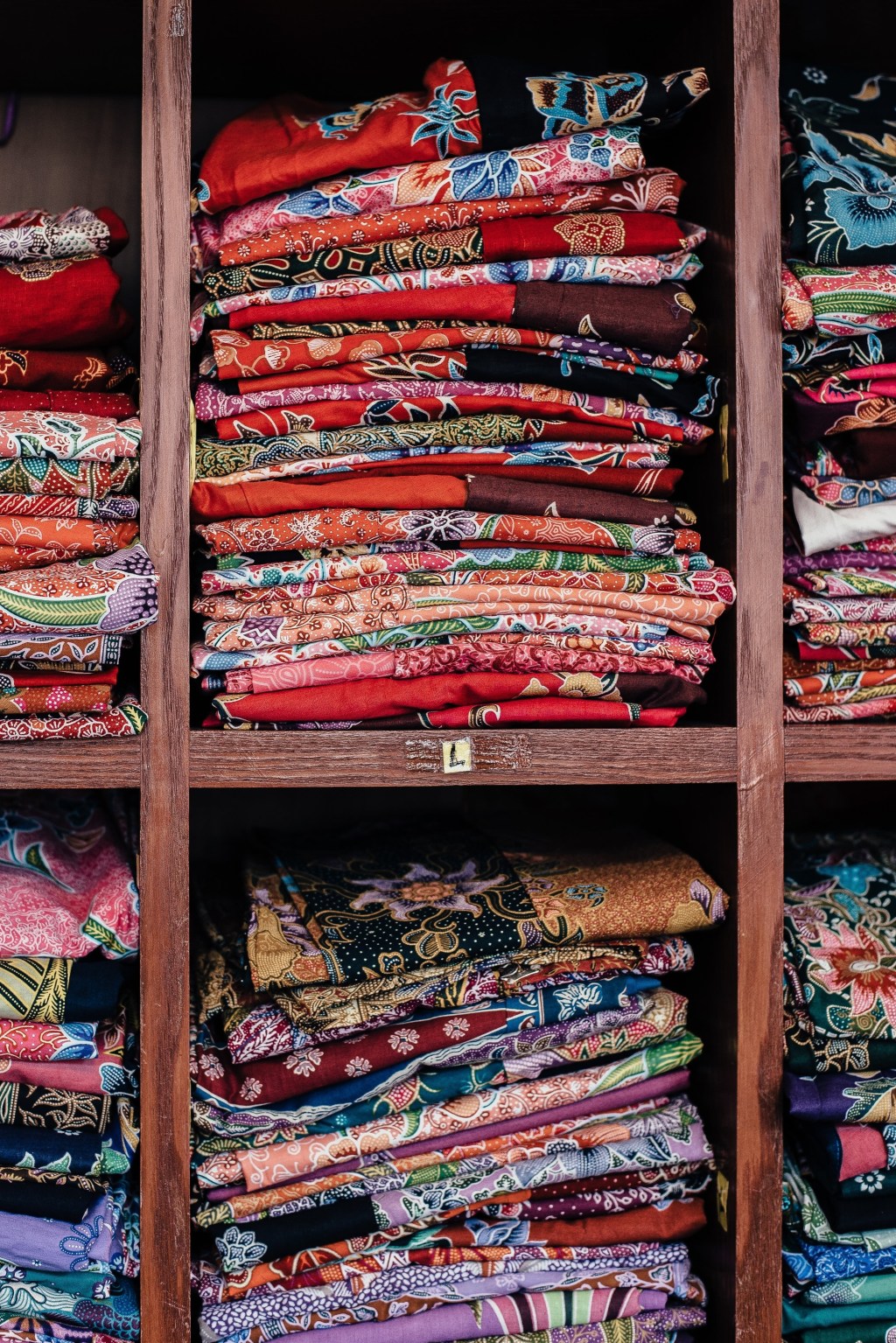
    Photo by SnapbyThree MY on Unsplash
  • Decluttering my world

    Decluttering my world

    Working towards my goal of minimising my possessions, this week I emptied my craft and sewing cupboard. I heard somewhere that one of the guidelines to reducing or minimising your possessions is to ask yourself if you have used the item in the past nine months or plan to use it in the next nine months.  Using this guideline, boxes and boxes of fabrics had to go.  Fortunately, I had previously boxed everything up to tidy up the cupboards. I say fortunately because if I knew everything that was in those boxes, I may not have parted with it so easily. I started to go through one box and was tempted to pull out bits and pieces I was fond of or thought were beautiful.  I slammed the lid back down and marched it all out to my car and sent a message to the woman I planned to give it to.

    I could not believe how much I struggled to emotionally part with this stuff.  It was a reminder to me of a lovely season in my life when as a Home Economics teacher, I taught units on textiles and embellishment to teenage girls.  It was a reminder to me of a season in my life when I enjoyed making aprons from pretty craft fabrics. It reminded me how I found solace in creativity when mum was dying.  I remember my ‘artist dates’ and how much I enjoyed choosing the fabrics and my delight at the fabric’s colours and patterns.  I started to rethink my decision and wondered if I might start creating with textiles again. Then I stopped.  I had not touched an item in those boxes for over two years. If I was completely honest I did not love textiles as much as I loved baking and my boxes were also full of unfinished projects. And even more so, I could not carry on with the things I believed that this season asked of me as well as start sewing again.  So, in spite of a surprising sense of grief I slammed the car boot shut and delivered everything to the woman I promised it to.

    I heard a message from a visiting Christian speaker recently that reminded me my inner world might need some decluttering too.  There are memories and experiences from my past; both good and bad, that may be holding me back from the things I believe that this season is asking of me.  Some of that inner world has already been packed in little boxes. At least I have sifted and contained some of the clutter. But, I have another step I must take and that it is to finally let go.  I am not advocating living in denial or pretence, but rather handing those boxes over to a loving God and trusting Him with the contents. I am not sure which boxes are going and which are to stay, but I do know hoarding boxes are both weighty and distracting. Minimising my inner world is necessary. 

    As I pause to reflect I realise that some of my boxes represent unrealised dreams, broken relationships and seasons that have ended. As my sewing boxes highlight, my outer world’s stuff is intertwined with my inner world.  As difficult as it is to let these go, it is necessary to lighten the load so I may move forward and into a new season. 

    How about you? Do you have clutter in your life: outer or inner? Have you done any sorting or sifting at all? How are you going with letting go of those boxes?

  • Taking a Godly risk.

    Taking a Godly risk.

    As I am moving further towards retirement I am sobered to realise how conservative and safe my thinking has become. This is being challenged though. This week an internal war seems to have broken out between my responsible and fiscally sensible inner person and a quiet voice whispering ‘take a Godly risk’! 

    As I get closer to my death I sometimes wonder if I have conceded to ordinariness out of weariness and sensibility.  Erring on playing it safe and being responsible, I have been considering my choices on the basis of practicality and what promises security. Security in what?  I could be taking Godly risks that involve faith and placing my security in a dependable God. 

    But when does risk taking turn into foolishness?  When does daring turn into folly?  How old is too old to take risks? 

    My husband and I have done some things others have considered foolish or folly.  Our lives have been richer though for the adventures we have been involved in. 

    In our mid-twenties, we packed up everything, gave up our jobs and travelled Australia in a four-wheel drive.  We left our then home in Western Australia and returned to Central Queensland to leave a ‘spare’ pup and our cat with my parents before heading off with our dog and friends in a matching two-toned Toyota Landcruiser.  Over a five-month period we travelled through New South Wales, South Australia, Western Australia and onto Darwin before returning to Central Queensland. We setup a tent and air mattress most every night and lived out of the back of the wagon.  We came back with many stories to tell.

    In our mid-thirties, we sold up everything we had accumulated, wrapped up our business and moved overseas to live in Vanuatu.  We sold up our home in Central Queensland, left our little dog with a church family before flying out with our two children.  Over a three-month period, we lived in villages on three islands.  We came back with many stories to tell.

    The past decade we have been consolidating, accumulating and evidently putting down roots.  We have been busy raising teenagers into young adults and in my case, saying goodbye to both my parents.  We have had some adventures and we have some stories to tell.

    But now, we are empty nesters stumbling in the dark as we consider our lives beyond raising a family.  Apart from all the ‘stuff’ that clutters our lives, we do not have too many adventures planned.  I fear I have become more of a spectator of life than someone living it.  My stories are old and my enthusiasm has waned. Perhaps it is time to get out there again and start a new adventure. 

    If I am to be a co-creator of my future story with God then I have to become a participant in life and not just be on the sidelines.  That means I might get hurt, I will get tired, I may end up with scars and bruises but I could also have stories of miraculous wins and jubilant celebrations.  It is time to shake off the unnecessary conservatism if my remaining decades are going to be story worthy.  Time to take a Godly risk-or two!  

  • An Accidental Minimalist

    An Accidental Minimalist

    My husband and I moved cities this year so he could be closer to the university he is studying at.  We did the maths and decided to buy a little house instead of rent.  As this home was both an investment and a short-term home, we made a conscious decision to move just enough possessions into it so that we may live and study. We left behind all our ‘stuff’ in the large family home on acreage, intending to return on weekends. 

    I had not considered the concept of minimalism until I set about purchasing a new fridge.  When I chose the small and cheap fridge I realised that I did not have the space to purchase bulk groceries, as I was used to.  I made a choice that day that we would live day to day with just essentials.  Did I just become an accidental minimalist? 

    What I found sobering was how much we did not miss the stuff we left behind in cupboards in our family home. We also took items from the family home to furnish the new home without a ripple in the decor.  Essential personal items were chosen for their portability and were carried with us when we returned home for the weekend. 

    What started out to be a practical decision became a liberating experience. I was awakened to the benefits of minimalism. The dilemma now is what am I going to do with all the ‘stuff’ in the family home? I have not missed it nor have I needed it.  Do I have sufficient momentum or energy to purge, declutter and become a genuine minimalist? 

    I see two obstacles. One is detaching from the memories of past roles and interests and the other is the hard work of disposing of it without just dumping it.  We have a games and puzzle cupboard leftover from the years we raised our family.  I have a sewing and craft cupboard that is full of projects and materials.  There is a kitchen and pantry full of catering and cooking equipment.  And a cupboard full of spare linen.  And that is without starting in the library or the shed. 

    Seventeen years ago, we sold up or gave away almost everything we owned before moving overseas.  I was much younger then and very focused; perhaps even ruthless.  Our children were eight and ten at the time.  They were left with one suitcase of clothes, one briefcase of school work and one box of special items, including toys.  As a family, we were never so free to go wherever we were called.    

    We came back, we settled into a house and we started to accumulate ‘stuff’ very quickly.  Before long the suitcase grew larger, as did the box and the books. New hobbies and new adventures mean more stuff and more storage. The children grew up, left home and left their ‘stuff’. And here I am owning more than I ever have in my life.   

    Whether accidental or intentional, I think minimalism is a fantastic goal.  However, my overwhelming task and question is “how do I dispose of the ‘stuff’ well’?  My kids sure don’t want it!

    photo by Florian Klauer

  • I’m just a kid from the sticks

    I’m just a kid from the sticks

    When I was ten years old, my family moved 300 kilometres east to settle closer to the coast.  We moved from a 2,500-hectare property where my father was a share-farmer to a 4-hectare rural block.  My father went to work as a bricklayer’s labourer and later as a security guard. Mum went from being a farmer’s wife to a housewife. 

    The actual move itself must have looked like a circus convoy.  Dad led the way in a truck with a cattle crate on its back. All our family’s possessions were in that crate and the family’s pet baby kangaroo was in a hessian bag on the floor of the Bedford.  My Pop in his little green Hillman was next.  His passenger was my Nan.  Mum drove the family’s station wagon; a red and chrome Ford Falcon filled to overflowing with kids, chooks, cats, guinea pigs and dogs.    I still recall my utter embarrassment when we stopped midway for fuel. When the hens poked their head out of the crates to look around I tucked mine in so no one would notice me.

    My new school was smaller than the one we had left behind but this time we could walk or ride our bikes. While I made plenty of friends, I always felt a little different.  My first ten years in the bush had not prepared me for pop culture; especially the latest music and fashion.  Three years later I made the daunting transition from the little primary school of 100 to attend the nearest high school with over 1000 students.  This time living twenty kilometres out of town on a rural block meant I was labelled as ‘a kid from the sticks’.  I wore this label as a defect.   

    It has occurred to me recently that I have been fighting this label for the past 35 years.  Leaving home, going to university and living in Brisbane and then interstate I have tried to shake off this lingering tag of being a ‘kid from the sticks’.

    Last year, my job took me inland and west of the Central Queensland coast.  I was surprised by my tears one day as I was driving down a narrow country road. The landscape was nostalgic of the farmland I had known the first ten years of my life.  I think a little of my heart was healed that day as I realised that I was first ‘a kid from the bush’ and I could be proud of being ‘a kid from the sticks’ too.

    I feel sad that I felt embarrassed about who I was growing up.  I wonder if things would have been different if the family move could have been re-framed?  Maybe I was (and am) just a sensitive kid.  One thing I know is that it is never too late to revisit childhood memories and re-frame them.  My story may not be yours, but I am no less or no more because I was first a ‘kid from the bush’ and then ‘a kid from the sticks’.  Perhaps I have been resisting too long and the saying is true : “you can take the girl from the country, but you can’t take the country out of the girl’! 

    Photo by Mark Galer

  • Looking in the rear vision mirror

    Looking in the rear vision mirror

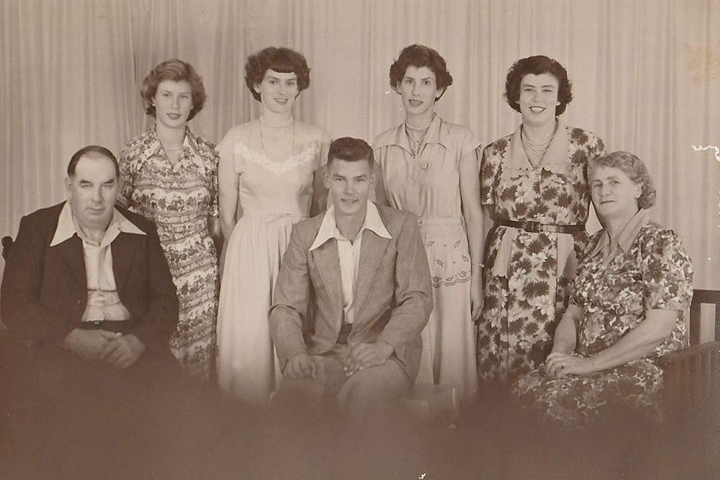
    This is my father’s family. That is my dad in the middle. He is; or rather was, one of five children. He was the only son. Dad had four sisters. 

    We said our farewell to one of those sisters on Friday. All but one in the photo above have passed away.  Dad’s eldest sister survives all. 

    I never knew my grandfather.  He died in 1965; the year before I was born and while my parents were on their honeymoon.  My grandmother died when I was eight years old.  I have few memories of her although plenty of wonderful respect for her through stories told by my father.    

    When my Dad died three years ago, I went searching for stories so I could put together his eulogy. I knew very little of his story before the age of thirty-two; the year I was born.  In doing so I unearthed some notes that not only provided story material but shed some light on some of the why’s Dad chose some of the roads taken in his life. I learnt how a childhood lived in the shadow of the Great Depression and the resultant poverty shaped both his dreams and his determination to be a landowner.

    As sobering as a funeral is I am also grateful for the time to pause to remember someone’s life and reflect on our mortality.  It occurred to me that while this side of my family tree is well researched and I may know who my ancestors are, I do not know their stories.  I am confronted by the fact that time is running out, because soon, my generation will be the eldest and their stories will be lost.

    I suddenly have a desire to look in the rear vision mirror. I feel an urge to look beyond my own life and begin to really listen and understand the stories of my father’s family. Perhaps in doing so I will come to understand a little more of who I am and the whisper of stories that are in my DNA.    

  • Is it possible to be kinder than God?

    Is it possible to be kinder than God?

    Somewhere along the way I have got confused about what love is and I have tried to be kinder than God! (@David Riddell)

    I am a slow learner.  I have to be reminded again and again how upside down and back to front I have got this loving thing.  I have subconsciously believed that because I have tried very hard to ‘love’ others they should reciprocate. And when they do not, I am left believing I am unlovable; so, I try harder to love them back in the hope that they might love me. This ‘love’ comes from neediness rather than out of abundance.   

    This love is more a counterfeit love than akin to God’s love.  God’s love is not a lopsided sentimental love; it is a love balanced with justice.  It is a love that does not mean granting another their every desire and it is balanced with consequences.

    Some of us in particular have a real problem with this. Many of us slip into this because we are women and have an innate maternal instinct.  Others have said it is a post-feminist issue, where we as women over function in our relationships which in turn creates under functioning men. As a parent, we help create young princes and princesses. How we love impacts how we function in our marriages, as a parent, as a colleague and how we function in the community and our churches. 

    This does not mean we stop caring for others but the problem is when we repeatedly do for others what they should do for themselves! This is actually not loving. In doing so we may also be protecting others from the consequences of their own faulty choices.  We can become a stumbling block to the other person’s maturity and unwittingly support their irresponsibility. 

    Over functioning can include mentally thinking for another by often reminding them of their functions and responsibilities.  Physically we may decide it is just easier to do it yourself so we end up doing everything from chores, to meal planning, to banking, shopping, organising and making appointments and even waking them up.  Emotionally, we are second guessing and counteracting in an effort to keep someone else from feeling a negative emotion. 

    When we do for others what they should really do for themselves we are over functioning or rescuing. As a result, we rob the other person of the responsibility of looking after themselves, the sense of accomplishment and competence they could hope to receive and the resulting sense of sufficiency and confidence. 

    Any wonder our loving feelings crumble and we become resentful and ignore our own hopes and dreams. None of these exemplify love.  This is not a sustainable love. It is not a love that can last. 

    God’s love is a perfect love; it is a deep abiding love that is also just and right.  If I; if we, are going to love out of abundance and not out of our own neediness, then we need to first let ourselves be loved by God.  How do we do that?  That is a question for another time.

    Photo by Jez Timms.  

    This blog post was adapted from a speech I gave on Valentine’s Day several years ago.  

    I would like to acknowledge the following sources that influenced my message and this blog:  

    * Living Wisdom by David Riddell

  • Emerging from the shadow

    Emerging from the shadow

    Under great pressure in my job and marriage last year I was confronted by a side of myself that alienated me in my relationships with others, spilling over into unprofessional and unloving behaviour.  I was shocked by the amount of resentment, frustration and impatience I discovered that I had towards myself and others when my expectations were not met.  The perfectionist in me was devastated by my imperfections that had surfaced and seemed relentless with their internal pressure.  The ‘good girl’ that I had tried to be for all of my life was not very good at all; in fact, she was ugly! 

    At my best, I have been known as wise, responsible and inspiring; but at my ugliest I am capable of being like a dog with a bone, self-righteous, intolerant and inflexible. None of these qualities I like in others so you can imagine how little I like them in myself. 

    During this stressful and messy time, I discovered that this ugliness of mine- my brokenness, had been there all along, hidden in the shadow. But that was not all that was hidden from me. Unrealised hopes and undeveloped talents were in the shadow too. 

    The shadow self is a psychological term and one that is also referred to by a profiling tool called the Enneagram.  It is a great metaphor for the parts of ourselves that we are not consciously aware of; perhaps even in denial of or blind too.  It is not just the ugly and the offensive that stays in the shadow but there is great stuff as well.

    I am abundantly grateful that I belong to a loving God who sees all and knows all; including my shadow self.  Filled with shame and self-loathing at my ugliness, I recall praying to Jesus confessing how I struggled to love this self and wondered how others could either? I believe that in my confession and shame Jesus reached down and grabbing hold of my hand he started drawing a shrivelled me from the shadow into his grace filled light. 

    The wholeness that I seek is impossible with so much of me still in the shadow.  To emerge from the shadow, I am to face this unacceptable part that I have previously been blind to. Acknowledging the ugly is not excusing it nor does it endorse it. Trying harder is not the answer either; the more I strive to be responsible the more inflexible and resentful I end up becoming. What I need is the forgiving, healing and redeeming power of the cross; the gift of undeserved Grace and the Good News in Jesus Christ! 

    There could be many reasons for my underlying anger (yes, that is the word that sums up all those feelings). Sometimes my rights have been violated, other times my needs have not been adequately been met and other times it is a warning that I am doing too much.  Harriet Lerner in her book The Dance of Anger says a woman learns to fear her anger because it brings disapproval.  Anger exists for a reason and always deserves our respect and attention.  I readily identified myself with her ‘nice lady syndrome’.  I would rather stay silent, become tearful, be self-critical and hurt than be open to the possibility of conflict.  Being ‘good’ is exhausting work. Life has already disclosed to me that I was an unhealthy peacekeeper and an avoid-er of conflict.  What I did not know was that by ignoring my anger and shoving it down I had also compromised much of my self. Along the way I had lost the ability to know my own thoughts, feelings and dreams. I had put my energy into reading others reactions and keeping the peace. I was good at feeling guilty but evidently not that good at feeling my anger and dealing with it. 

    This road to wholeness and finding my voice requires courage and vulnerability to accept the good, the bad and the downright ugly.  Grace is needed so I do not slip back into old patterns and beliefs. Even more grace is required to dare to be who God created me to be. It is time to find my voice-to speak up, learn to ask and to own my needs and boundaries. Through prayer and a huge measure of God’s love and grace I am trusting Him to lead me in a new season as I emerge from the shadow.    

  • Stop Running!

    Stop Running!

    I became a woman in the 1980’s when big hairdos, shoulder pads and power dressing was the vogue.  I believed a lie that as a woman I could have it all:  a career, a home, a family, health, beauty, wealth, and happiness.  Falling for the lie was not all that difficult as I was running from my mother’s misery which I associated with a housewife’s lot in life with no financial means or identity of her own.  I did not have a plan, nor did I really have a dream. The glossy women’s magazines of the day fed a vague hope and a lie. 

    At the age of twenty-seven, with two children under three, a failed business and little cash I was diagnosed with post-natal depression.  As a part of getting well, I swapped the women’s magazines for self-help and motivational books of the 1990’s.  I decided to get balance in my life so added exercise and church attendance to my family and business activities. Now I was full of vague dreams of wealth and success and a belief that all things were possible if I just tried harder.  

    In my thirties, my husband and I grew our business, built a grand home, leased new vehicles and hardly stopped to take a breath, let alone ‘smell the roses’.   By 2000 I was exhausted and overwhelmed.  We were in debt and were indebted to others to keep the treadmill of life and our lifestyle going.  My body was running so fast my soul could not catch up. 

    I realised that in spite of all the trappings of success the thing I lacked the most was peace.  I found that peace when I committed to follow Jesus.  We sold almost all of our possessions, untangled ourselves from debt and packed our bags to live overseas and started to home-school our children.  I gave up all ideas of having it all or being it all to enjoy the rhythm of family life and later Bible College. 

    In the early 2000’s I was diagnosed with an autoimmune disease and began a journey of addressing my poor physical health.  Struggling to make a difference as I worked out at a local gym, I was overcome with grief wondering if I had brought this on myself as a result of the ridiculous pace of life I kept- trying to have it all and be all.   For a while I relished the luxury of a slower pace of life and the healing that brings. 

    Another decade passed and as I look back on those years, I realise that the pace of life picked up very quickly.  During these years our children became young adults and I became middle-aged.  Looking in the rear vision mirror of life I realised I had started to run on that treadmill again.  I still did not have a plan or a dream. Instead of a vague hope of doing more and being more for myself; I was doing more and being more for others and with a vague hope that I was making a difference in the world.  At the end of last year, I was nearly at breaking point.  I was no longer running from my mother’s misery but was instead running from my own. 

    Being busy, having a purpose or being on a mission has become a way of life for me; a bias if you like. Unfortunately, I have come to realise it is also a way I avoid my own pain and grief.  As a result of running away from the things I fear I have also denied myself the opportunity to authentically dream, plan and hope for the things I love. 

    If I’m not striving to have it all or being all, what then?  Perhaps it’s time for my soul to catch up with my body.  Time to grieve for things lost, to heal from pain; time to dream dreams and plan for my future.  Instead of the world making me something else, perhaps it’s time to be myself.  And with the grace of God, that is enough. 

    What good will it be if someone gains the whole world, yet forfeit their soul?  (Matthew 16:26)

  • Remembering my Dad and the days ordained

    Remembering my Dad and the days ordained

    My Dad would have been 83 years old this week.  He died over 3 years ago; five months short of his 80th birthday. 

    Dad once said to me that he had already lived three score year and ten and that “any more was a bonus”.  Using this logic, he had nine bonus years. 

    The day Dad died, I saw his Ute filled with his rubbish bins pass by my house.  I was at the kitchen window.  I knew that I could expect him later for a cup of tea and instructions for the care of his place while he was away for a few days.  Instead I had the police at the door advising me he had passed away suddenly and was found in his Ute, with his dog at his side parked at the face of the rubbish dump. His doctor had declared him dead from a list of possible old age conditions.

    As sad as this was and still is,  my thoughts go back to 2009; four and a half years earlier when I thought he would die.  Dad had travelled with me to spend a week in a village on a remote island in Vanuatu with my family and our friends that lived there.  He became seriously ill on his last day there.    

    Two nights before our flight off the island was due we were guests of honor at a banquet. I was fussing over him staying up late and he sent me off to bed telling me “I’m a big boy!”  Less than twenty-four hours later, Dad was very pale and lay on a rough wooden bed inside the village hut’s guest bedroom. We did not know at the time, but his diabetes had complicated his body’s response to a tropical infection on his lower leg. Never before had I felt so aware of this small village’s isolation from medical care and faced with the possibility that my Dad could die.

    My Dad survived this serious infection and enjoyed the attention of private medical care in Port Vila and two Australian public hospitals before his release six weeks later.  Getting him there felt like an eternity though, as we painstakingly transported him on a thin mattress in the back of a utility nine kilometres up a steep and windy rain-forest dirt track to the airstrip one hundred and sixty metres above the village.  Our luggage, our family, slabs of fresh fish plus many other Ni-Vans joined my Dad on the back of the utility, making the slow journey even slower as we chugged up the mountain in the island’s only vehicle. 

    Providentially this was our scheduled flight off the island although the only flight due that week.  Intravenous insulin, saline solution and an overnight stay in the capital’s whitewashed private hospital cost him one thousand dollars and provided him with the medical release that allowed him to fly home on our scheduled flight the next day and into the care of the Royal Brisbane Hospital.

    Not only did Dad survive this trip overseas but my sister and I accompanied him on a two-week guided tour of China, culminating in a visit to the Great Wall. Since that trip to Vanuatu, he struggled with circulation in his affected leg and had also had a stent placed in his heart.  Towards the end of the holiday angina had hindered his steps and his feet were swollen.  He survived a Chinese foot massage by a skimpily clad masseuse in tiny shorts and enormous heels; and hired a strong man from Tibet to push him in a wheel chair through Tienanmen Square and the Forbidden City of Beijing.  He did not quite manage to walk the Great Wall but he did step foot on it. Three months later he was gone.

    Dad and I had spoken about death some years earlier. He believed that his days were numbered by God.  It seems miraculous that he survived his illness in Vanuatu and yet he died doing a chore he routinely did for over 30 years. 

    As much as I miss him, I take comfort that he too believed as the psalmist did that “…all the days ordained for me were written in your book before one of them came to be.” (Psalm 139:16)