Tag: homestead

  • A house is only a home, when it is filled with people

    A house is only a home, when it is filled with people

    ‘Do you want to visit your old family home?’ my husband asked, as we drove past the turnoff, on the remote, dusty road.

    ‘No, I said. ‘I’ve done that before.  What good would it do, to revisit the decay?  Leave it to my memory.’

    Twenty years earlier, an old neighbour had taken me that way. 

    ‘Be warned’ he said.  The last owner stored grain inside, and the cattle have tramped through it.’

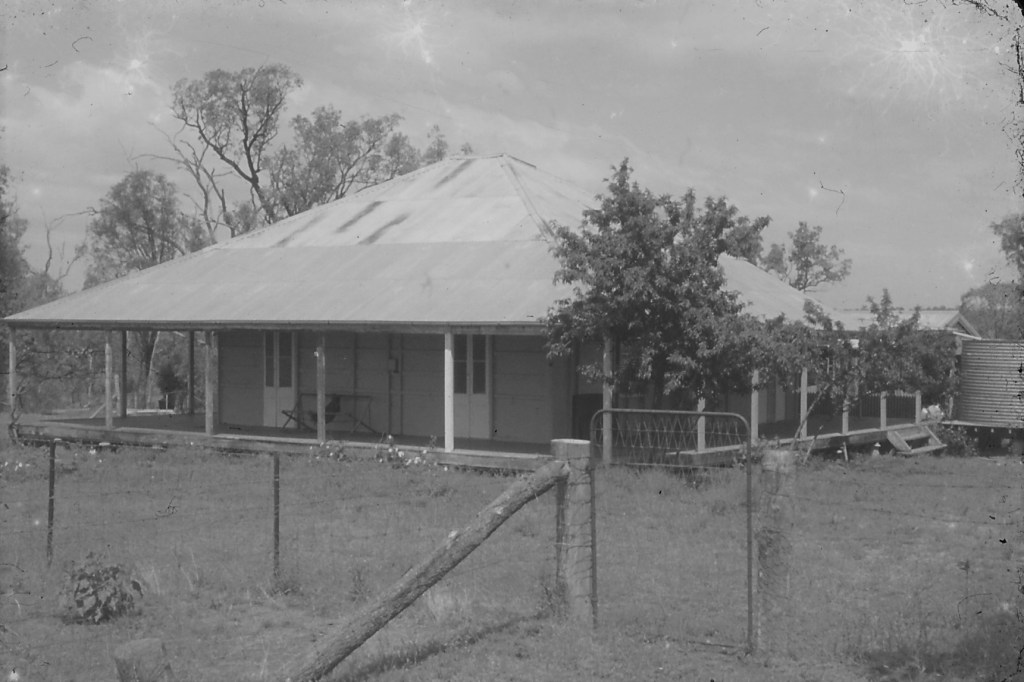
    Cow pats lay drying on the aged, grey hardwood of the wrap around verandah.  The homestead was already old before I was born.  The rust on the corrugated roof, and the powdering pastel, green paint was just a bit more. The holes, though, were much bigger. The rain would now fall through and dripping would replace any thrumming.

    It was the size that got me.  I had remembered the verandahs as wide; wide enough for two cars to pass each other. At three, I had a red metal wagon, and my sister, a replica bug of bright red.   We pedaled hard on those wooden boards, keeping back from the outer track and the dangers of the edge with no handrail. The French doors rocking on their hinges were smaller than I remembered.  Dad and I used to stand together under their frame on a dry summer’s night, watching the storms roll across the paddock and the lightning fill up the sky.

    The tank stand that sheltered our children’s afternoon play, now leaned eastward.  I wondered how the tank on the top ever kept enough water to provide for our family.  Any rainfall today would pour through the crumbling sieve that remained sprawled on short, tired stumps below.  Back then, our only water was from this tank or a nearby bore.  Very little was spared for the garden, so the yard did not offer lawn for us children to play on at all.  Instead, there was plenty of dirt to dig holes in, and the clay underneath the tank stand formed the best mud pies. I recalled making bricks for a grandiose cubby house I planned at five. 

    I dared not go inside for fear of falling through a rotten board or encountering one of those snakes my mum would chase with her rifle.  I would rather remember our family home filled with people, rather than mouse droppings, cow dung, and the webbing of now dead spiders. By staying outside, I could smell mum’s baking, hear my brother’s laughter, and pretend I was waiting for my dad to come in from harvesting.  And that old rope spinning in the rafters that would unravel with the tiniest of tugs? Well, I pretended that it was still attached to the wooden swing, that was the joy in my sibling’s laughter.    

    The yard looked much the same as I remembered.  More dirt than green, and more prickles than grass. The wisteria was still there, draped over the sagging, training wire on the verandah; a touch of lilac on a sepia backdrop.   Every now and then, a breeze picked up a bundle of chaff that would tumble over the yard, like the ghosts of my childhood memories.     

    The drum halves, used to pot Mum’s red and orange geraniums, were twisted like the front stairs they accompanied. These rusting relics were from a time before recycling became trendy. No one else came after us to fill them with flowers, and this old Queensland lady was too far gone now to ever belong to another family. 

    I could not bring myself to walk out back.  I suspected the cast-iron, clawfoot bathtub had long been prised out of the lean-to. With the water dried up and the taps rusted shut, I daresay the green frogs who shared this wet room, had long hopped away.   I did not need to see the old thunderbox to know that families of red back spiders had taken up residence.

    Instead, I remembered our Teddy, the black and white Collie dog snoozing in the sun. I saw cats and kittens, guinea pigs and chickens.  Kangaroos and emus.  And wheat in the paddock beyond.  I heard harvesters and diesel generators. I smelled kerosene, the wood fire burning and the lingering scent of first rains on the dust of the freshly plowed paddocks.

    ‘Let’s go’, I said, coming back to the present.

    I left as I came, down a graded track, winding over the creek and through a gate.  As I said to my husband, I would rather remember this old lady as a home, than a derelict house and a hump of corrugated iron and timber.  I agree, that a house is only a home, when it is filled with people.

    To paraphrase a proverb: timber and iron makes a house, but the laughter of children makes a home.
  • Timber and iron make a house, but the laughter of a child makes it a home.

    Timber and iron make a house, but the laughter of a child makes it a home.

    Let me tell you about this house.  It seems a lifetime ago that I lived here, in this original Queensland homestead.  This was the first home of my parents as a married couple in the 1960s, and my first home as their first-born child.  I lived here for 9 years, before our family that had grown to six, relocated 300 kilometres away. 

    Born in the little country hospital half an hour away from the 6,000-acre property where my parents were share-farmers, I would spend my first summer lying in a wicker bassinet on the breezy verandas of this homestead.   

    These same verandas became the racetrack for my siblings and our pedal cars and trikes. Wooden and tyre swings hung from the rafters and a nearby tree.  Many a kitten and cat sunned themselves here alongside the drums of potted geraniums. 

    Water was either from a bore or from the rainwater tank. Very little was spared for the garden, so the yard did not offer lawn for us children to play on.  Instead, there was plenty of dirt to dig holes in and make mud pies or bricks from. 

    Bindi-eyes were a problem, and shoes were few, so we suffered many a prickle in our feet, if we ventured into the backyard. I am not sure what hurt the most, standing on the prickle or mum digging the offending item out with a needle and little mercy.

    There were many snakes as well.  Some were so long that their head touched the ground one side of the fence and their tail the other when slung over it to die.  My mother would shoot them with her .22 calibre rifle to kill.  There would always be another brown or black snake that would still lurk.  Death adders lived here too. 

    Mum, like dad used her rifle regularly.  Kangaroos would eat the tender shoots of their farming crops and at times existed in plague proportions.  ‘Roo shooting was a common past time and my siblings and I would consider it an evening out.  We would rug up and bounce along in the station wagon or on the back of the four-wheel drive Landcruiser ‘ute’, while mum and dad took it in turns to spotlight the paddock and shoot the kangaroos and wallabies there. 

    I always considered it an irony that any infant joeys found in the pouch of ‘roos that were shot, were then raised by my mother.  They found a warm place in a hessian bag, slung over the slow combustion stove in the kitchen. Mum would feed them with milk in old baby bottles. When they were too old for the makeshift pouch and could jump the fence outside, they would return to the paddock where they could be shot for eating a crop. 

    Our bathroom consisted of a claw foot bath on rough concrete in a lean- to on the side of the house.  We relied on the wood fired stove to heat the drum that heated the water for our bath.  Many a green frog lived in our bathroom and the adjacent laundry, where mum’s shiny Simpson washing machine,with a wringer stood.

    Our toilet, like most in those days was an outhouse in the backyard.  Of course, we never enjoyed that excursion. Even though we scared each other with red-back spider and snake stories, none of us were ever bitten.

    Electricity came from a diesel lighting plant that was crank-started in the carport. It was noisy and hard to start.  It was usually started early evening to provide us with lighting.  Occasionally mum would start the generator during the day to use her sewing machine or mix master.  Our refrigerator ran on kerosene. 

    Without insect screens or fans, the windows and French doors were most often left wide open.  We got used to inundations of seasonal insects from black ‘stink’ beetles, to flying ants and grasshoppers. All of these were attracted and spawned in the crops of nearby paddocks. 

    The plague of mice was the hardest to forget.  They ran across us as we slept. They ate holes in almost everything from our wool blankets to brake lines in the car.  No matter how many cats slept on our verandas, they could not catch enough mice.  Drums were set up with baits hanging over water. Each morning bucket loads of drowned mice were emptied out.  As children we were in awe of the single white mouse that presented himself amongst the thousands of brown field mice and begged mum to allow us to keep him as a pet. The mice were so thick under the bags of grain, that they could have carried the bags away. 

    Large grasshoppers were plentiful.  I recall as children catching them from the leaves of a grain crop, pulling off their legs and shoving them head first in a ‘meat’ ants nest.  I’m not sure if it was me or one of my siblings who used to eat them as a toddler, under the dining room table.

    Caterpillars that swarmed on nearby brigalow shrubs were a menace to children like me. Many a time I would be so itchy that my body would break out in hives.  Mum would be swift to bathe me and then paint me pink with calamine lotion.

    I have memories of amazing lightening shows as thunderstorms rolled in across the neighbouring plains.  Dad would often sit on the veranda in the cool of the evening watching the show. The sound of the rains was almost deafening on the corrugated tin roof.  Occasionally it included hailstones. 

    There were bush-fires too.  When they came, all able-bodied adults were given a wet hessian bag to start beating out the line of fire.  When the fires got away, neighbours were called to lend a hand. 

    There were floods too.  The creek below the house was most often dry except when the rains came it ran high.  It never threatened the house, but it did isolate us and we could not get out.  The soil was black and when the roads were wet, they were slippery and vehicles would often get bogged. 

    When I think back to my childhood, I surprise myself at some of the ghoulish things we did as children.  Snakes, floods, fires and the shooting of kangaroos were a part of everyday life in the bush and a part of my childhood. 

    This old house is derelict today. We were the last family to live in it. It became a place to store feed after we left and cattle knocked it around as they walked through it. 

    A house though is only a home when it is filled with people. My memories have outlasted its timber and iron.  To paraphrase a proverb: timber and iron makes a house, but the laughter of children makes a home. 

    Here’s to warm memories of a lifetime ago, evoked by an old photo of a homestead that used to be my childhood home.