Tag: slowing down

  • Does speed matter?

    Does speed matter?

    I collapsed in my chair at the end of last week, shattered physically, mentally, and emotionally. In a week marked by efficiency, busyness and speed borne out of necessity to deliver outcomes, I should have been delighted in all I had achieved. Instead I felt overwhelmed in the wake of my intense week and dismayed about the impact my overwhelm might have had on others.

    It does not matter what I did or where I did it, because this has happened before.  It does not really matter why either.  What matters is what lesson I am slow to learn. 

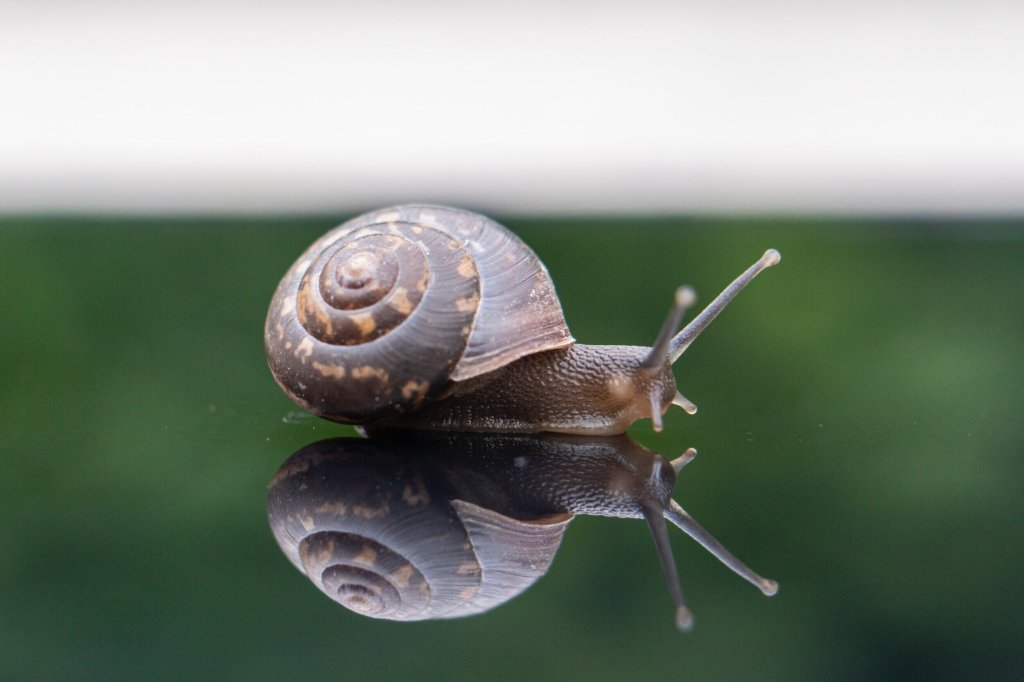
    A good friend, who prays for me and especially prayed for me this week passed on a message of encouragement with a Scripture to read.  She attached a P.S. suggesting that the picture of the snail that accompanied the verse, might in fact be just as important a message as the words.  A snail I thought? And then, I agreed. 

    I have been slapping my forehead the past few weeks, dismayed by my frustrations and exclaiming “Am I stupid? or Is there a lesson I have not learned?”  There is a lesson in this, I realised.  I need to go slower!  I suspect, in my case, this is not actually slow, but it will certainly feel slow for someone who multi tasks and has spent decades developing her efficiencies. 

    This is not a new thought.  For a long time, I have had a curiosity about the slow living and the slow food movement.  My weekends are spent pottering in my garden and in my kitchen; or hanging out with friends over a cuppa.  Why can’t I get this rhythm at work? Is it even possible? 

    I know why I cram so much into my workdays.  I do not think my motives are wrong, but the consequences are dangerous. Certainly, dangerous to my health, both physical and mental.  My body, already struggling with hormonal imbalances, does not need another squirt of stress hormone in the mix.  It is true if you run fast you risk stumbling. I felt that this week. 

    Did you know there is a ‘slow work’ movement too?  It focuses on mindfulness, creativity, and balanced work environment.  Paul Gentile in “How to make the slow movement work for you”, emphasizes using your time for more meaningful and productive ways, by taking controlled breaks and focus on individual tasks. For me that means no more multitasking and eating on the run. 

    Morgaine Gerlach suggests in addition, doubling the time estimate for the ‘to-do list’ items on your daily schedule, adding relaxation periods to each day and being patient with the process. 

    I know in my heart that slowing down allows me to go deeper and be present.  This is especially important for relationships not only with others, but with oneself and one’s God.  Just like the snail, going slower may mean I get to see the benefit and the beauty of every inch!

    Under duress, it all seems so hard and yet I know it is so important.  I rather like this Chinese Proverb and may have to post it on a note on my desk. “Be not afraid of going slowly, be afraid only of standing still.”

    And this one by Shakespeare “Wisely and slow. They stumble that run fast.”

    I will be sure to add a picture of a snail too. 

    P.S. Feel free to check in with me in a week’s time or a month’s time and ask me how I am managing ‘slow’. 

    Photo by amirali mirhashemian on Unsplash

  • Being Still for the Hustle

    Being Still for the Hustle

    Sometimes I think I have two opposing forces at work in me; the call to hustle or make a difference pulling me one way and a deep yearning and call to be still pulling me the other.  This time of the year the call to be still is strong as I weary with the hustle.  I am looking forward to the holidays beyond the jostle of Christmas when I can sink deep into being still.  I know that long after I’ve stepped off the treadmill of work and life, the adrenalin and cortisol will still be pumping through my system.  It will take considerable effort to put the brakes on and not keep moving when I know it’s good for me to slow down.    It is times like this that I yearn for the simplicity of a monastic community like the Christian mystics of old, living a simple life of retreat in contemplation.  Perhaps, I will settle for a ‘good’ vacation instead.  

    According to a 2011 Expedia report, Australians are the 3rd worst in the world for deprivation of vacation time and so are millennials-those born between 1981-1997; as reported in their most recent report (2017).  “Taking time off is a critical piece of living a happy, balanced life.”  As Susan Kraus Whitbourne says, in “The importance of Vacation to our Physical and Mental Health”, ‘holidays have the potential to break into the stress cycle…where we have the potential to emerge to take on the world again. ‘

    Many Australians do not take leave because work commitments make it difficult for them to plan.  Perhaps they haven’t heard Winston Churchill’s words “He who fails to plan is planning to fail.”  Without a planned vacation, how can we possibly continue to perform well in our vocation? Over half the millennials in the 2017 report, said that they shortened their trips due to impending workloads.  It would seem that the pressure to hustle overpowers the quiet call to be still. 

    My job as a teacher gives me time off whether I want it or not; afterall school is out!  It is my choice though whether I intentionally use it by being still in order to replenish body and soul or if I misuse it.  While I will be spending my time relaxing on a beach where the Wi-Fi is weak, I know I will have to be intentional to not bring the hustle with me. 

    Matt Plumber said there are three types of people who misuse their holidays. (See his article “How to actually come back from holidays feeling refreshed”; Dec 22, 2017). Some become couch potatoes, others holiday humbugs, and others ‘workaholidayics’.  The couch potato, whilst disengaging from work while ‘vegging out’ is actually neglecting other meaningful interactions that are necessary to replenish body and soul.  The holiday humbug uses the holiday season to catch up on work; essentially working all through their holiday.  Whilst this may help short term to reduce stress, it certainly does not help in the long term.  And then there is the ‘workaholidayics’ who switch lanes but not pace. Instead of hustling in their usual workplace, they rush all through their holidays from party to party, travel miles and leave no time or space to be still at all. 

    Matt says that we must be intentional and suggests setting sustainability goals for your holidays, prioritising processing time, setting goals for the next year and spending more time planning how to achieve your goals than you do setting your goals.  Last but not least, he suggests that creating and upholding holiday traditions are ways to create meaningful, productive and restful tradition to guarantee our needs are met while we are on leave. 

    It is not about hustle or being still; it is about the importance of both.  Annual holidays and the Christmas break can and should provide us with the opportunity to be still so we are replenished and focused to return to the hustle.  What are your plans for the Christmas holiday season this year?  What will you intentionally put in place so that you will start 2019 replenished and focused?  Will you join me in slowing down long enough to be still? 

    Photo by Katie Moum on Unsplash