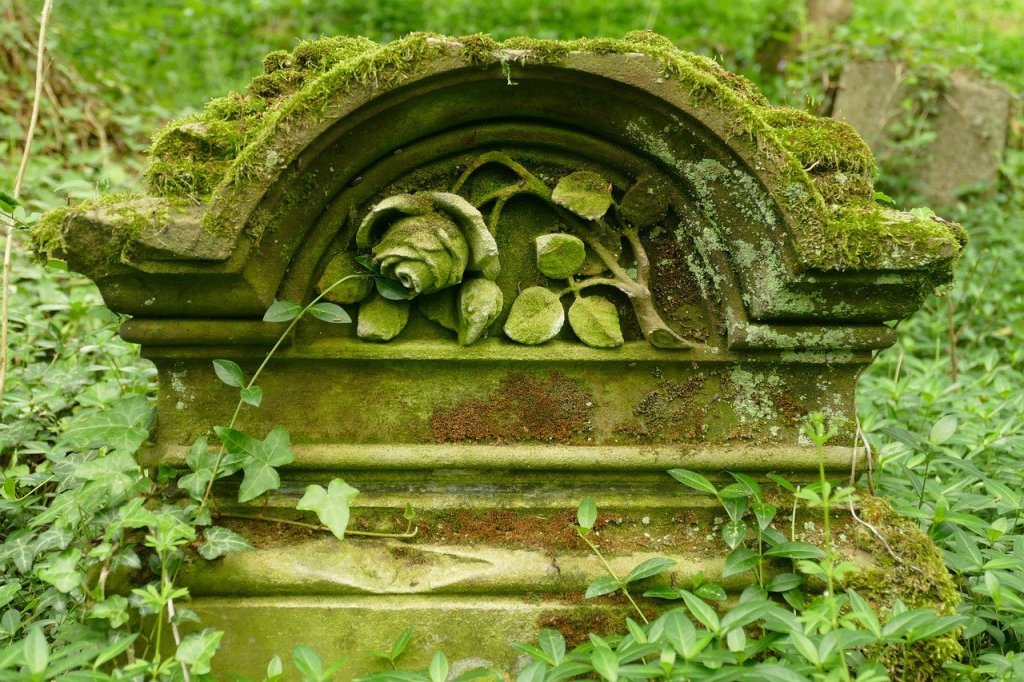
Tag: tradition

  • Final Goodbyes.

    Final Goodbyes.

    I avoided funerals as a young person, for no other reason than a sense of inadequacy around communicating sympathy.  I would like to think that I have grown up a little bit, even if I still struggle to adequately express myself to those closest to the deceased.  Not one to excel at small talk, I would rather serve the tea and coffee, or deliver the eulogy.  Again, I like to think I have matured some, and overcome my own discomfort for the sake of others.   I have also come to appreciate the importance of ritual and traditions, and saying final goodbyes.

    I have sat through some long funeral services, and one less than half an hour.  I missed others during Covid lockdowns, but was able to watch online.  In the last three months, I have attended three funerals in person, and am thankful that I was able to be a part of the rituals and traditions that acknowledged the life – and the death, of someone I knew and loved.

    Except for Covid limitations, I have never been denied attendance at a funeral.  Have you? As I have discovered, not everyone has a funeral service, and some are ‘family only’.  How would you feel if you never got to say goodbye to someone before they died, and then was denied access to their funeral?  What if there was no funeral at all?  No graveside to visit nor plaque on a wall. Nothing at all, to mark the life and the death of the person gone. How then do people grieve or remember, if there is no event or place for final goodbyes?

    Studying pastoral care at Bible College, I had the privilege of a closeup look at a crematorium, a funeral home, and a mortuary. One thing that stood out to me from each of these locations, was the intentional cues and rituals designed to facilitate grief and closure.  For example, at the crematorium there was a little button on the podium, that could be pressed at a significant moment in the service, thus closing a curtain behind the coffin as it disappears for cremation.  It was explained to us that this was just one of several cues or rituals that helped people move along the grief process, as they say a final goodbye to a loved one. 

    I understand that we live in a culture that often shuns religious ceremonies and traditions, including funerals held in a church.  Instead I have seen celebrants officiate and services held in a chapel, often adjacent to a crematorium or a funeral home.  I have seen fewer people buried in graveyards and less ashes placed under a plaque; and instead, are scattered at some later date, in a place special to the deceased, and their loved ones. 

    It is written in some places that surely the funeral, or the lack of, is the right of the deceased and their close relatives.  After all, a funeral can cost quite a bit of money and the deceased might have requested no fuss. Why not skip the gathering and avoid difficult conversations altogether, and exclude people who haven’t been around the deceased in decades?  But, what about those who don’t get to say their final goodbyes and struggle to relinquish their grief, all because of this lack of tradition?  Why must they find ways to grieve alone, when for centuries our community’s cultural rituals, in funerals, were presumed and known? 

    Each funeral I attended recently was as different as the deceased person themselves.   Two funeral services were held in a church and the other in the chapel beside the crematorium.  One was followed by a large wake, another by a potluck lunch, and the other with refreshments over a cuppa.  Each service acknowledged the person’s life and legacy. Guests came from far and wide to support the family, pay their respects and to mourn the loss of the dead. In each case, I appreciated personally as well as for others, that this communal gathering provided various intentional rituals, that offered closure and the opportunity to grieve.  I also found that by reconnecting with some people we had not seen in decades, we were incredibly comforted, as well as nostalgic, and has resulted in reignited old friendships. 

    My friend who couldn’t understand her exclusion from a private funeral, will have to find her own way to bring closure and acquit her grief.  If this trend continues, we too might have to find ways in the future to process our grief and loss in private or independent ways, without the communal rites and traditions we take for granted.   Writing a letter, planting a tree, or holding a private memorial are all excellent ways to process grief; but they remain individual. They also miss out on so much more; more that a good old-fashioned funeral provides. 

    What you think? Just how important are communal rituals and traditions for saying final goodbyes? 

    “Grief is the price we pay for love” – Colin Murray Parkes

  • Oh Christmas Tree, O Tannenbaum, how lovely are your branches…

    Oh Christmas Tree, O Tannenbaum, how lovely are your branches…

    Our Christmas tree in the Queensland bush as a child was a spindly, needled tree that was more grey than green. My Dad would venture into the nearest scrub to cut down the tree on Christmas Eve.  Its trunk was placed in a crepe paper covered metal bucket of river rocks and water. We would drape its branches with crepe paper streamers before hanging a few special and colourful glass balls from it.  The most important decoration was the angel that had to be placed on the top of the tree.  

    Today, my tree is artificial and dark green,and lives in a box  during the year.  Our decorations are much more sophisticated and mass produced.  These days our family can afford tinsel and fairy lights and grand baubles.  Most years the tree is setup in early December.  This year I have not even unpacked it. 

    Why do we put up a Christmas tree?  Why did my Dad set ours up on Christmas Eve and not the beginning of December?  He is not around to ask but I suspect it has something to do with his German and Protestant roots and customs.  Some say legend has it that Martin Luther invented the Christmas tree, although there are many pagan and Christian examples of the tree being centrepiece to Christmas celebrations before then.  It was German immigrants who introduced the Christmas tree to England and America in the nineteenth century and of course why we as Australians have associated a tree with Christmas today.

    I confess I have placed more symbolism in the decorations rather than the tree itself. I have associated it with a place to lay the gifts rather than it being a gift itself.  Tradition says the evergreen tree symbolises faithfulness during a time when most trees in the forest during the European winter are without leaf.  And so it is with Christ, whose birth we celebrate at Christmas time which represents God’s faithfulness to mankind. Just as the tree is evergreen, so is God’s love for us. 

    The Christmas Carol “Oh Christmas Tree” is translated from the German song ‘O Tannenbaum’ that is centuries old. There are many versions it seems. Here is one that is said to be a translation that is truer to the original than many others. (Credit to Tradition in Action.)

    O Christmas tree, o Christmas tree
    How steadfast are your needles!
    Green not only in the Summertime,
    But also in Winter when it snows.
    O Christmas tree, o Christmas tree
    How steadfast are your needles! 

    O Christmas tree, o Christmas tree
    You make me very happy!
    How often at Christmastime has
    A tree like you given me great joy!
    O Christmas tree, o Christmas tree,
    You make me very happy! 

    O Christmas tree, o Christmas tree
    Your dress wants to teach me something:
    Your hope and durability
    Always provide comfort and strength.
    O Christmas tree, o Christmas tree,
    That’s what your dress teaches me.

    Will you have at tree this Christmas?  Have you thought about the why?  Perhaps you, like me will look at the tree itself differently this year.  I think I shall go and put mine up. Or should I wait and get an evergreen on Christmas Eve?

    Photo by Manuel Will on Unsplash.com


  • Wedding weirdness or justifiable tradition?

    Wedding weirdness or justifiable tradition?

    Have you ever considered why we do certain things when we get married?  Why are the engagement and wedding rings placed on the left hand’s third finger?  Why does a bride wear a veil? Why does she wear something blue?  Whose idea was it to tie cans to the bridal couple’s car? 

    This weekend I had the occasion to consider the answers to these questions while completing a quiz at a bride-to-be’s kitchen tea. Considered I said, as I still really do not know the correct answers. Like many traditions, often the reasoning behind the ritual is no longer recalled. Sometimes, it is no longer applicable. 

    This reminds me of a story of a woman who would cut a joint of meat a certain way in order to roast it in the oven.  One day when questioned about her practice she shrugged and said ‘that’s the way my mother always did it!’  Her mother when questioned said the same.  When Grandma was finally questioned, she explained that her roasting pan was very small and that was the only way she could fit a whole joint into the oven in her pan.  In the meantime, two generations had followed her practice assuming it a tradition of significance. 

    It seems as if many wedding traditions are based on pragmatic reasons-just like grandma’s roast. Others seem to be based on outdated superstition. 

    Take for example the tradition of the groom standing to the right of the bride.  Apparently, this was so he could then tuck her safely into his left-hand side, freeing his right arm to wield a sword to protect her. How many grooms today carry a sword or need to defend off attackers?  What about a left-handed groomsman? 

    I have been to a wedding where tin cans and toilet paper were surreptitiously tied to the groom’s car for a laugh. No one would have thought or believed for one moment that there were any evil spirits that needed to be warded off! 

    Is all of this tradition wedding weirdness; is it comforting folklore or is it just a bit of fun?  What do you think? 

    Mark Twain said “The less there is to justify a traditional custom, the harder it is to get rid of it.” 

    Perhaps that is why so many wedding customs remain.


    photo by Morgan McDonald on Unsplash.com